A Window into Bohemian Paris: Modigliani’s Portrait of Lejeune
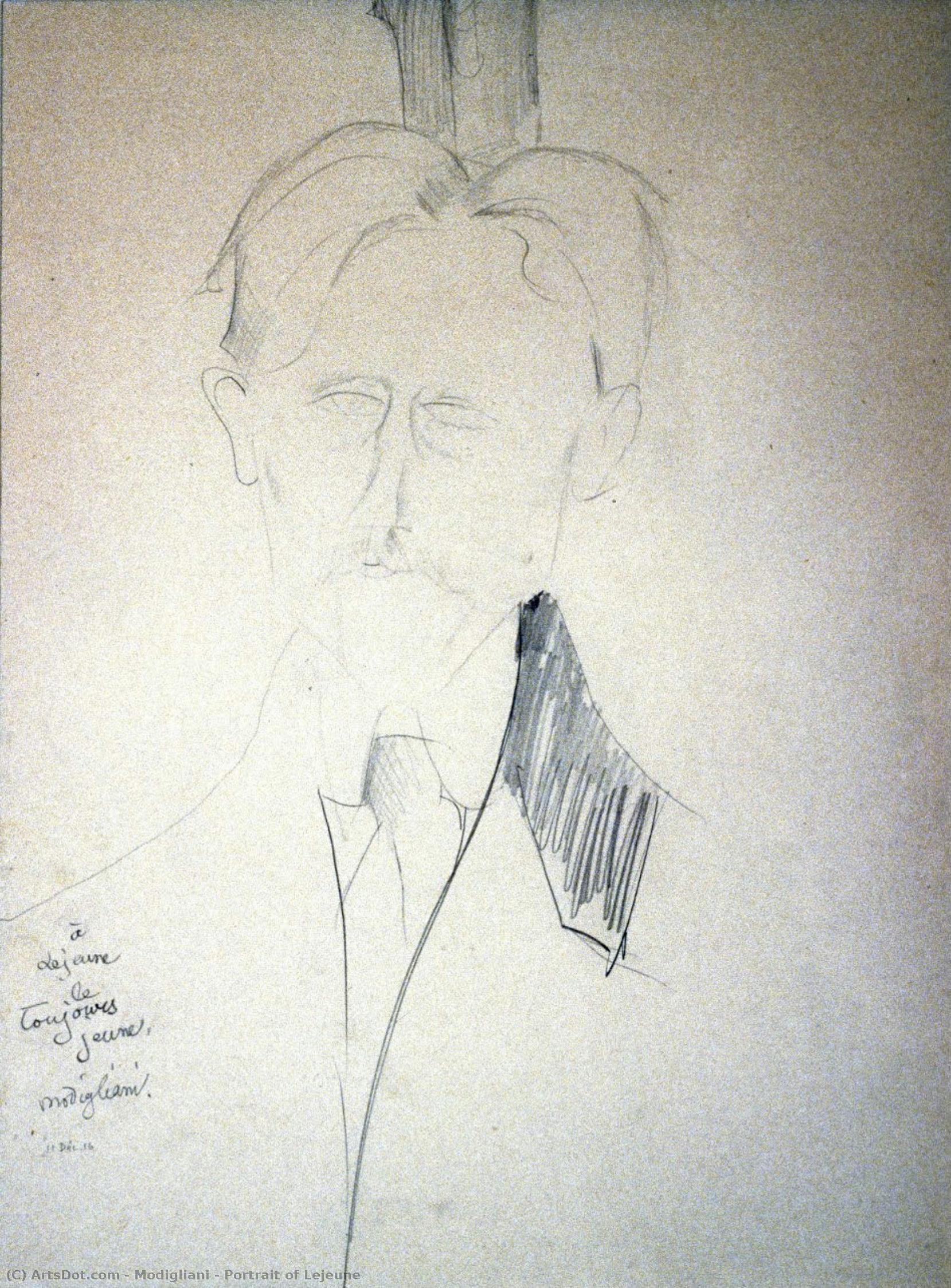
Amedeo Modigliani's 1916 charcoal sketch, “Portrait of Lejeune,” is more than just a likeness; it’s a whispered glimpse into the heart of Montparnasse’s vibrant artistic community. The subject, Louis François Baron Lejeune, was not merely a fellow painter but a friend and colleague within Modigliani's close-knit circle – a testament to the collaborative spirit that defined this era. The portrait emerged from a small exhibition orchestrated by Modigliani’s dealer, Paul Guillaume, held in Lejeune’s own studio, highlighting the interwoven lives and mutual support amongst these burgeoning artists. It was a period of growing recognition for Modigliani as a portraitist, and “Portrait of Lejeune” stands as a poignant example of his ability to capture not just physical appearance but also the very essence of those who populated his world.
The Elegance of Elongation: A Defining Style
1916 marked a pivotal year in Modigliani’s artistic evolution, solidifying the signature aesthetic that would come to define his oeuvre. “Portrait of Lejeune” exemplifies this stylistic breakthrough – an intentional departure from strict realism towards graceful elongation. The figure is stretched and refined, prioritizing elegant linearity over precise anatomical representation. This wasn't a distortion for its own sake, but rather a deliberate attempt to convey a sense of inner life and timelessness. The artist’s personal inscription, “á Lejeune le toujours jeune, Modigliani 11 Dec 16” (“To Lejeune, forever young, Modigliani”), adds an intimate layer, suggesting both affection for his friend and a belief in the enduring power of art to transcend time. It’s as if Modigliani wasn't simply depicting Lejeune, but immortalizing him.
A Study in Line and Shadow: Technique and Emotional Resonance
The artwork’s monochromatic palette – a delicate interplay of grays, whites, and blacks – immediately draws the eye to the masterful manipulation of line and form. Modigliani doesn't rely on color for impact; instead, he employs a nuanced range of techniques, from feather-light strokes that capture subtle details to bolder, more assertive lines defining major shapes. The composition is vertically oriented, with Lejeune positioned slightly off-center, his direct gaze engaging the viewer in a quiet dialogue. The sketch-like quality, achieved through the application of charcoal or graphite on paper, lends an immediacy and intimacy to the portrait, as if we are witnessing Modigliani’s creative process unfold before our eyes. The deliberate elongation of Lejeune's head and neck isn’t merely stylistic; it imbues the subject with a sense of otherworldliness, a subtle detachment that invites contemplation.
Modigliani and Lejeune: Lives Intertwined
To understand “Portrait of Lejeune” fully, one must consider the lives of both artist and sitter. Amedeo Clemente Modigliani, born in Livorno, Italy, arrived in Paris seeking artistic freedom and quickly became immersed in the city’s avant-garde scene. His work, influenced by antiquity, the Renaissance, and artists like Picasso and Brâncuși, began to garner attention for its unique blend of classical form and modern sensibility. Louis-François Baron Lejeune, though perhaps less known today, was a significant figure in his own right – a French general and painter celebrated for his dramatic depictions of Napoleonic battles, and importantly, a pioneer in the art of lithography. Their connection speaks to the diverse influences circulating within Montparnasse, where military history, innovative printmaking, and avant-garde painting could coexist and inspire one another. “Portrait of Lejeune” is therefore not just a portrait of an individual, but a symbolic representation of this vibrant artistic exchange.