A Vision of Melancholy Beauty
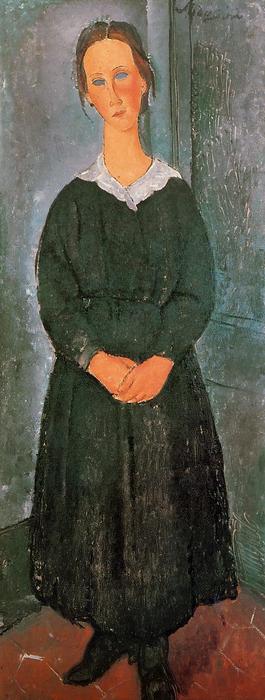
In the quiet, evocative realm of Amedeo Modigliani’s 1918 masterpiece, “The Servant Girl” (also known as La Jeune bonne), we encounter more than a mere portrait; we enter a profound meditation on the human condition. Painted during the artist's period of Parisian exile, this work serves as a haunting emblem of his signature aesthetic. The subject, a young woman standing with a poised yet contemplative stillness, becomes a vessel for themes of longing and isolation. As she gazates outward with an unsettling serenity, her presence commands the space, inviting the viewer to peer into a world defined by quiet introspection and the elusive nature of beauty.
The painting’s power lies in its masterful use of elongated proportions, a hallmark of Modigliani’s genius. By subtly distorting the figure—stretching the neck and refining the facial structure—the artist achieves a rhythmic, sculptural grace that transcends anatomical reality. This deliberate manipulation of form does not merely decorate the canvas; it emphasizes the subject's vulnerability, lending her an ethereal, timeless quality that resonates deeply with anyone moved by the poetic truth of the human silhouette.
Technique and the Palette of Introspection
Modigliani’s technical approach in this piece utilizes the macchiaiolo method, a technique characterized by loose, expressive strokes that prioritize emotional resonance over photographic precision. Through these "dabs" of paint, he builds a textured surface that feels alive with movement and feeling. The color palette is intentionally restrained, dominated by muted earthy tones such as ochre, umber, beige, and deep brown. This somber chromatic range creates an atmosphere of stillness, mirroring the heavy, contemplative mood of the subject.
For the discerning collector or interior designer, this painting offers a sophisticated anchor for any space. The warmth of the earthy tones allows it to integrate seamlessly into refined, modern, or classical interiors, providing a focal point that is both intellectually stimulating and visually soothing. It is a piece that does not shout for attention but rather commands it through its understated elegance and profound depth.
Symbolism and Historical Resonance
Beyond the surface of the paint lies a complex web of symbolism. The woman’s almond-shaped eyes are perhaps the most arresting feature of the work; they appear to hold a profound, unspoken sadness, suggesting an awareness of loss or a yearning for something perpetually out of reach. This gaze directs the viewer's attention outward, bridging the gap between the painted world and our own reality.
Contextually, the painting was birthed during the anxieties of World War I, a period of immense global uncertainty. While the work reflects the shadows of its era, it transcends historical boundaries to explore universal human emotions: beauty, sorrow, and the search for meaning amidst chaos. To possess a reproduction of “The Servant Girl” is to hold a fragment of art history that speaks to the enduring resilience of the human spirit and the timeless allure of the melancholic soul.