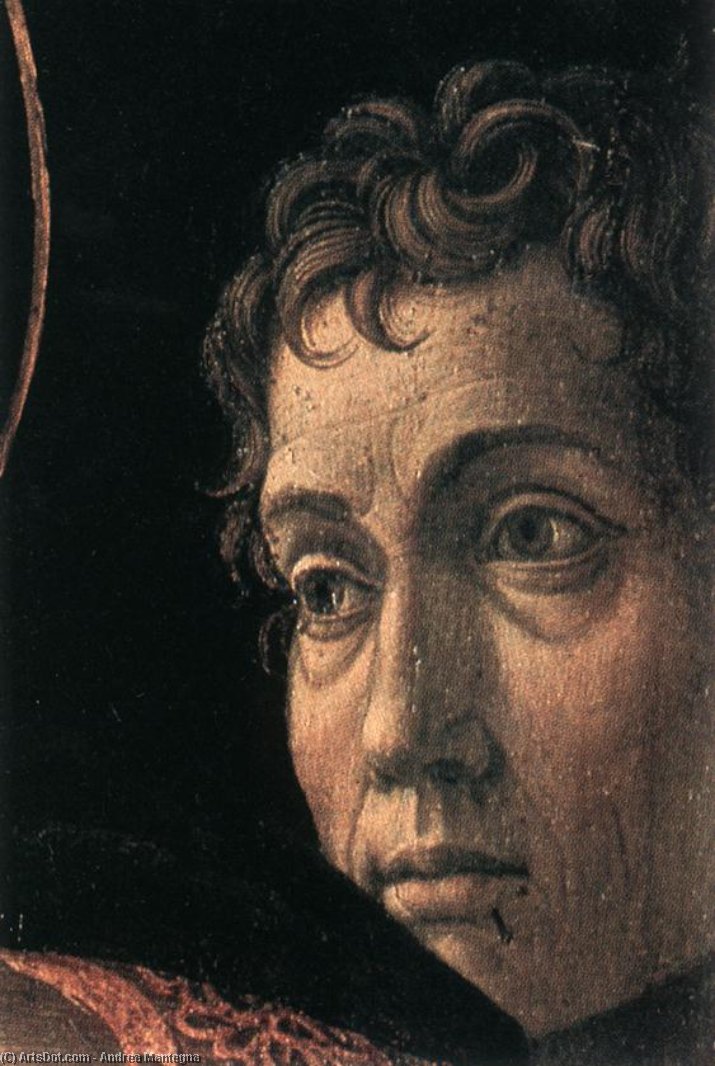
Presentation at the Temple (Detail) by Andrea Mantegna – A Window into Renaissance Faith
This exquisite detail from Andrea Mantegna’s “Presentation at the Temple” offers an unparalleled glimpse into the artist's revolutionary approach to depicting religious narrative. Completed around 1460, this fragment embodies the core of Mantegna’s artistic philosophy: a fervent return to classical antiquity filtered through a uniquely Italian sensibility. More than simply illustrating a biblical scene – the formal presentation of Mary at the Temple – it represents a pivotal moment in the development of Western art, showcasing an almost obsessive dedication to anatomical accuracy and dramatic perspective that would profoundly influence generations of artists.
The image immediately draws the eye to the central figure: a man with a distinguished beard, presented directly to the viewer. His posture exudes quiet authority and solemnity, reflecting the gravity of the religious occasion. Mantegna’s masterful use of light – a stark contrast between the brightly illuminated face and the shadowed background – creates a powerful sense of depth and focuses our attention entirely on this central figure. The deliberate framing, with its obscured body, invites contemplation and encourages us to consider the individual's role within the larger narrative.
Renaissance Forged in Antiquity
Andrea Mantegna’s artistic vision was inextricably linked to his fascination with Roman antiquity. Unlike many of his contemporaries who merely employed classical forms superficially, Mantegna embarked on a deeply immersive excavation of the past. He spent years studying Roman ruins, sculptures, and inscriptions, meticulously documenting their details – a practice largely unheard of at the time. This obsession manifested itself in every aspect of his work: the monumental scale, the sculpted quality of figures, and most notably, his pioneering use of linear perspective.
His formative years under Francesco Squarcione, a painter and collector who operated less as a traditional studio and more as an academy dedicated to Roman studies, were crucial in shaping this unique approach. Surrounded by fragments of a lost empire, Mantegna developed a profound understanding of how ancient artists had manipulated space and form to create illusions of reality – a skill he then brilliantly translated into his own paintings.
Symbolism and Technique
The scene itself is rich with symbolic meaning. The Presentation at the Temple represents Mary’s dedication to God, a foundational event in Christian theology. Mantegna's meticulous attention to detail extends beyond mere representation; it elevates the scene to a profound meditation on faith, devotion, and the divine connection between humanity and the sacred. Notice the careful rendering of the marble floor, a technique that adds to the sense of realism and grandeur. The use of foreshortening, particularly in the depiction of Christ’s body, is a hallmark of Mantegna's style – a bold experiment with perspective that would become increasingly influential.
The dark background serves not merely as an absence of color but as a deliberate device to heighten the impact of the illuminated figure. It creates a sense of drama and emphasizes the importance of this singular moment, drawing the viewer’s eye directly to the central subject. The restrained palette – dominated by browns and muted tones – contributes to the overall atmosphere of solemnity and reverence.
A Legacy of Innovation
“Presentation at the Temple” is more than just a beautiful painting; it's a testament to Andrea Mantegna’s revolutionary spirit. His unwavering commitment to classical accuracy, combined with his innovative use of perspective and dramatic lighting, established him as one of the most important artists of the Early Renaissance. This detail offers a rare opportunity to appreciate the genius of this visionary artist and witness firsthand the birth of a new artistic language – a language that continues to inspire awe and wonder today.