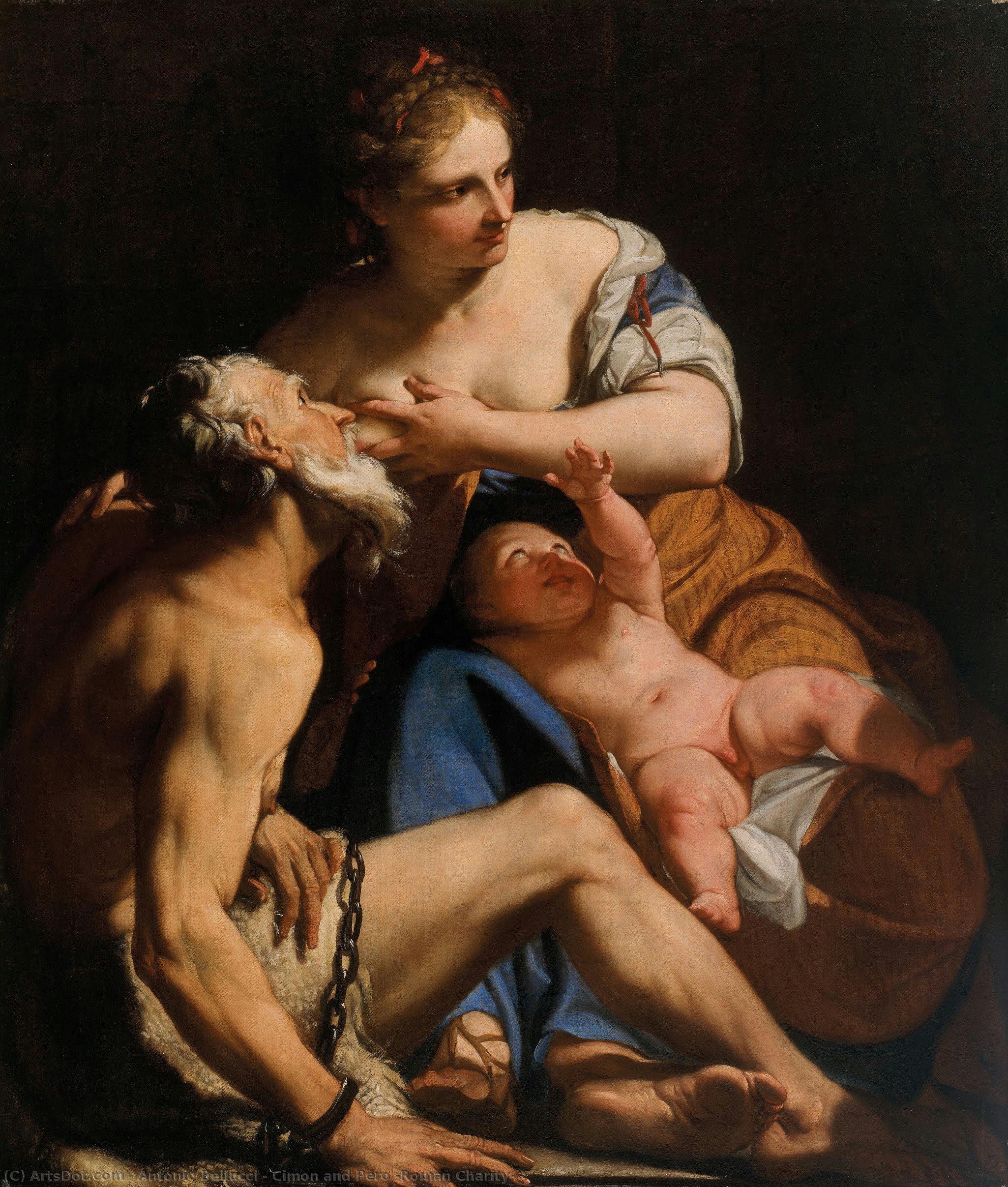
Antonio Bellucci’s "Cimon and Pero" (1685) is a dramatic Baroque masterpiece showcasing stark contrasts of light and dark, depicting Roman charity with an erotic undertone. This captivating scene features a woman nursing her child while a man observes, highlighting the tenebrous style and Bellucci's skill. Discover this exquisite hand-painted reproduction.
Cimon and Pero (Roman Charity) by Antonio Bellucci – A Baroque Masterpiece of Erotic Tension
- Subject Matter: This arresting painting depicts the poignant and controversial scene from Valerius Maximus’s historical account, where Athenian Cimon, imprisoned and awaiting death by starvation, is rescued by his daughter Pero who nurses him with her own breast. The composition brilliantly captures a moment of desperate survival intertwined with undeniable human emotion.
- Artist: Created by Antonio Bellucci (1654-1726), a pivotal figure in the Venetian Grand Manner and a favored patron, this work exemplifies his mastery of tenebrism – the dramatic use of light and shadow that characterized the “Tenebrous” school of Venetian painting.
- Date: Executed in 1685, during Bellucci’s peak creative period, the artwork offers a rare glimpse into the artistic sensibilities of late 17th-century Venice.
A Study in Contrasts – The Technique and Composition
Bellucci's skill is immediately apparent in his masterful manipulation of light and shadow, a hallmark of tenebrism. Stark contrasts define the scene: the deep darkness of the prison cell sharply juxtaposed with the luminous glow illuminating Pero and her child. This dramatic effect intensifies the emotional impact, drawing the viewer’s eye directly to the central figures. The composition itself is carefully constructed – arranged in a pyramidal form, mirroring classical principles while simultaneously creating a sense of dynamic tension. The placement of Cimon, Pero, and the child creates a powerful visual narrative, emphasizing their interconnected fates. Notably, Bellucci deviates from traditional depictions by presenting the child as an active participant, further complicating the scene's interpretation.
Symbolism and Interpretation – Beyond Christian Charity
While ostensibly depicting a story of Christian charity—a popular theme in Baroque art reflecting the virtues of *caritas christiana*—Bellucci’s work transcends simple religious allegory. The painting is steeped in erotic undertones, fueled by the inherent ambiguity of Pero's gaze and the intimate act of nursing. This duality – the pious narrative alongside a palpable sensuality – was a recurring feature of Venetian art during this period, reflecting a cultural fascination with beauty and desire. The inclusion of the chain around Pero’s neck adds another layer of complexity, perhaps symbolizing her vulnerability or the constraints imposed upon women within societal norms.
Historical Context and Artistic Significance
Painted in 1685, “Cimon and Pero” reflects the broader artistic trends of the Baroque era, particularly the Venetian emphasis on dramatic realism and emotional intensity. Bellucci’s work aligns with the influence of Giovanni Battista Piazzetta, another prominent member of the "Tenebrous" group, known for their bold use of light and shadow and their willingness to explore morally ambiguous themes. Bellucci's patronage by the Venetian nobility further cemented his position as a leading artist, contributing significantly to the city’s rich artistic heritage. The painting’s enduring appeal lies in its ability to provoke contemplation on themes of love, sacrifice, and the complexities of human relationships – elements that continue to resonate with viewers today.
Dimensions & Reproduction Details
*
Title: Cimon and Pero (Roman Charity)
*
Artist: Antonio Bellucci
*
Date: 1685
*
Size: 118 x 101 cm
*
Material: Oil on Canvas
*
Reproduction Quality: Hand-Painted Reproduction – Each artwork is meticulously crafted by skilled artisans, ensuring exceptional detail and color accuracy. Available in various sizes to suit your space and budget.