A Symphony of Nature: The Wild Spirit of Sierra Morena
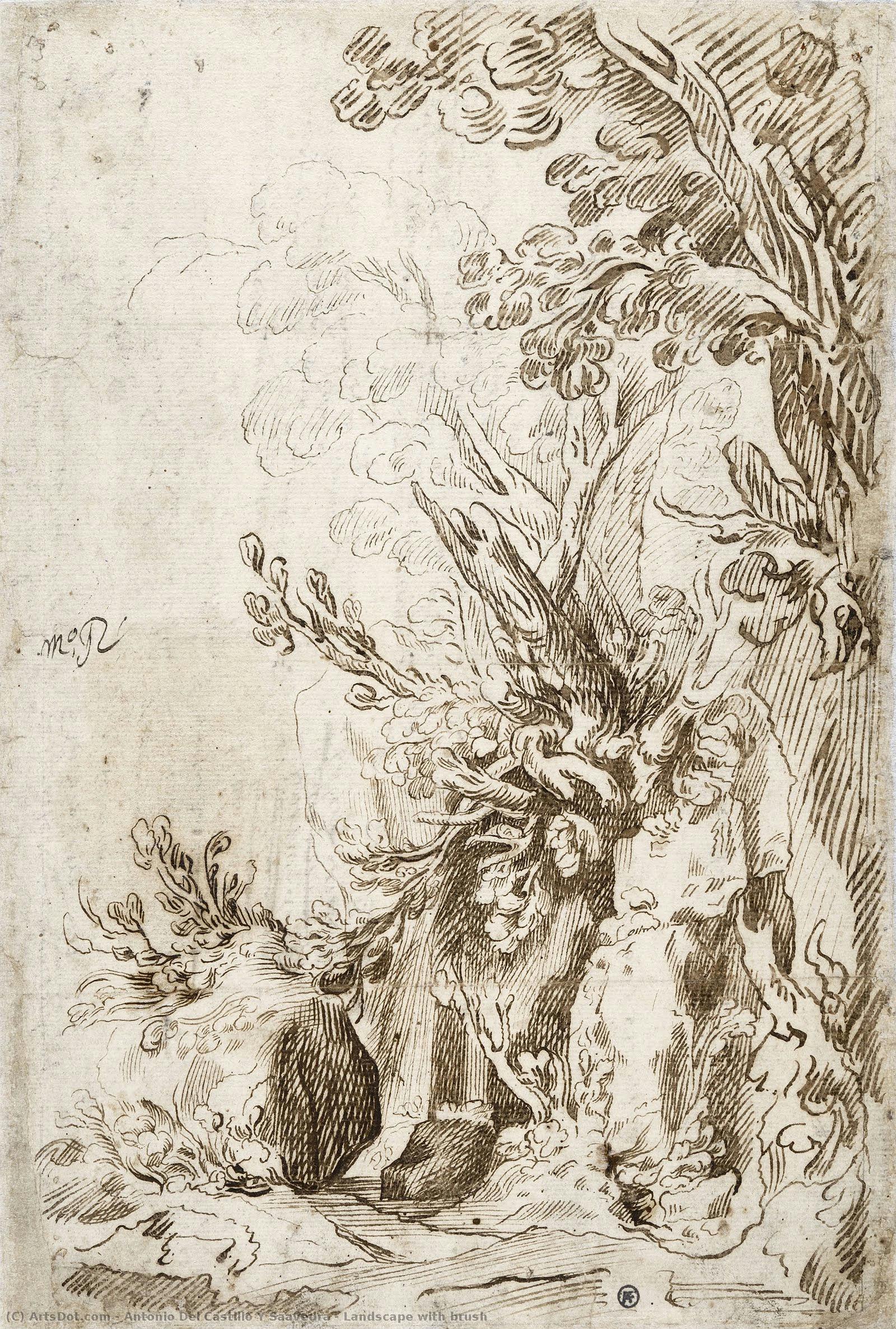
In the delicate, monochromatic strokes of Landscape with brush, we encounter a profound moment of stillness captured by the Spanish Baroque master, Antonio del Castillo y Saavedra. This exquisite drawing serves as more than a mere depiction of flora; it is an intimate window into the untamed heart of Sierra Morena. Through his masterful command of line and shadow, Castillo reveals himself not just as a painter, but as a meticulous analyst of the natural world. The composition breathes with the life of the Spanish wilderness, where every branch and textured trunk tells a story of endurance and organic grace. There is an undeniable romanticism woven into the texture of the paper, a sense of deep concentration on the magnificence of the vegetation that invites the viewer to lose themselves in the quiet majesty of the landscape.
The technical brilliance of this work lies in its ability to evoke depth and atmosphere without the use of color. The artist utilizes a sophisticated interplay of light and dark to define the rugged anatomy of the trees, creating a sense of volume that feels almost tactile. A solitary bird, perched with quiet dignity upon a sprawling branch, acts as a focal point of life amidst the silent woods, while other avian figures dance through the periphery, suggesting a hidden, bustling ecosystem. The presence of a subtle figure on the left side of the frame adds a layer of narrative tension, hinting at a human connection to this wild space—a witness to the harmonious coexistence of man and nature. For the discerning collector, this piece offers a masterclass in how simplicity of medium can achieve unparalleled emotional complexity.
The Scholar-Artist: Poetry in Every Stroke
To understand Landscape with brush, one must look beyond the ink to the intellectual soul of its creator. Antonio del Castillo y Saavedra was a true Renaissance man of the Baroque era, an artist whose hand was as skilled in verse as it was in pigment. This particular drawing is a rare treasure because it bridges the gap between visual art and literature; on its reverse, the artist inscribed an original manuscript of his own poetry, Quejarse un prado porque el enero lo había agotado. This fusion of disciplines elevates the work from a landscape study to a profound testament of the artista-erudito tradition. The very act of writing poetry upon his art demonstrates a spiritual union with nature and an immense pride in his dual identity as a poet and a painter.
For interior designers and lovers of fine art, this piece represents a sophisticated choice for creating a space of contemplation and intellectual depth. A high-quality reproduction of this drawing brings a sense of historical gravity and organic serenity to any setting, whether it be a classical study or a modern gallery-style living room. It serves as a conversation piece that speaks of the Golden Age of Spain, evoking the era of great masters like Zurbarán and Murillo. Owning such a work is an invitation to appreciate the quiet, enduring beauty of the natural world and the profound human impulse to document its fleeting moments through both word and image.