The Goan Beggar – A Portrait of Resilience and Quiet Dignity
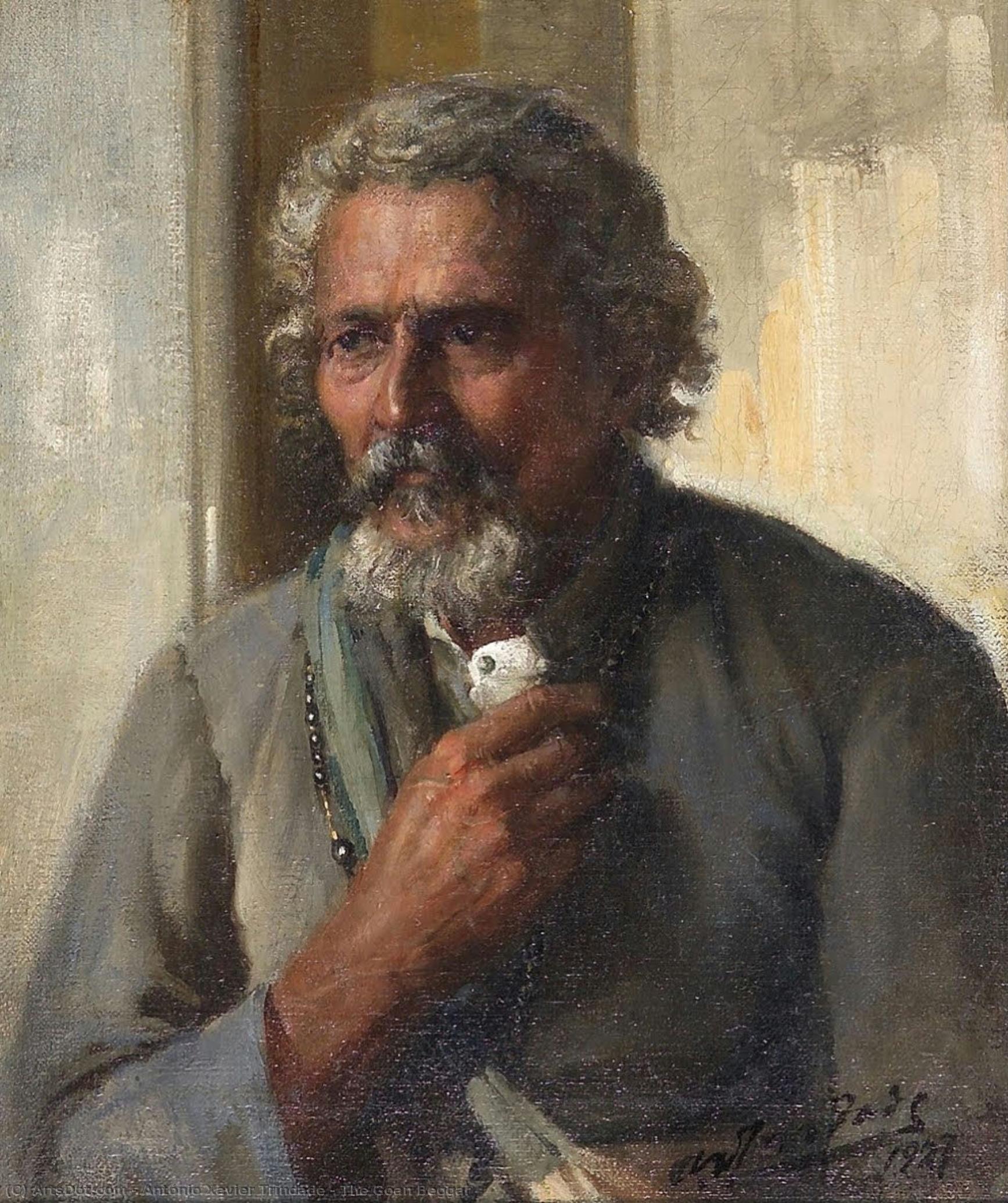
António Xavier Trindade’s “The Goan Beggar” transcends mere depiction; it's an invitation to contemplate the soul of colonial India through a lens of subtle observation. Painted in 1927, this oil on canvas masterpiece captures not just a man’s physical form but also his inner life—a testament to Trindade’s masterful ability to convey character and emotion with remarkable restraint.
- Subject Matter: The portrait focuses on an elderly Christian wanderer – a figure common amongst itinerant populations across the subcontinent. His attire, notably the grey shirt and humble bag, speaks volumes about his socioeconomic status and underscores Trindade’s keen awareness of social realities prevalent during his time.
- Style & Technique: Trindade adheres to the tenets of Bombay School naturalism, prioritizing realism while retaining a humanist sensibility. The artist skillfully employs muted tones—primarily grey—to imbue the scene with solemnity and depth, reflecting the melancholic gaze of the sitter. Brushstrokes are deliberate yet understated, contributing to an overall impression of tranquility and contemplative stillness.
- Historical Context: Created during British rule in Goa, “The Goan Beggar” serves as a poignant reminder of India’s diverse ethnic tapestry. It reflects the broader artistic movement of its time—the Bombay School—which championed portraying everyday life with dignity and sensitivity. The painting's creation coincided with a period of significant social reform and intellectual discourse concerning colonial governance and indigenous identity.
- Symbolism: Trindade’s choice of symbols – the spiral seashell, rosary beads, and unruly hairstyle – are laden with significance. The seashell represents purity and spiritual contemplation, aligning with Christian iconography. Similarly, the rosary symbolizes faith and devotion, highlighting the sitter's religious beliefs. The unkempt hair embodies simplicity and resistance to societal pressures—a visual metaphor for upholding integrity amidst adversity.
- Emotional Impact: Perhaps most powerfully, “The Goan Beggar” evokes a profound sense of empathy without resorting to sentimentality. Trindade’s depiction captures the quiet dignity of a man living outside conventional social norms, conveying resilience and self-respect—themes that resonate deeply with viewers seeking beauty in understated narratives. References to Shihandi, Marcella, et al; Tavares, Cristina Azevedo et al; Gracias, Fátima offer valuable insight into Trindade’s artistic legacy and the painting's scholarly significance.
A reproduction of this evocative artwork will bring a touch of contemplative elegance to any interior space.