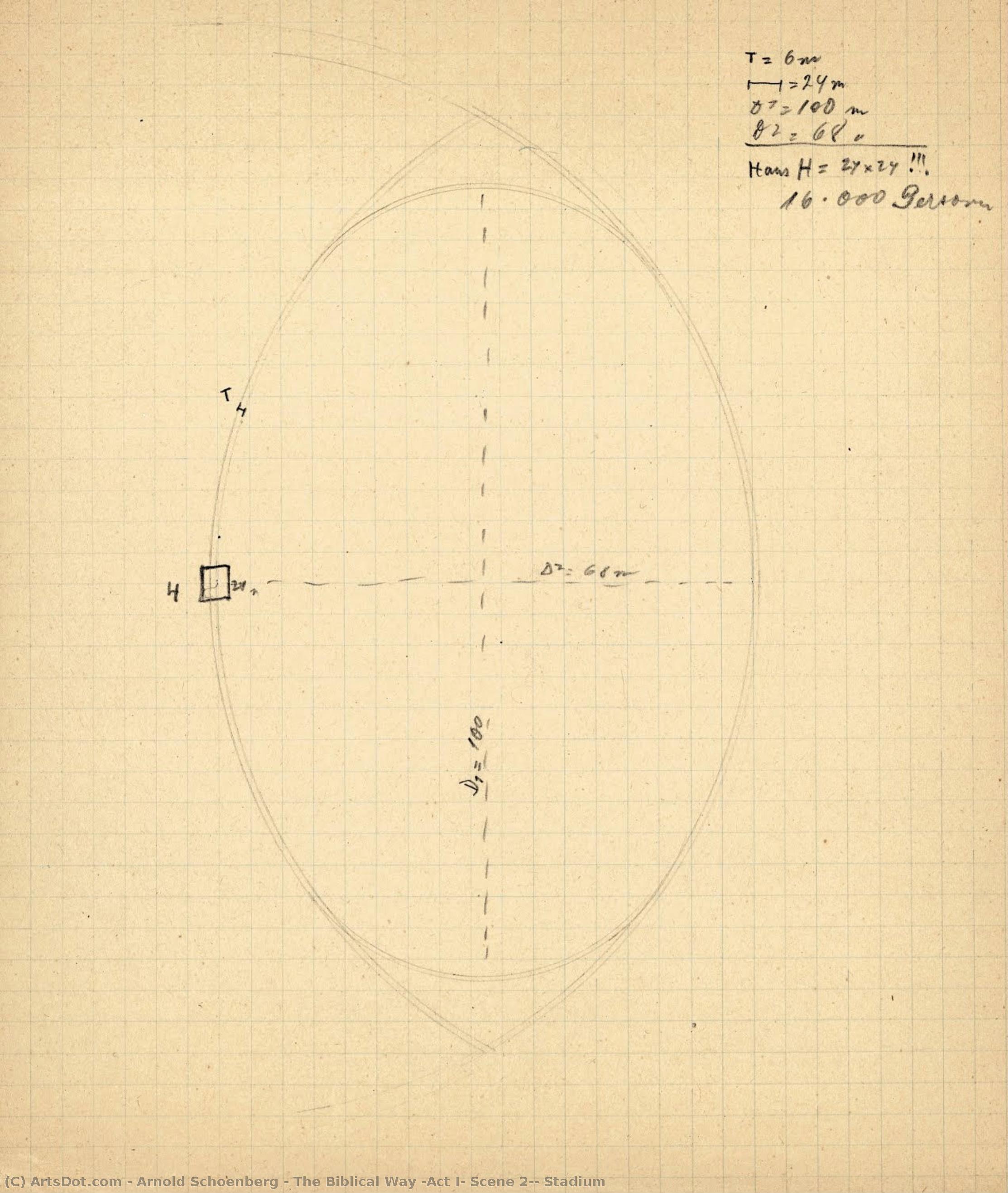
Precise circular diagram by Arnold Schoenberg (1927) captures the geometry of a stadium’s design—an intriguing blend of art and engineering that invites you to discover or own this unique piece.
アルノルト・シェーンベルクの革命的な音楽を探索しましょう。無調主義、十二音技法、そして20世紀の作曲家たちに与えた影響。シェーンベルク・センターで彼の遺産を見つけ出してください。
ウィーン:音楽の遺産が息づく街。アルノルト・シェーンベルク・センターでは、無調音楽や十二音技法の先駆者であるシェーンベルクの貴重な手稿、作品、書画を展示し、ウィーン・モダニズムの深淵を探求できます。
A Geometric Vision
The drawing unfolds on a modest 16 by 19‑centimeter canvas, yet its impact is anything but small. At the heart of the composition sits a single circle, rendered with precise lines that seem to pulse with quiet authority. Surrounding it, smaller circles echo its form, each positioned as if in careful dialogue with the central shape. Numbers—measured distances and perhaps symbolic ratios—are etched around the main circle, inviting the viewer into an intimate conversation between geometry and meaning. The composition feels like a blueprint, a map of possibility drawn by hand, where every line is deliberate and every space charged with potential.
The Composer's Brushstroke
Arnold Schoenberg, celebrated for his revolutionary atonal music, steps onto the visual field in this work with the same daring spirit that defined his scores. Though primarily known as a composer, here he translates musical structure into visual form: the circle becomes a motif of unity and continuity, while the surrounding smaller circles suggest variations—much like leitmotifs in an orchestral movement. The technique is meticulous; the lines are clean yet expressive, hinting at the precision of an engineer and the fluidity of a composer’s hand. In 1927, amid a world still reeling from war and on the cusp of modernist upheaval, Schoenberg's drawing stands as a testament to interdisciplinary exploration.
Symbolism in Circles
Circles have long been symbols of eternity, wholeness, and the cyclical nature of existence. In this piece, the central circle may represent the core of an idea—perhaps the nucleus of a nation or the heart of faith that Schoenberg so passionately explored in his writings about Judaism and the Jewish people’s quest for a homeland. The surrounding circles could signify the diaspora, the scattered communities, each orbiting around a shared destiny. The measured distances etched around the main circle suggest a deliberate mapping of this journey: how far one must travel to reach unity, how many steps separate the present from the promised land. The drawing becomes an allegory for collective aspiration and individual contribution.
Emotional Resonance
When viewers encounter this work, they are drawn into its quiet intensity. The precise geometry invites contemplation; the subtle interplay of numbers and shapes evokes a sense of order amid uncertainty. For collectors, it offers a rare glimpse into Schoenberg’s visual imagination—a bridge between his musical innovations and architectural precision. Interior designers may find in it a focal point that sparks conversation about heritage, ambition, and the enduring power of symbols. The piece does not merely depict circles; it invites us to imagine the spaces they occupy—both physical and metaphysical—and to feel the pulse of hope that has guided generations toward their own promised lands.