A Portrait of Refinement: Bartholomeus van der Helst’s “The Musician”
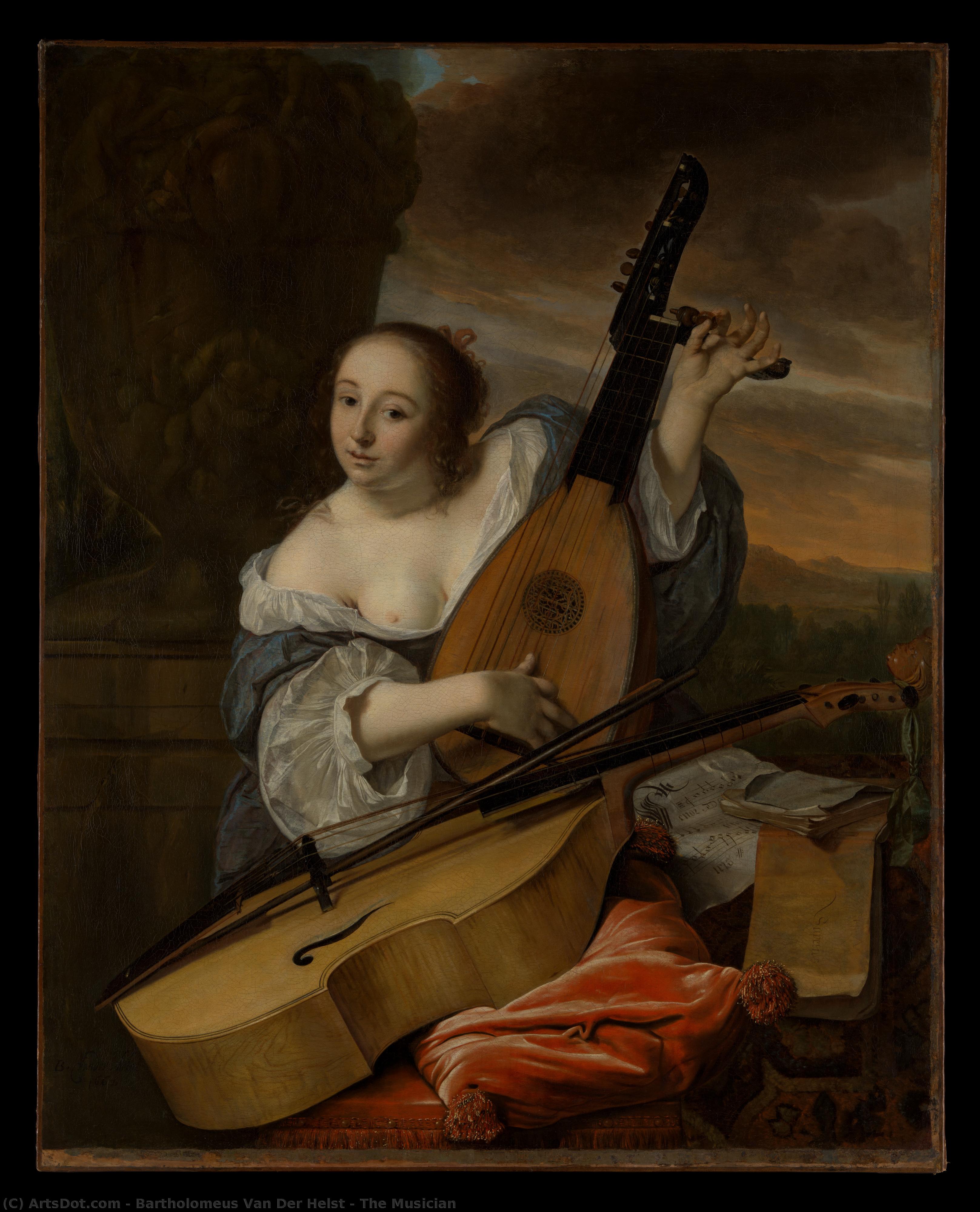
Bartholomeus van der Helst's "The Musician," painted in 1662, stands as a quintessential emblem of the Dutch Golden Age – an era defined by artistic brilliance and burgeoning cultural sophistication. More than just a depiction of a woman playing the lute, this artwork delves into the social conventions of its time, reflecting the aristocratic pursuit of leisure and intellectual engagement alongside romantic allure. Located within The Metropolitan Museum of Art’s collection (accession number EP73.2.R), it exemplifies Van der Helst's mastery of portraiture and his ability to capture not merely likeness but also character and mood.
- Subject Matter & Context: The painting portrays a woman absorbed in tuning her theorbo-lute, accompanied by a viola da gamba and sheet music for tenor and soprano voices. This carefully staged tableau speaks volumes about the aristocratic fascination with musical performances as social rituals – opportunities for conversation and flirtation within refined circles. Such concerts were considered vital for cultivating social graces and establishing connections amongst the elite.
- Style & Technique: Van der Helst’s signature style is characterized by dramatic chiaroscuro—a masterful manipulation of light and shadow—that lends an air of theatrical grandeur to the scene. The artist employs meticulous detail, particularly in rendering the woman's dress and facial expression, demonstrating a commitment to realism blended with idealized beauty. His technique relies on layering thin glazes over a preparatory underpainting, resulting in luminous surfaces and subtle tonal variations.
- Symbolism & Composition: Beyond its visual splendor, “The Musician” carries symbolic weight. The lute itself represents musical artistry and intellectual pursuits—values highly esteemed during the seventeenth century. The inclusion of instruments like the viola da gamba reinforces this association with erudition. Furthermore, the woman’s gaze directly engages the viewer, establishing a connection between subject and observer – a common motif in portraiture intended to convey dignity and composure.
- Influence & Legacy: Van der Helst's work has resonated across centuries, influencing subsequent artists and inspiring interpretations of aristocratic life. Notably, scholars like Walter Liedtke have suggested that “The Musician” may have been inspired by earlier paintings depicting lute players—particularly Gerrit van Honthorst’s and Ferdinand Bol’s works—demonstrating the interconnectedness of artistic traditions.
Further Exploration & Reproduction Considerations
For collectors and interior designers seeking to infuse their spaces with a touch of Dutch Golden Age elegance, ArtsDot.com offers exceptional reproductions of “The Musician.” Our hand-painted versions meticulously recreate Van der Helst’s masterful technique and luminous palette, ensuring that the artwork's emotional impact—its quiet contemplation and understated beauty—is faithfully preserved. Explore high-resolution images and detailed specifications on our website to discover how this iconic portrait can elevate your artistic vision.