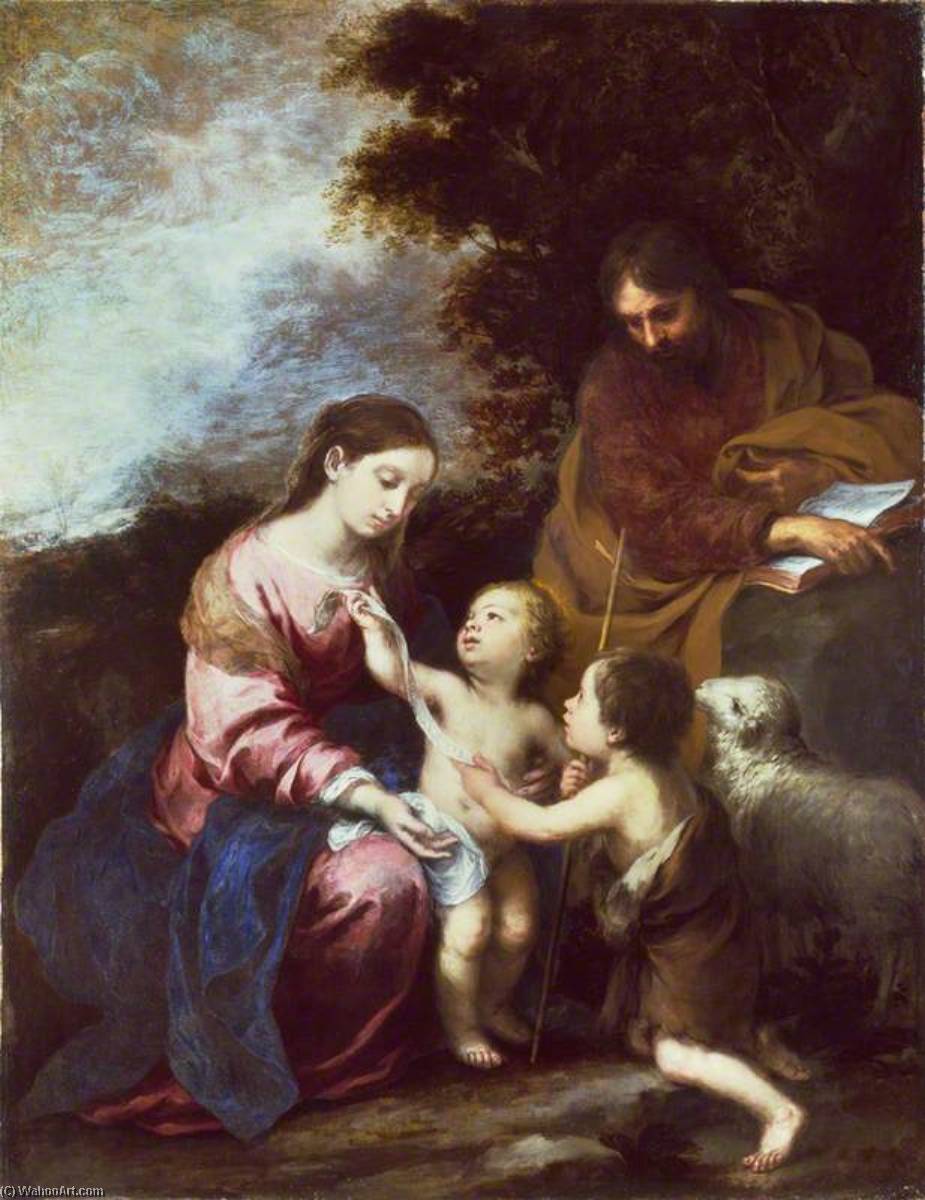
Admire Bartolomé Esteban Murillo’s masterpiece – ‘The Holy Family with the Infant Baptist,’ a serene depiction of Mary, Joseph, and Jesus bathed in Andalusian light, showcasing biblical piety and artistic brilliance.
バルトロメ・エステバン・ムリーリョ(1618-1682)は、スペイン・バロックを代表する画家。セビリアの日常生活や宗教的テーマを情感豊かに描き、特に「無原罪の御宿命」シリーズで知られる。その光輝く作風は後世に大きな影響を与えた。
ロイヤル・コレクションへ!ダ・ヴィンチやミケランジェロの傑作から豪華な装飾品まで、13の歴史的邸宅で英国王室美術の壮麗さを体験してください!
ロイヤル・コレクション, 美術館, イギリス美術, ダ・ヴィンチ絵画, ハーフォードハウス
The Holy Family with the Infant Saint John the Baptist: A Beacon of Serenity in Baroque Seville
Bartolomé Esteban Murillo’s *The Holy Family with the Infant Saint John the Baptist*, painted circa 1668-1670, stands as a quintessential emblem of Sevillian Baroque art—a testament to its profound spiritual depth and masterful artistic execution. Held within The Wallace Collection in London, this canvas transcends mere depiction; it embodies an idealized vision of domestic piety and familial devotion, reflecting the dominant religious sensibilities of Spain during Murillo’s lifetime.
A Vision of Pastoral Tranquility
The painting immediately captivates with its luminous palette—primarily bathed in soft, diffused light that emanates from an unseen source, creating a palpable atmosphere of serenity. Murillo skillfully employs chiaroscuro, manipulating tonal variations to sculpt the figures and imbue them with a sense of tangible presence. The composition is carefully balanced, placing Mary, Joseph, and Jesus centrally within a simple yet elegant architectural setting—a modest room adorned with drapery and illuminated by candlelight. This deliberate restraint contributes to the painting’s overarching impression of peace and contemplation.
Technique and Artistic Innovation
Murillo's technique distinguishes him from many of his contemporaries. He favored thin glazes applied over preparatory underdrawings, resulting in surfaces that shimmer with subtle color changes—a hallmark of Sevillian Baroque painters who sought to emulate the radiant beauty of Caravaggio’s dramatic lighting effects. The artist meticulously rendered textures – the folds of Mary's robe, the infant Jesus’s skin, and even the rough wool of the dogs – demonstrating an unparalleled attention to detail. This meticulous approach elevates the artwork beyond a mere representation; it becomes an immersive experience for the viewer.
Symbolism Rooted in Faith
The scene is laden with symbolic significance reflecting Christian iconography prevalent during Murillo's era. The Holy Family—Mary, Joseph, and Jesus—represents divine grace and familial sanctity, embodying the core tenets of Catholic faith. John the Baptist, depicted kneeling before Christ, symbolizes repentance and baptism—the sacrament of purification and renewal. The presence of two dogs – one on each side of the family – is interpreted as representing loyalty and vigilance, guarding the sacred space and symbolizing spiritual guardianship. Furthermore, the book subtly references scripture and underscores the importance of divine revelation within Christian belief.
Emotional Resonance: A Portrait of Domestic Harmony
Ultimately, *The Holy Family with the Infant Saint John the Baptist* transcends its formal elements to evoke a powerful emotional response. Murillo’s portrayal captures the essence of familial tenderness—the quiet intimacy between Mary and Joseph as they gaze upon their son. The serene expressions on each figure convey compassion, humility, and unwavering faith. This depiction resonates deeply with viewers across centuries, reminding us of the enduring power of family bonds and the beauty of spiritual contemplation. It remains a masterpiece not only for its artistic brilliance but also for its profound articulation of human values—a timeless symbol of serenity and devotion.