A Divine Encounter Amidst the Storm
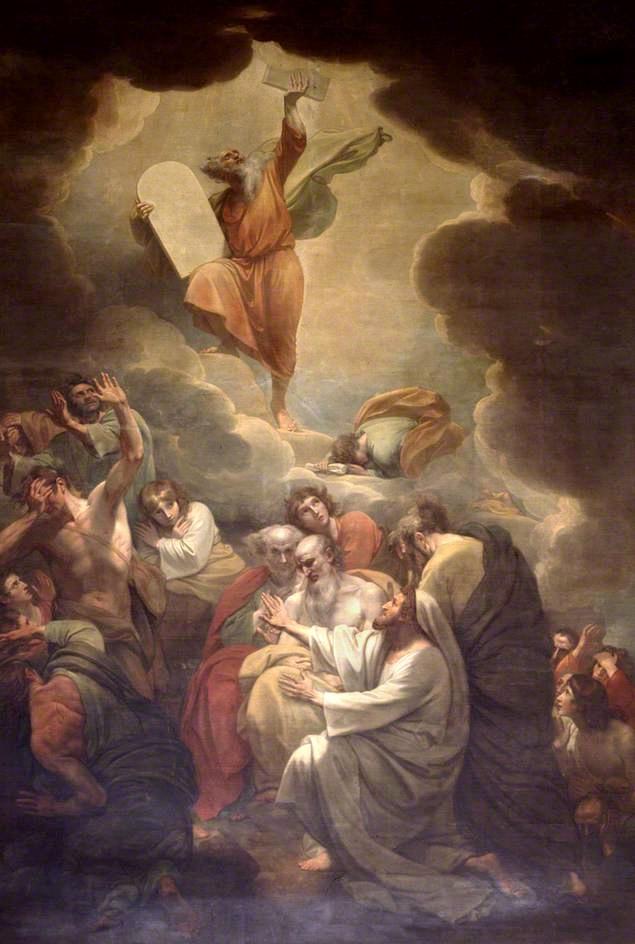
In the grand theater of 18th-century history painting, few moments resonate with as much spiritual gravity as Benjamin West’s “Moses Receiving the Law on Mount Sinai.” Completed in 1784, this masterpiece serves as a breathtaking bridge between the structured ideals of Neoclassicims and the burgeoning emotional intensity of British Romanticism. The canvas captures the very heartbeat of biblical revelation, transporting the viewer to the rugged, windswept heights of Sinai. Here, the air feels heavy with the presence of the divine, as Moses stands at the precipice of a new era for humanity. West does not merely illustrate a scriptural event; he orchestrates a cosmic drama where the boundaries between heaven and earth dissolve into a turbulent, atmospheric spectacle.
The composition is a masterclass in structural storytelling. Utilizing a classic pyramidal arrangement, West anchors the viewer's gaze upon Moses, who rises like a pillar of strength amidst the surrounding chaos. His outstretched arms, clutching the two stone tablets of the Ten Commandments, create a powerful vertical axis that connects the terrestrial realm to the celestial light breaking through the clouds. This deliberate geometry provides a sense of stability and permanence, mirroring the eternal nature of the Law being imparted. Surrounding this central figure is a sea of humanity—Aaron, Joshua, and the Israelites—whose faces are etched with a profound spectrum of human emotion. From the wide-eyed astonishment of the youth to the contemplative reverence of the elders, West captures the psychological weight of witnessing the impossible.
The Alchemy of Light and Shadow
Technically, the painting is an extraordinary display of West’s ability to manipulate light to evoke spiritual awe. The sky above Mount Sinai is not a mere backdrop but a living, breathing character in the narrative. Rendered in bruised purples, stormy greys, and deep indigos, the turbulent heavens serve as a visual metaphor for the internal upheaval and the monumental significance of the moment. West employs a dramatic use of chiaroscuro, allowing shafts of divine light to pierce through the gloom, illuminating the tablets and Moses’ determined features. This interplay of shadow and brilliance creates a sculptural depth, making the figures appear almost tangible, as if they might step from the canvas into the room.
For the discerning collector or interior designer, this work offers more than just historical interest; it provides a profound emotional anchor for any space. The painting’s rich, moody palette and its themes of resilience, leadership, and spiritual clarity make it an ideal centerpiece for a library, a formal study, or a grand salon. A high-quality reproduction of this piece allows one to invite this sense of monumental drama into a contemporary setting, offering a window into an era where art sought to elevate the soul. To hang such a work is to surround oneself with the echoes of greatness, celebrating the enduring power of truth and the timeless beauty of the human spirit in the face of the infinite.