A Symphony in Silver: The Mastery of Benvenuto Cellini
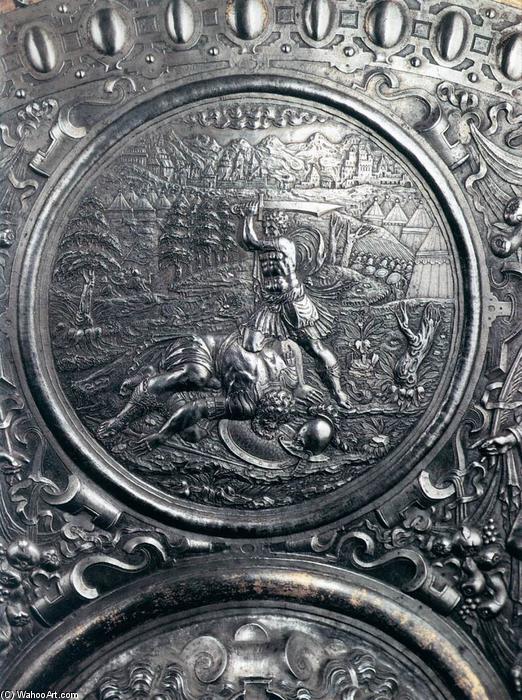
To gaze upon the Shield for Francesco I de' Medici is to step directly into the heart of the Italian Renaissance, where metalwork transcends utility to become high poetry. Created around 1570 by the legendary goldsmith and sculptor Benvenuto Cellini, this breathtaking detail serves as a window into an era of unparalleled opulence and artistic daring. The piece is not merely a defensive object but a theatrical stage rendered in precious metal, capturing a moment of intense human drama. Within its oval frame, a struggle unfolds between a resolute warrior and a fallen foe, a composition that breathes life into the cold surface of the silver and gold alloys. For the discerning collector or interior designer, this work offers more than just visual interest; it provides a profound connection to the Mannerist spirit—a period defined by elegance, tension, and a deliberate departure from the calm stability of the High Renaissance.
The technical virtuosity displayed in this relief is nothing short of miraculous. Cellini, a master of chasing, repoussé, and engraving, utilized these demanding techniques to manipulate light and shadow across the metallic landscape. By hammering the metal from both sides, he achieved a sculptural depth that allows the figures to emerge with startling three-dimensionality. The fine, precise lines defining the anatomy of the combatants and the intricate folds of their armor create a tactile sensation that invites the eye to wander through every crevice. Subtle hints of enamel pigment may have once added vibrant accents to the composition, further elevating the visual complexity. This interplay of light—where polished surfaces catch the glow while deep recesses cast dramatic shadows—creates a dynamic energy that ensures the piece remains captivating from every angle and under any lighting condition.
Symbolism and the Grandeur of the Medici
Beyond its technical brilliance, the shield is steeped in the political and social symbolism of 16th-century Florence. Commissioned to honor the prestige of the Medici family, specifically Francesco I, the work functions as a visual manifesto of power and triumph. The central conflict—the standing warrior poised in victory over a prone figure—mirrors the broader Renaissance themes of struggle, dominance, and the eventual triumph of order over chaos. This narrative of strength was essential for a ruling dynasty seeking to solidify its legitimacy through art. Surrounding this central drama is an exquisite border of organic motifs: flowing scrollwork, delicate floral patterns, and stylized mythical creatures that weave a tapestry of courtly sophistication.
For those looking to integrate such profound historical resonance into a contemporary space, a high-quality reproduction of this masterpiece offers a unique opportunity. The muted metallic palette of silver, grey, and weathered gold integrates seamlessly with both classical and modern aesthetics, providing a sophisticated focal point that evokes a sense of timelessness. Whether placed in a curated gallery setting or used to anchor the design of a luxurious study, the Shield for Francesco I de' Medici brings with it an emotional weight—a reminder of human ambition, the beauty of craftsmanship, and the enduring legacy of one of history's greatest artistic polymaths.