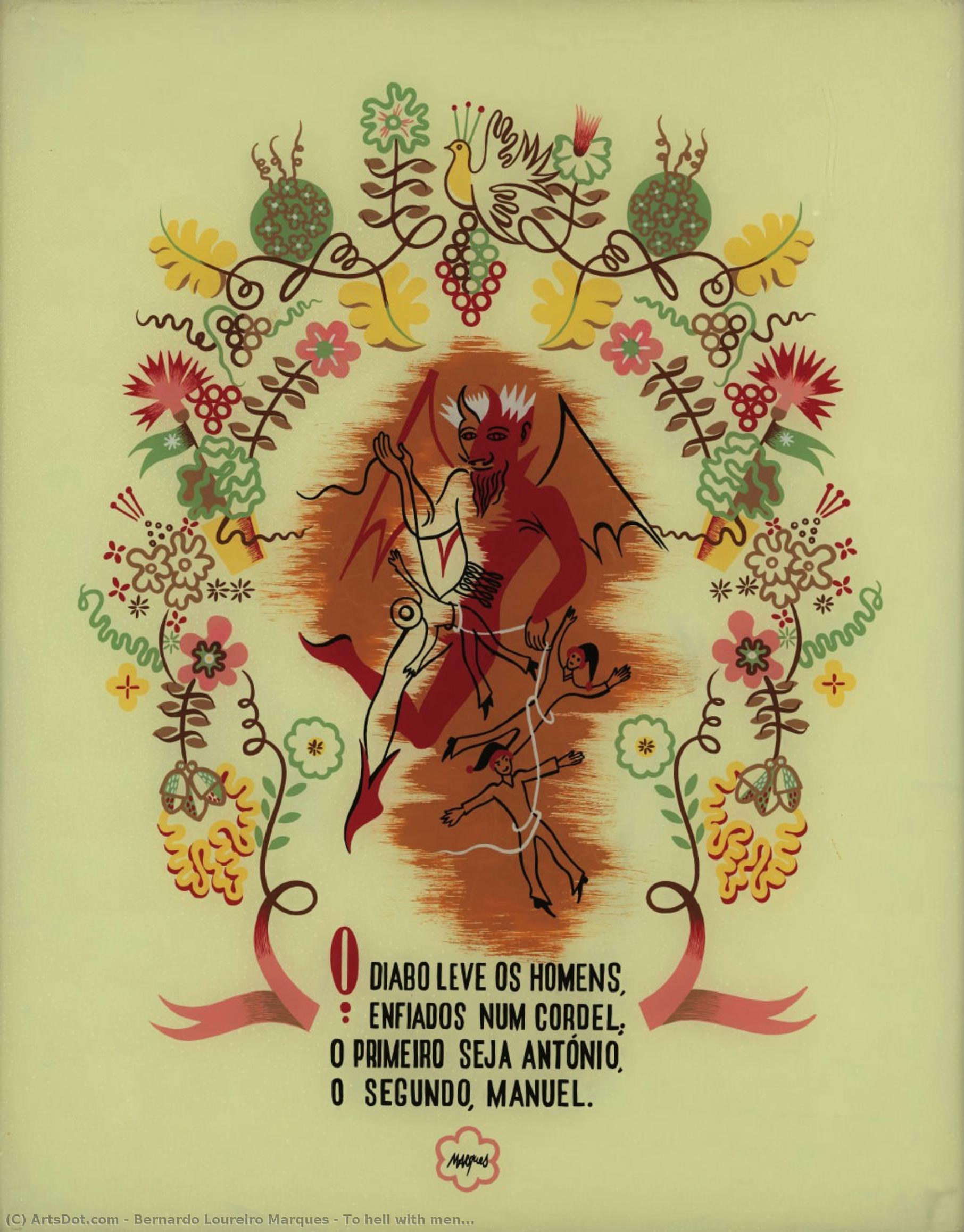
A striking demon figure amidst lush flora defines this 1900 glass painting by Bernardo Loureiro Marques, offering a unique glimpse into Portuguese folk art style for collectors seeking a truly captivating masterpiece.
ベルナルド・ロウレイロ・マルケスの詩的な風景画と、ポルトガルの風刺的なカリカチュア(風刺画)をご覧ください。グラフィックアートから風景画へと進化した彼の軌跡を探る――ポルトガル美術史における重要人物です。
Discover Portugal’s cultural heritage at Lisbon's National Museum of Ethnology! Explore 40,000+ artifacts from Africa, Asia & South America, plus Portuguese folk art. Witness decolonization efforts and diverse exhibits.
Painting on glass, framed, with a pictorial composition allusive to the popular quatrain written in the centre of the bottom half. This painting is part of a set of twelve panels, never displayed at the Popular Art Museum, which may have been commissioned for an exhibition on Portuguese folk art held in Bern during the time António Ferro was ambassador in Switzerland. After his dismissal from SPN these paintings were deposited in the Museum of Popular Art in 1958, together with other materials that were in the possession of António Ferro.Underneath the quatrain is the ex-libris of Bernardo Marques (1898-1962), a painter, illustrator and graphic artist, friend of António Ferro, who was one of the painters-decorators of the Bureau for National Propaganda (Secretariado de Propaganda Nacional - SPN), the department of the dictatorial regime of Estado Novo charged of the organization of the Portuguese pavilions in several international exhibitions held in the 1930s. Bernardo Marque was also part of the team of decorators of the pavilions of the Exhibition of the Portuguese World (1940) and, after its closure, collaborated, from 1943 onwards, in the adaptation of the