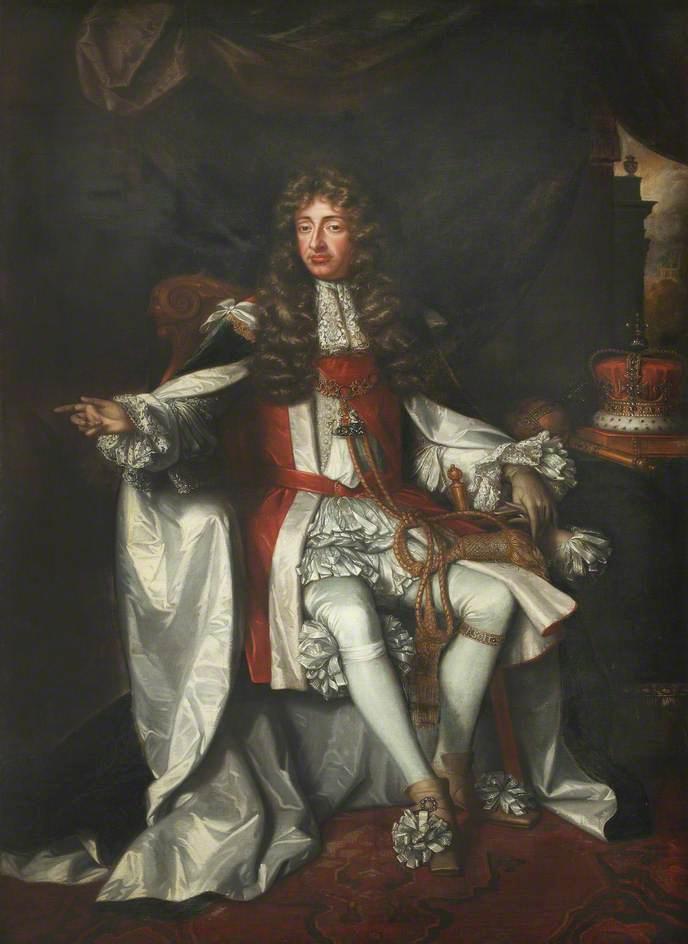
The Regal Presence: James II in the 17th Century
Sir Godfrey Kneller’s “James II” is more than just a royal portrait; it's a meticulously crafted window into the tumultuous political landscape of 17th-century England. Painted around 1680, during the king’s reign marked by religious strife and attempts to reassert Catholic influence, the artwork captures James II not as a triumphant monarch, but as a man grappling with immense pressure and uncertainty. The composition immediately draws the eye to the seated figure – a dignified yet subtly anxious King James, rendered in the rich, formal style characteristic of Kneller’s “kit-cat” portraits. His posture is upright, conveying authority, yet his gaze holds a quiet intensity, hinting at the burdens he carried as the last Catholic monarch of England and Ireland.

A Masterclass in Mannerism: Technique and Detail
Kneller’s skill as a portraitist is immediately evident. The painting exemplifies the Mannerist style, prevalent at the time, characterized by an emphasis on elegance, dramatic lighting, and intricate detail. Note the masterful rendering of James's red wig – a symbol of royal power – meticulously sculpted to capture every strand. The velvet robes, adorned with gold embroidery, speak to his wealth and status, while the subtle folds and textures suggest the weight and richness of the fabric. The artist’s use of chiaroscuro—the dramatic contrast between light and shadow—creates a sense of depth and volume, drawing attention to James's face and hands, which are clasped in a gesture of contemplation. The inclusion of the vase, a common element in aristocratic interiors, adds a touch of decorative elegance, subtly reinforcing the king’s position within a refined social setting.
- Color Palette: Rich reds, deep blues, and gold dominate, reflecting wealth and authority.
- Brushwork: Precise and controlled, showcasing Kneller's technical mastery.
- Composition: Balanced yet dynamic, drawing the viewer’s eye to the central figure.
Symbolism of Power and Peril
Beyond a simple likeness, “James II” is laden with symbolic meaning. The king's posture, while projecting authority, also suggests a degree of restraint – a careful calculation of how to present himself to the increasingly skeptical English Parliament. The vase, often associated with abundance and prosperity, could be interpreted as a subtle reminder of James’s attempts to restore Catholic traditions and revive the fortunes of the Church. However, the overall mood is one of guarded dignity rather than overt confidence. The painting reflects the precariousness of his position, foreshadowing the Glorious Revolution that would soon overturn his rule.
A Legacy of Portraiture: Kneller’s Influence
Sir Godfrey Kneller's “James II” stands as a pivotal work in English portraiture. It exemplifies his innovative approach to capturing the likenesses of prominent figures, particularly through his "kit-cat" portraits—a style that profoundly influenced generations of artists. The painting’s enduring appeal lies not only in its technical brilliance but also in its ability to convey the complex emotions and political realities of a pivotal era. Reproductions of this iconic artwork offer a captivating glimpse into the world of 17th-century England, inviting viewers to contemplate the legacy of James II and the artist who immortalized him.