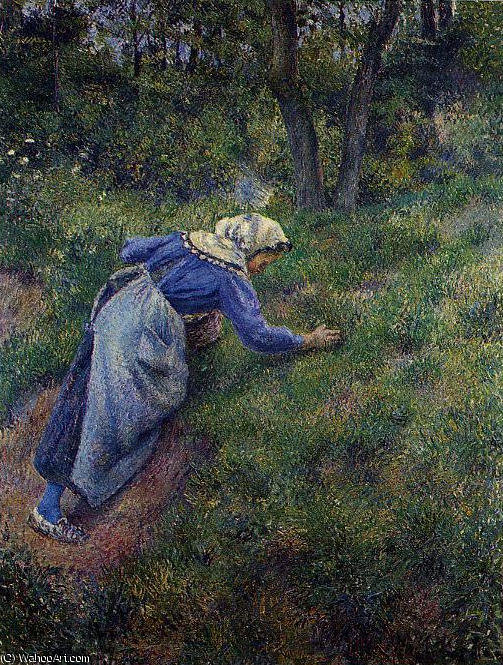
peasant gathering grass.

A serene Impressionist painting by Camille Pissarro depicts a woman gathering grass in a lush field, capturing the peaceful connection with nature and rural life of 1881.


ピサロ (1830 - 1903)

印象派と新印象主義の巨匠、カミーユ・ピサロ。農村風景やパリの日常を捉え、ゴッホやセザンヌにも影響を与えた。光と色彩で表現された作品は、19世紀美術に革新をもたらした。

A Moment of Rural Grace: Camille Pissarro's "Peasant Gathering Grass"

  • Camille Pissarro’s “Peasant Gathering Grass,” painted in 1881, offers a poignant glimpse into the heart of rural life – a scene both familiar and imbued with a quiet dignity. This unassuming work, depicting a woman collecting grasses within a verdant landscape, is a quintessential example of Pissarro's mature style, firmly rooted in Impressionism yet retaining a deep connection to Realist traditions. The painting’s strength lies not in dramatic gesture or grand narrative, but in the meticulous observation and delicate rendering that characterize his later years.
  • The subject matter itself is remarkably simple: a woman, likely a peasant farmer, engaged in a commonplace activity – gathering plants for sustenance or perhaps decorative purposes. This focus on everyday life was a hallmark of Pissarro’s artistic concerns, reflecting his belief in the importance of depicting scenes accessible to all viewers. The woman's posture, subtly conveyed through careful brushwork, suggests a practiced ease and connection with her environment.

Technique and Impressionistic Vision

  • Pissarro’s technique in “Peasant Gathering Grass” is characterized by short, broken brushstrokes – a defining feature of Impressionism. He employed this method not to create photographic realism but rather to capture the fleeting effects of light and atmosphere. The vibrant greens of the field are built up from countless layers of color, creating a shimmering effect that evokes the warmth of the sun and the freshness of the air.
  • Note the subtle modeling of form achieved through variations in tone and texture. Pissarro skillfully uses these techniques to convey the three-dimensionality of the woman’s figure and the surrounding landscape, avoiding any sense of flatness or detachment. The artist's mastery of color and light is particularly evident in the way he depicts the reflections on the grasses and the dappled sunlight filtering through the trees.

Historical Context: Pissarro and the Evolution of Impressionism

  • Painted in 1881, “Peasant Gathering Grass” represents a pivotal moment in Pissarro’s artistic journey. Having initially embraced Realist principles, he gradually evolved towards Impressionism, influenced by artists like Monet and Renoir. This period saw him increasingly focused on capturing the subjective experience of seeing – the way light and color affect our perception of reality.
  • The late 1870s and 1880s were a time of significant change in the art world, with Impressionism challenging the established conventions of the Salon. Pissarro played a crucial role in this movement, advocating for greater artistic freedom and encouraging younger artists to experiment with new techniques. His work reflects this spirit of innovation and his commitment to portraying the beauty of everyday life.

Symbolic Resonance and Emotional Impact

  • Beyond its technical merits, “Peasant Gathering Grass” possesses a quiet symbolic resonance. The scene evokes a sense of harmony between humanity and nature – a theme that was central to Pissarro’s artistic vision. The woman's solitary activity suggests a connection to the land and a respect for traditional ways of life.
  • The painting’s overall atmosphere is one of peacefulness and serenity, inviting viewers to contemplate the simple pleasures of rural existence. It’s a reminder that beauty can be found in the most unassuming subjects, and that true art lies in capturing not just what we see, but how we feel about it. This reproduction offers an opportunity to bring this timeless scene into your home, adding a touch of rustic charm and Impressionistic elegance.