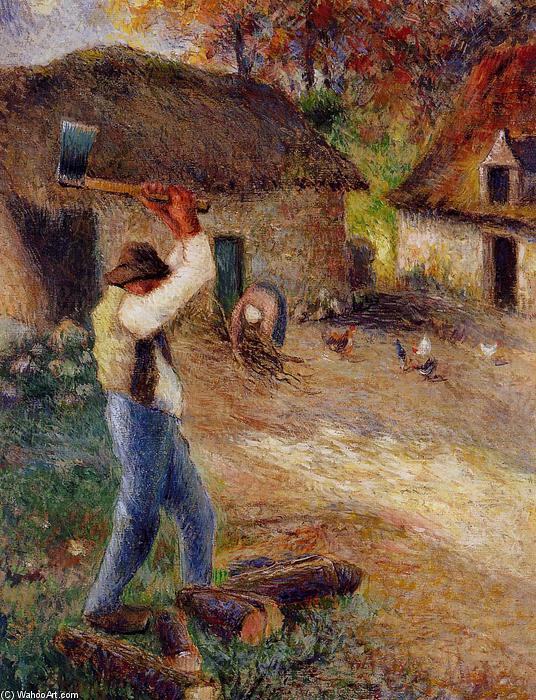
A Moment Frozen in Impressionistic Light
“Pere Melon Cutting Wood,” painted by Camille Pissarro in 1880, is more than just a depiction of rural labor; it’s an embodiment of the Impressionist ethos—a fervent desire to capture fleeting impressions of everyday life and the transformative power of natural light. This oil on canvas masterpiece transports us back to a pivotal moment in art history, where artists like Pissarro rejected academic conventions in favor of spontaneous observation and vibrant color palettes.
The Essence of Impressionism: Technique and Style
Pissarro’s masterful brushstrokes exemplify the core principles of Impressionism. Rather than meticulously blending colors to achieve photorealistic accuracy—a hallmark of earlier artistic movements—he employed a technique characterized by visible, textured marks that convey movement and atmosphere. The dappled hues of green, brown, and yellow shimmer across the canvas, mirroring the sunlight filtering through the foliage and illuminating the woodcutter’s hut. This deliberate disregard for traditional blending allows viewers to experience the immediacy of the scene, fostering a visceral connection with its environment.
Historical Context: Impressionism's Bold Rebellion
Painted during the eighth Impressionist exhibition in Paris—a landmark event that solidified the movement’s reputation—“Pere Melon Cutting Wood” reflects the broader societal anxieties and aspirations of the era. The Industrial Revolution was reshaping Europe, yet artists like Pissarro sought solace and inspiration in the tranquility of the countryside. This painting speaks to a yearning for authenticity and connection with nature, countering the sterile grandeur of neoclassical art.
Symbolism Within Simplicity: Observing Nature's Rhythm
Beyond its technical brilliance, “Pere Melon Cutting Wood” carries subtle symbolic weight. The woodcutter’s task—a fundamental element of rural life—represents perseverance and resilience. Simultaneously, the presence of birds symbolizes freedom and vitality, harmoniously interwoven with the earthy tones of the landscape. These elements collectively convey a profound appreciation for the cyclical rhythms of nature and the beauty found in ordinary activities.
Emotional Resonance: Capturing Transient Beauty
Ultimately, “Pere Melon Cutting Wood” succeeds in evoking a powerful emotional response. The painting’s serene composition invites contemplation, prompting viewers to consider themes of labor, tradition, and the sublime grandeur of the natural world. Like all great Impressionist works, it captures a fleeting moment—a single afternoon bathed in sunlight—transforming it into an enduring symbol of beauty and tranquility. It's a piece that resonates with collectors and interior designers alike who appreciate art’s ability to transcend time and inspire awe.