A Moment Frozen in Light: The Soul of Pissarro’s Labor
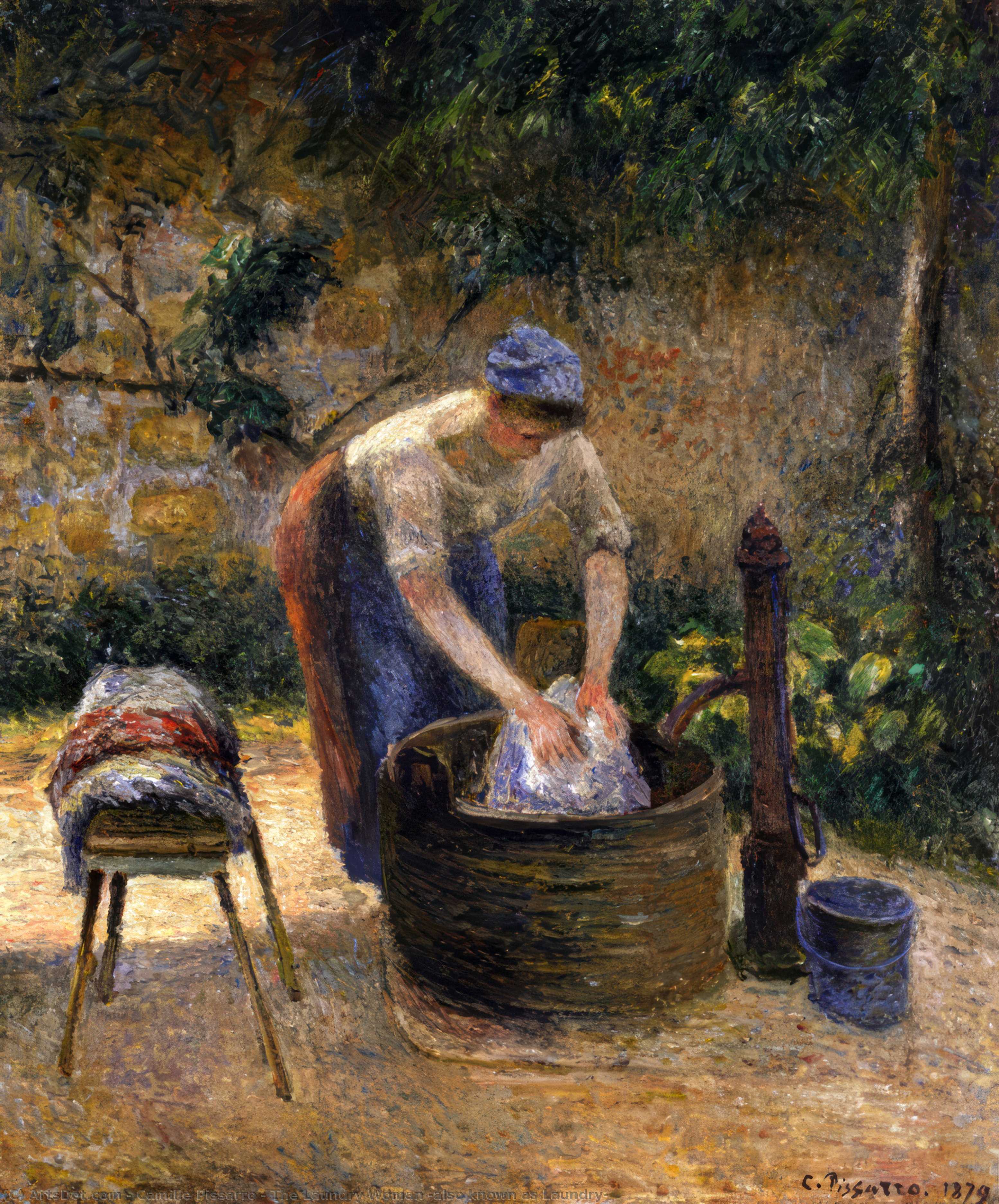
In the quiet corners of art history, few works capture the profound dignity of the everyday as tenderly as Camille Pissarro’s 1879 masterpiece, The Laundry Woman. This is not merely a depiction of domestic toil; it is an exquisitely rendered snapshot of Impressionist philosophy itself. As we gaze upon this unassuming scene, we find ourselves transported to a sun-dappled outdoor setting where the rhythmic pulse of rural life beats steadily. A woman, lost in the meditative cadence of her task, bends over a large wooden tub, her form integrated seamlessly into the landscape. Through Pissarro’s eyes, the act of washing clothes becomes a sacred ritual, a moment where the mundane is elevated to the level of the sublime.
The painting serves as a breathtaking testament to the Impressionist revolution, a period when artists began to abandon the rigid, polished perfection of academic tradition in favor of capturing the ephemeral. Pissarro, a foundational pillar of this movement, utilizes a technique characterized by loose, visible brushstrokes that do not merely sit upon the canvas but seem to vibrate with life. He masterfully manipulates oil paint to mimic the way sunlight filters through foliage, casting dancing shadows and soft highlights across the woman’s white blouse and blue headscarf. By blending colors directly on the canvas, Pissarro achieves a sense of immediacy, inviting the viewer to feel the warmth of the afternoon sun and the dampness of the air.
Harmony in Simplicity and Symbolism
Beyond its technical brilliance, the composition of The Laundry Woman is a study in balanced harmony. The large wooden tub acts as the gravitational center of the piece, anchoring the viewer's gaze and serving as a tangible symbol of the cyclical nature of life and labor. Surrounding this focal point, Pissarro carefully places elements that ground the scene in domesticity—a simple wooden chair and a pair of bowls—while a subtle potted plant introduces an organic grace that mirrors the growth of the natural world. This careful arrangement creates a sense of equilibrium, where every element, from the dirt beneath the woman's feet to the distant trees, contributes to a unified, tranquil tableau.
For the discerning collector or interior designer, this artwork offers more than just visual beauty; it provides an emotional sanctuary. The color palette, dominated by earthy tones punctuated by delicate blues and greens, evokes a sense of groundedness and peace. It is a piece that breathes life into a room, offering a window into a slower, more intentional era. Whether placed in a sunlit gallery or as a focal point in a sophisticated living space, The Laundry Woman continues to resonate with anyone who finds beauty in the quiet, honest moments of existence. It remains an enduring invitation to contemplate the profound elegance found within the simplest of human endeavors.