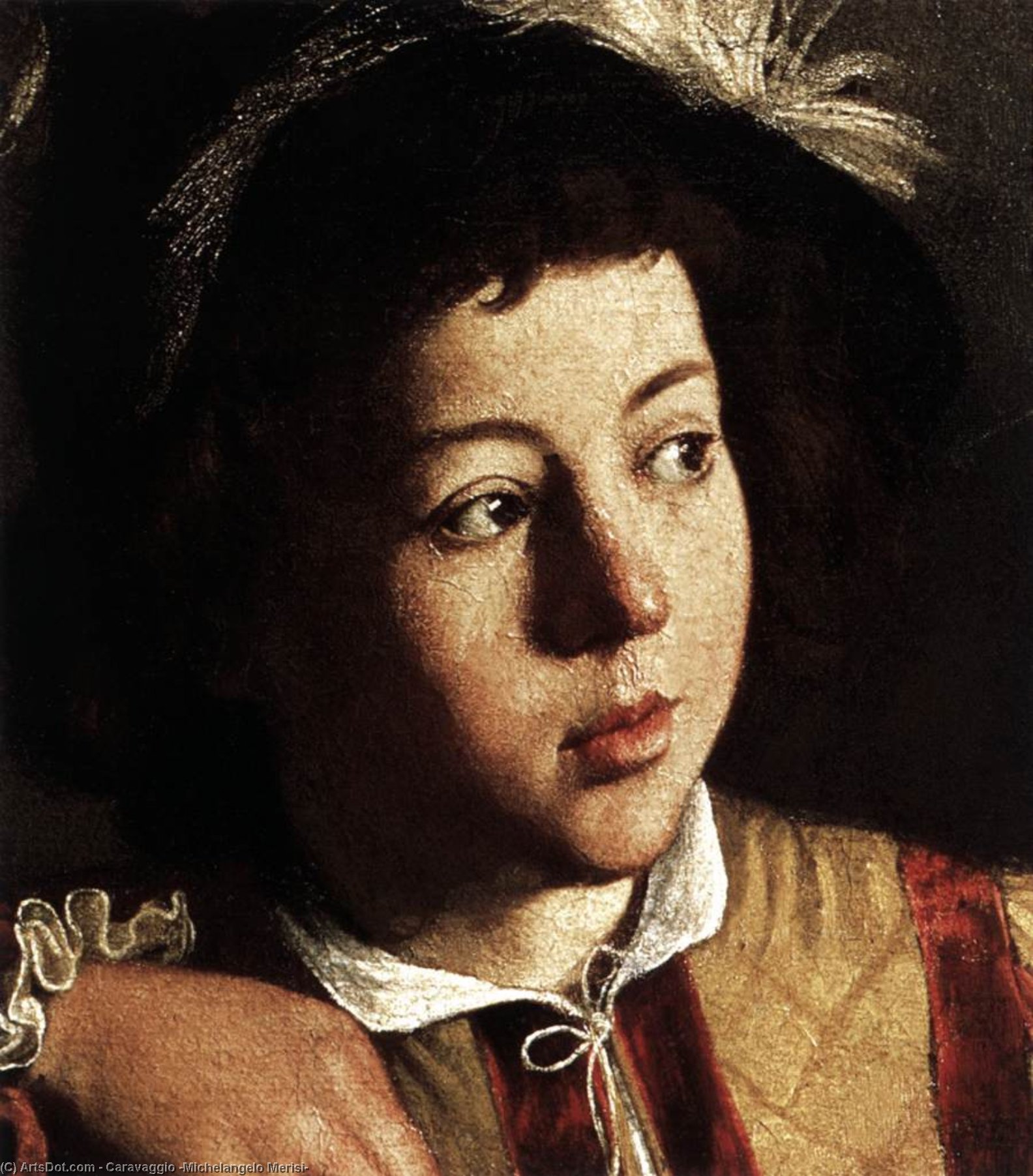
The Calling of Saint Matthew: A Baroque Masterpiece
- Title: The Calling of Saint Matthew (detail) (17)
- Artist: Michelangelo Merisi da Caravaggio
- Date: 1599-1600
- Medium: Oil on Canvas
Caravaggio's "The Calling of Saint Matthew" is a pivotal work within the Contarelli Chapel in San Luigi dei Francesi, Rome. This painting dramatically depicts the moment Jesus Christ calls Levi (later known as Saint Matthew) to become one of his apostles. It marks a significant shift from Mannerism towards the Baroque style, influencing generations of artists with its innovative use of light and shadow.
Composition, Technique & The Power of Chiaroscuro
The painting's composition is striking in its realism and immediacy. Jesus, barely visible on the right side of the canvas, extends his hand towards Matthew, who sits amidst a group of tax collectors counting money. Matthew’s surprised reaction – his hand gesturing towards himself as if questioning the divine call – captures a moment of profound spiritual awakening. Caravaggio's masterful technique lies in his use of chiaroscuro, the dramatic contrast between light and dark. A single, unseen source illuminates key figures, highlighting their expressions and gestures while plunging other areas into deep shadow. This creates a powerful sense of drama and focuses the viewer’s attention on the central narrative.
Historical Context & Artistic Innovation
Painted during the Counter-Reformation, "The Calling of Saint Matthew" reflects the Catholic Church's desire to engage with ordinary people through art. Caravaggio broke from artistic conventions by depicting biblical scenes with everyday realism. He used common people as models, eschewing idealized figures and portraying them with raw emotion and physical detail. This approach brought a new level of humanity and accessibility to religious art. The inclusion of a self-portrait in the painting (believed to be among the figures on the left) further blurs the lines between observer and participant, drawing the viewer into the scene.
Symbolism & Emotional Impact
The symbolism within the painting is rich and layered. The light emanating from Christ represents divine grace and revelation. The money being counted by Matthew and his colleagues symbolizes worldly possessions and the distractions of earthly life. The contrast between the darkness surrounding them and the illuminating light signifies the choice between a life devoted to material wealth and one dedicated to spiritual devotion. Emotionally, the painting evokes a sense of surprise, doubt, and ultimately, potential transformation. Matthew’s hesitant gesture invites viewers to contemplate their own responses to divine calling and the challenges of leaving behind familiar comforts for a higher purpose.