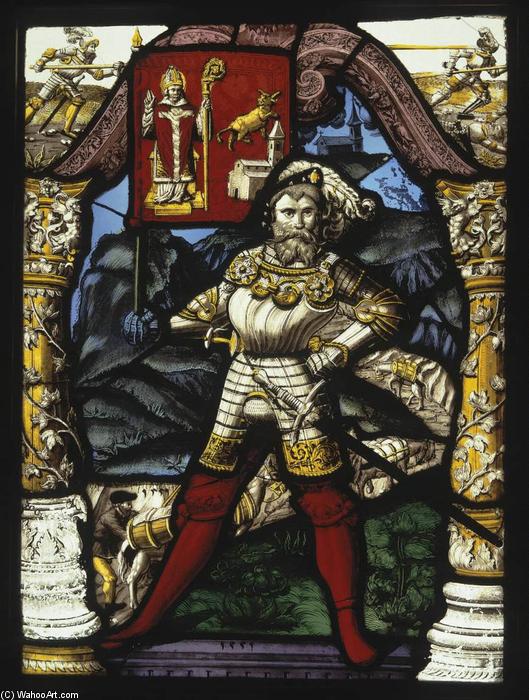
The
Stained-Glass Panel by
Carl Von Egeri is a stunning example of medieval artistry, showcasing the skill and craftsmanship of stained-glass artists from the 16th century. This beautiful panel, measuring 43 x 22 cm, is made of glass and dates back to 1551. It is currently housed in the
The Hermitage museum in St. Petersburg, Russia.
Artistic Style and Symbolism
The
Stained-Glass Panel features a knight in armor, standing against a backdrop of architectural elements such as columns and arches. The colors used are vibrant, with reds, blues, yellows, and greens, typical of stained-glass artistry from the Gothic or Renaissance periods. The panel also includes a red shield bearing a coat of arms, featuring a lion rampant and a castle or fortress. Above this shield is an image of a bishop in full regalia, indicating a religious figure of high rank.
Key Features of the
Stained-Glass Panel include:
- Intricate details such as reflections on the armor and textures of fabrics worn by the bishop
- Vibrant colors used in the stained-glass design
- Symbols of chivalry, religion, and power within medieval society
Artistic Context and Significance
The
Stained-Glass Panel is a significant example of medieval artistry, reflecting the cultural and historical context of 16th-century Europe. For more information on similar artworks, visit
Carl Von Egeri: Stained-Glass Panel or explore other works by artists such as
Hubert Robert and
Mattia Preti on
ArtsDot.com.
To learn more about the
The Hermitage museum, visit their page on
ArtsDot.com.
For handmade oil painting reproductions of famous artworks, including those by
Ilya Robe, visit
ArtsDot.com.