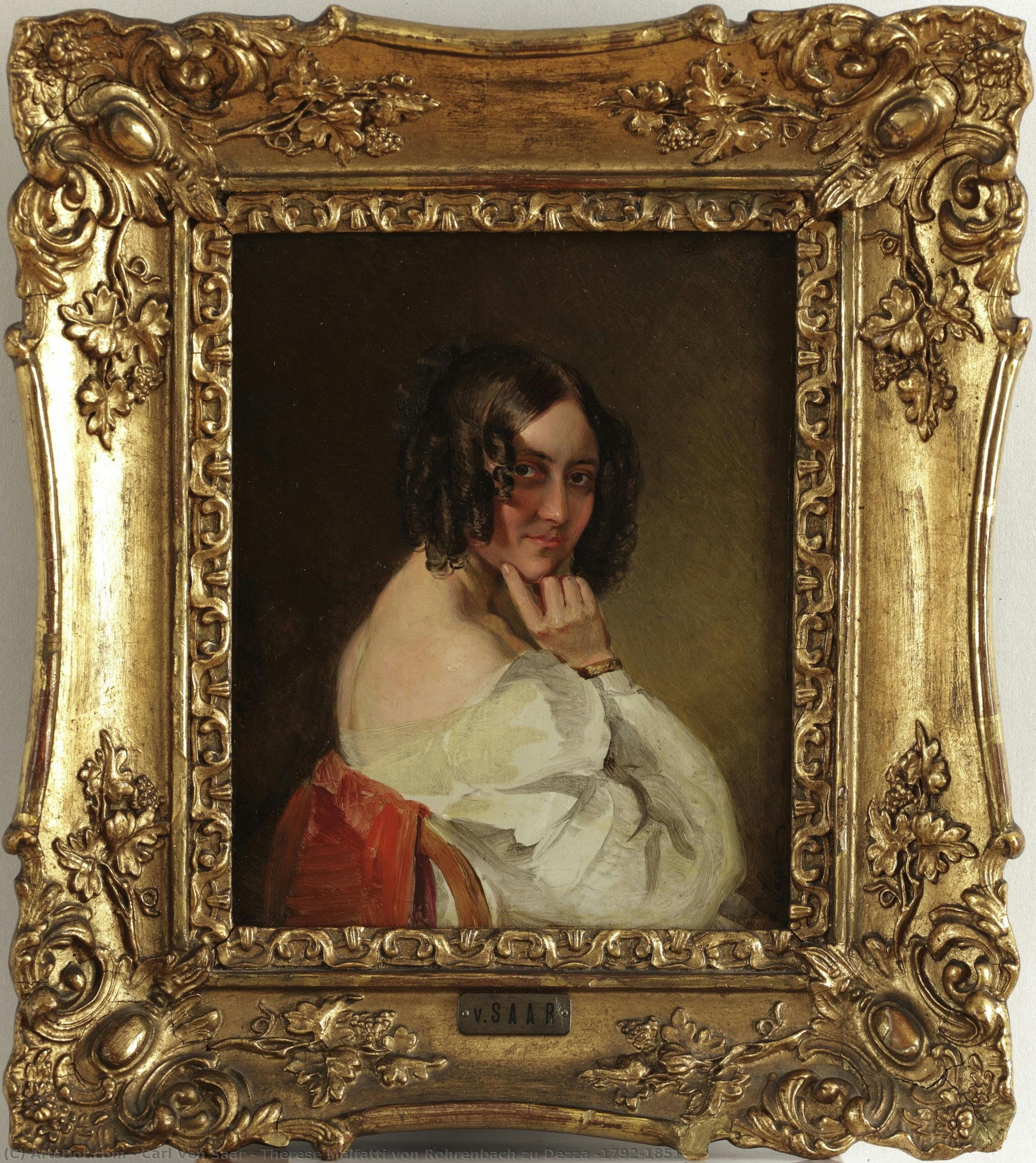
Therese Malfatti von Rohrenbach zu Dezza (1792-1851): A Portrait Steeped in Beethovenian Reverie
Carl von Saar’s depiction of Therese Malfatti, painted in 1834, transcends mere likeness; it embodies a poignant moment captured within the orbit of Ludwig van Beethoven's life. This exquisite miniature portrait resides at Bonn’s Beethoven Haus, offering visitors a glimpse into the artistic milieu that nurtured both composer and subject.
- Subject Matter: The painting portrays Therese Malfatti, niece to Johann Baptist Malfatti—a physician renowned for his humanitarian endeavors—and a woman deeply admired by Beethoven himself. Their friendship blossomed around 1808, fueled by shared intellectual curiosity and culminating in Beethoven’s audacious proposal of marriage.
- Style: Saar's signature style is characterized by its meticulous realism combined with an understated elegance typical of Viennese portraiture during the Romantic era. He prioritized capturing subtle nuances of expression—a downward gaze, a hint of serenity—to convey Therese’s inner state.
Technique: Saar employed oil paint on canvas, utilizing delicate brushstrokes to achieve remarkable tonal gradation and textural detail. The artist skillfully rendered the luminous quality of Therese's skin tone and the subtle sheen of her dress fabric, demonstrating mastery over chiaroscuro—the interplay between light and shadow—a technique favored by Romantic painters.
Historical Context: Painted against the backdrop of Beethoven’s turbulent personal life and artistic breakthroughs, the portrait reflects the broader cultural currents of its time. The Romantic movement championed emotion and individualism, influencing Saar's approach to portraying human subjects with sensitivity and psychological depth. It speaks to a fascination with beauty and melancholy—themes prevalent in Beethoven’s compositions.
Symbolism: Beyond capturing Therese’s physical appearance, Saar subtly imbued the painting with symbolic resonance. The downward gaze suggests introspection and contemplation, mirroring Beethoven's own preoccupation with profound philosophical questions. Furthermore, the ornate frame—featuring gilded accents—underscores the portrait’s status as a treasured heirloom, symbolizing enduring admiration and artistic legacy.
Emotional Impact: Viewing Saar’s Therese Malfatti is an exercise in empathetic observation. The painting evokes feelings of quiet grace, wistful longing, and perhaps even unspoken affection—capturing the essence of Beethovenian reverie and reminding us that art possesses the power to transcend time, conveying emotions that endure across generations.
- Provenance: Currently housed at Bonn’s Beethoven Haus, this portrait exemplifies Saar's dedication to documenting artistic circles of his era.
Saar’s Therese Malfatti stands as a testament to the Romantic ideal—a celebration of beauty intertwined with psychological insight. It invites contemplation and inspires appreciation for the enduring power of art to illuminate the human spirit.