St Mary Magdalene: A Florentine Piety in Oil
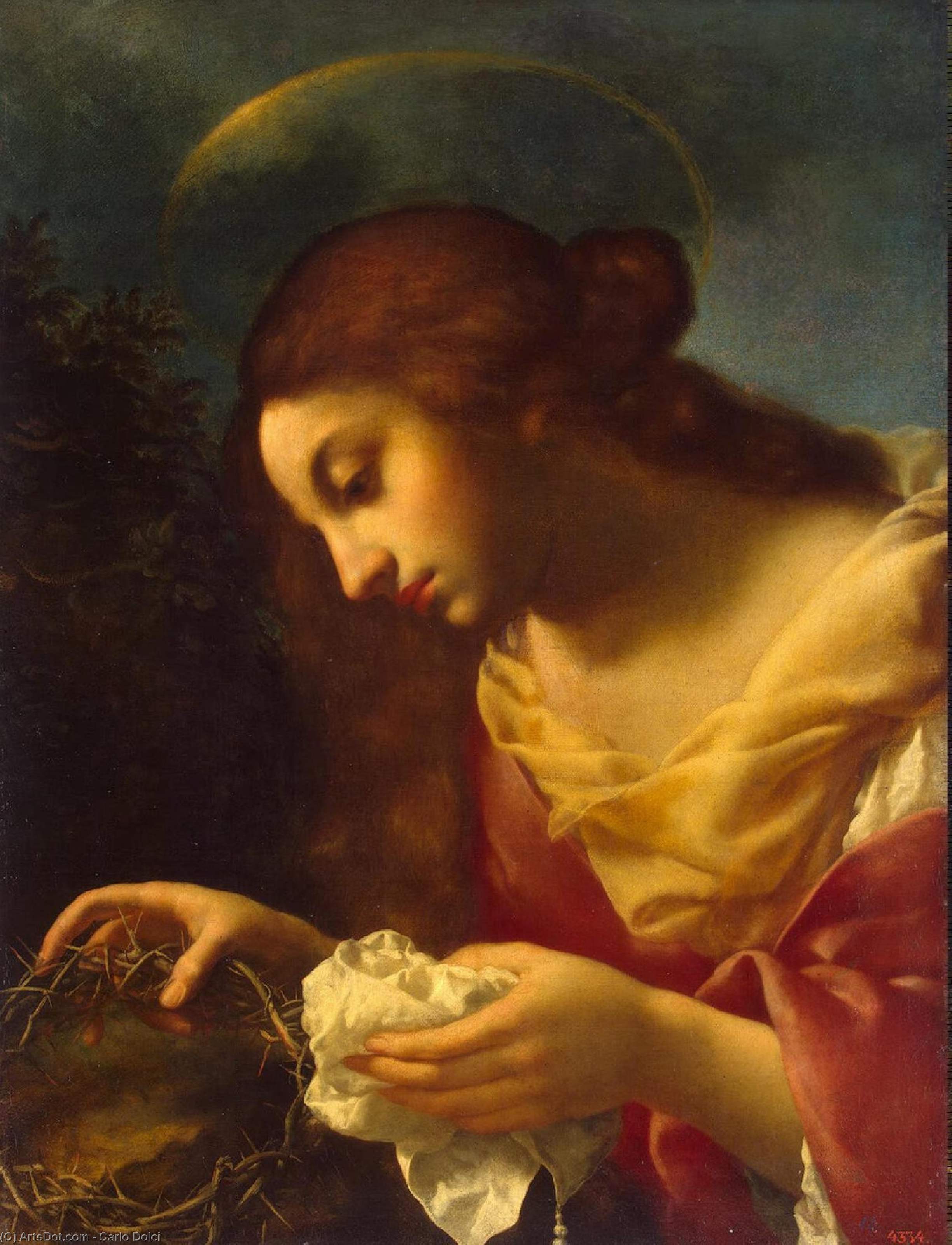
Carlo Dolci’s “St Mary Magdalene,” painted in 1644, is not merely a portrait; it's an immersion into the profound devotional atmosphere of late Mannerism and early Baroque Florence. This intimate depiction of the biblical figure transcends simple representation, offering instead a glimpse into the artist’s deeply felt spirituality and his mastery of subtle color and meticulous detail. The painting, measuring 74 x 57 cm, resides within a quiet space of contemplative beauty, inviting viewers to contemplate themes of repentance, grace, and the transformative power of faith.
Dolci, a Florentine artist known for his unwavering commitment to religious subjects, eschewed the grandiosity favored by many of his contemporaries. Instead, he cultivated a style characterized by quiet intensity and an almost obsessive attention to detail. His work is often small in scale, reflecting a deliberate choice to focus on intimate emotional experiences rather than dramatic narratives. The composition itself is remarkably restrained – Mary Magdalene sits before a simple tree, its branches reaching upwards as if towards the divine, while her hand gently holds a cloth, a gesture both humble and symbolic of her past.
The Artist’s Hand: Technique and Style
Dolci's technique is immediately striking. He employs a layered approach to paint application, building up color with delicate glazes that create an astonishing sense of luminosity and depth. The flesh tones are particularly noteworthy – not rendered in the vibrant hues of later Baroque painters, but rather in muted, almost ivory-like shades, conveying a sense of fragility and vulnerability. The artist’s brushwork is incredibly fine, creating textures that range from the smooth sheen of her garments to the rough bark of the tree. This meticulous attention to detail speaks volumes about Dolci's dedication to his craft and his desire to capture not just the likeness of Mary Magdalene, but also the essence of her spiritual journey.
The painting’s palette is predominantly cool – blues, greens, and browns dominate, creating a sense of serenity and introspection. However, subtle touches of warmer colors—a hint of red in her garment, a golden glow around her face—suggest a glimmer of hope and redemption. The background, rendered with remarkable restraint, serves to emphasize the central figure without distracting from her profound expression.
Symbolism and Context
“St Mary Magdalene” is deeply rooted in the religious and cultural context of 17th-century Florence. Dolci’s work reflects the prevailing piety of the era, a period marked by intense spiritual fervor and a renewed interest in biblical narratives. The tree itself holds symbolic significance – representing life, growth, and connection to the divine. Mary Magdalene's gesture of holding the cloth is laden with meaning; it alludes to her past as a repentant prostitute, but also signifies her transformation through faith and her role as a witness to Christ’s resurrection.
Dolci was part of a tradition that emphasized the interior life of the soul. His paintings are not intended to be visually spectacular, but rather to evoke a sense of contemplation and spiritual awakening. The painting's quiet intimacy invites viewers to reflect on themes of forgiveness, redemption, and the enduring power of faith – concepts central to Dolci’s artistic vision.
A Timeless Reflection
“St Mary Magdalene” is more than just a beautiful painting; it’s a testament to the artist's profound spirituality and his mastery of technique. Its quiet intensity, subtle color palette, and evocative symbolism continue to resonate with viewers today, offering a glimpse into the heart of Florentine piety and the enduring power of faith. Reproductions of this work capture much of its original beauty and emotional depth, making it an ideal addition to any collection or interior space seeking a touch of contemplative grace.