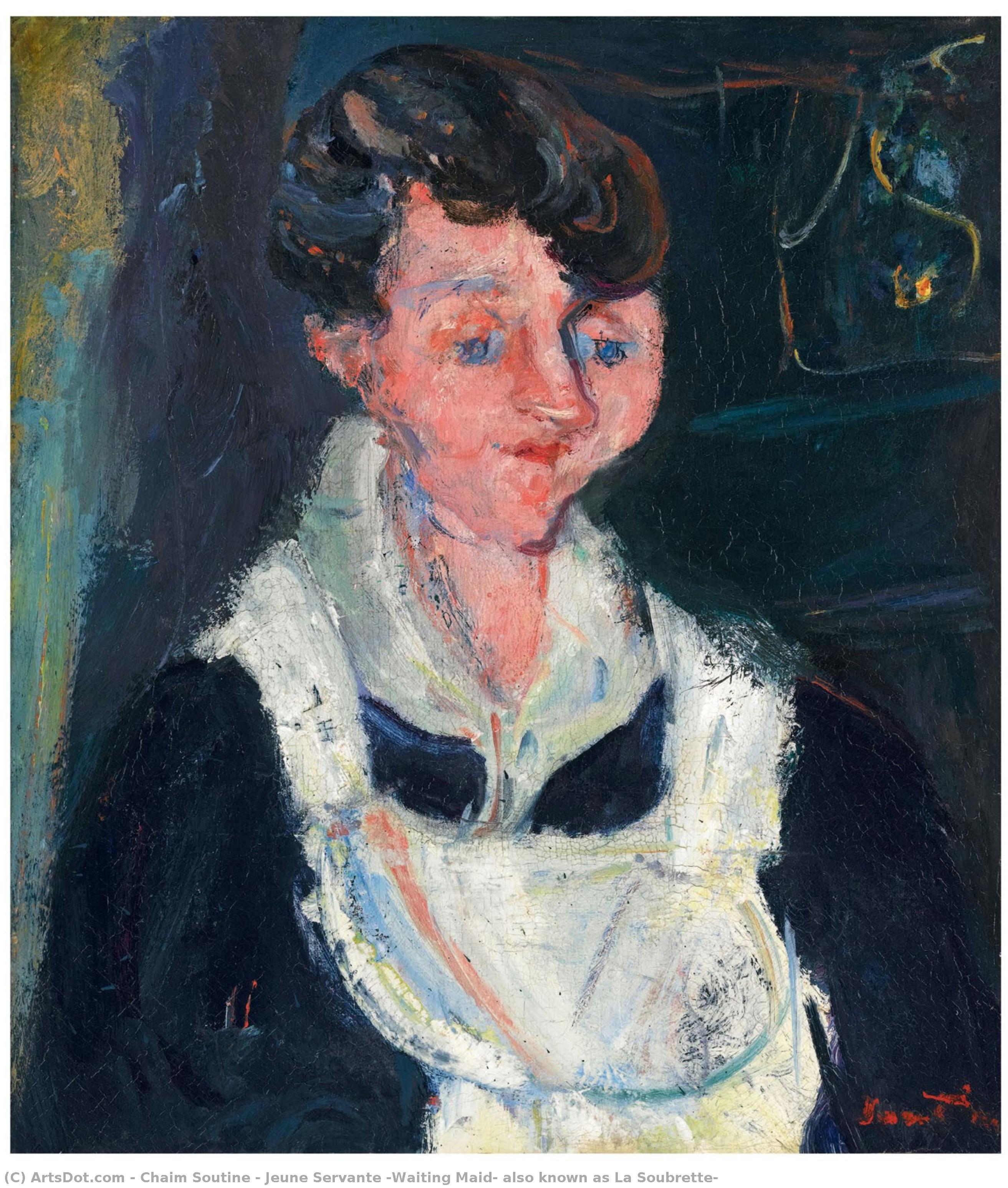
Chaim Soutine’s ‘Jeune Servante’: A Portrait of Quiet Intensity
Chaim Soutine's “Jeune Servante” (Waiting Maid, also known as La Soubrette) is a powerfully evocative work that encapsulates the artist’s singular approach to figuration. Painted in 1933, this seemingly simple depiction of a young servant girl reveals layers of psychological depth and technical mastery, hallmarks of Soutine's oeuvre. The painting immediately arrests the viewer with its raw emotionality – a direct gaze from the subject, coupled with an almost palpable sense of unease. This is not a portrait intended for polite society; it’s a glimpse into a private moment, pregnant with unspoken anxieties and perhaps even a hint of melancholy.
- Subject & Composition: The central figure, rendered in meticulous detail, dominates the canvas. Her posture, slightly turned towards the viewer, creates an immediate connection, while her averted gaze suggests introspection or perhaps a guarded vulnerability. The unadorned doorway behind her serves not as a mere backdrop but as a symbolic threshold – a transition, a waiting, a potential escape.
- Color & Texture: Soutine’s signature impasto technique is on full display here. Thick, almost sculptural brushstrokes build up the surface of the canvas, creating a tactile experience for the viewer and imbuing the figure with an unsettling physicality. The muted palette – dominated by browns, ochres, and blacks – contributes to the painting's somber mood, further emphasizing the subject’s isolation.
A Painter Forged in Turmoil
Understanding “Jeune Servante” requires acknowledging the context of Chaim Soutine’s life and artistic development. Born in 1894 in Smilovichi, Russia, Soutine's early years were marked by hardship and religious constraints – experiences that profoundly shaped his worldview and ultimately informed his art. His formal training in Vilna provided a foundation, but it was his move to Paris in 1913 that truly liberated him. Within the bustling artistic environment of the city, Soutine resisted prevailing trends, developing a highly personal style characterized by distorted forms, expressive brushwork, and an intense emotional charge. This painting exemplifies this approach perfectly – a deliberate departure from academic realism, prioritizing feeling over precise representation.
Historical Context: “Jeune Servante” was created during a period of significant artistic experimentation in Europe. While Cubism and Futurism dominated the art world, Soutine remained steadfastly committed to his own vision, anticipating later developments in Expressionism with his focus on subjective emotion and psychological intensity. The painting’s appearance at the 1938 “Tragic Painters” exhibition – a show designed to highlight the work of emotionally charged artists – further cemented its place within this artistic movement.
Symbolic Layers & Emotional Resonance
Beyond its technical brilliance, "Jeune Servante" is rich in symbolic potential. The ‘servant girl’ archetype itself carries connotations of vulnerability, subservience, and perhaps even a yearning for freedom. The doorway represents not just a physical space but also the possibility of change or escape – a theme frequently explored by Soutine. The painting's emotional impact stems from its ability to evoke a sense of quiet desperation, inviting viewers to contemplate themes of isolation, longing, and the human condition. It’s a portrait that doesn’t offer easy answers; instead, it presents a complex and ambiguous image that lingers in the mind long after viewing.
- Symbolism: The waiting posture suggests anticipation, but also uncertainty and perhaps even dread.
- Emotional Impact: The painting's raw emotion and unsettling composition create a powerful and memorable experience for the viewer.