A Celestial Decree: The Grandeur of Meynier’s Allegorical Vision
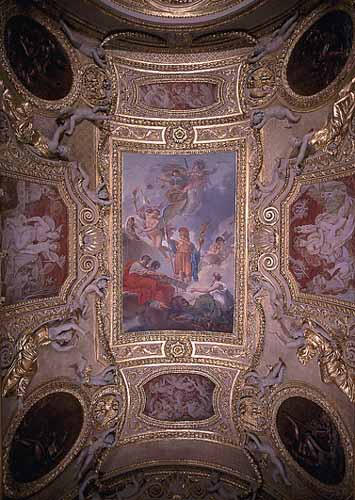
In the hallowed halls of the Louvre Museum, specifically within the sanctuary of Roman antiquities, resides a masterpiece that transcends mere paint and canvas to become a window into the soul of classical virtue. Charles Meynier’s monumental ceiling painting, La Terre recevant des empereurs Adrien et Justinien le code des lois romaines dictées par la nature, la justice et la sagesse, is not simply an ornament; it is a profound philosophical treatise rendered in vibrant oil. Executed between 1802 and 1803, this work captures a moment of divine transmission, where the earthly realm meets the eternal principles of law. The composition breathes with a sense of cosmic order, inviting the viewer to look upward and contemplate the very foundations of civilization.
The scene unfolds with breathtaking dramatic intensity, as the Roman emperors Hadrian and Justinian are depicted receiving the sacred scroll of Roman law. Meynier masterfully orchestrates a tableau where the figures of Nature, Justice, and Wisdom descend to bestow knowledge upon the rulers of the past. There is an undeniable emotional gravity in the way the emperors receive this weight of responsibility; their postures reflect both the heavy burden of governance and the enlightened grace of receiving divine guidance. For the discerning collector or interior designer, this piece offers more than visual splendor—it provides a focal point of intellectual depth, making it an ideal centerpiece for spaces dedicated to reflection, prestige, and the celebration of heritage.
The Alchemy of Neoclassical Mastery
Technically, Meynier demonstrates a virtuosity that bridges the gap between the emotive drama of the Baroque period and the disciplined clarity of Neoclassicism. The artist employs a sophisticated application of oil paint to manipulate light, creating a chiaroscuro effect that lends a sculptural three-dimensionality to the figures. As the eye wanders across the ceiling, one is struck by the opulent use of gold leaf and the rich, imperial purples that drape the emperors. This meticulous attention to texture—from the soft, billowing clouds in a cerulean sky to the heavy, intricate folds of royal drapery—creates a sensory experience that feels both tactile and ethereal.
The surrounding architectural ornamentation, characterized by swirling floral motifs and mythological reliefs, works in perfect harmony with the central painting. The gilded frames and intricate patterns do not merely surround the art; they elevate it, creating an immersive environment of luxury. This seamless integration of painting and decorative arts makes a high-quality reproduction of this work an extraordinary choice for grand interiors. It possesses the unique ability to transform a room, infusing it with the architectural dignity of a palace and the sophisticated atmosphere of a historical gallery.
A Legacy of Wisdom and Power
Beyond its aesthetic brilliance, the painting serves as a powerful symbol of legitimacy and moral authority. By depicting Hadrian and Justinien—emperors synonymous with the codification of law—Meynier aligns the political ideals of his era with the timeless virtues of antiquity. The symbolism is layered and profound: Wisdom represents the light of enlightenment, while Justice ensures the stability of the state, all under the watchful eye of Nature herself. This narrative of continuity and the pursuit of truth resonates deeply in any setting, offering a sense of permanence and wisdom.
To possess a reproduction of such a significant work is to invite a piece of history into one's personal sanctuary. It is an investment in an aesthetic that celebrates the triumph of reason over chaos and the enduring beauty of classical ideals. Whether adorning a study, a grand salon, or a curated library, Meynier’s masterpiece continues to inspire awe, serving as a testament to the era when art was used to bridge the gap between the mortal and the divine.