The Majesty of a Queen: Christian Daniel Rauch’s Seated Victoria
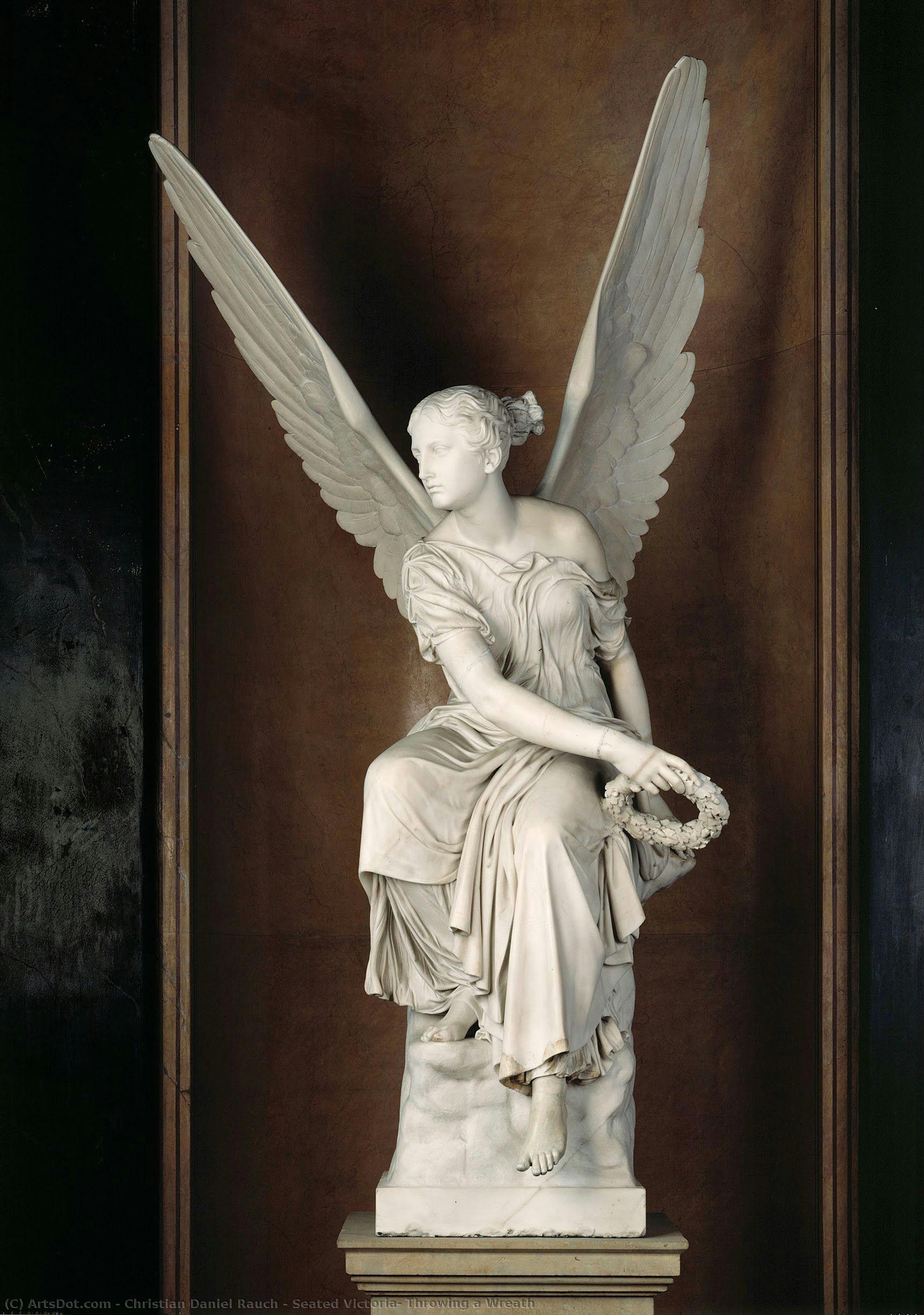
Christian Daniel Rauch's "Seated Victoria, Throwing a Wreath" is more than just a sculpture; it’s a potent distillation of 19th-century Neoclassical ideals and the burgeoning romantic fascination with historical grandeur. Completed in 1836-1845, this remarkable marble figure embodies the spirit of Queen Victoria herself, yet transcends mere portraiture to become an allegorical representation of power, victory, and the enduring legacy of a nation. Rauch’s masterful handling of form and drapery imbues the statue with a palpable sense of movement – as if Victoria is poised mid-gesture, about to bestow her laurel wreath upon an unseen victor.

Neoclassical Roots and Berlin’s Artistic Renaissance
Rauch's work is inextricably linked to the artistic fervor of early 19th-century Berlin. Following the Napoleonic Wars, the city became a vibrant center for sculpture, fueled by royal patronage and a desire to establish a distinctly German artistic identity. Rauch, born in Arolsen, Germany, rose from humble beginnings – his father’s position at the Hessian court providing an initial foothold – to become arguably the most celebrated sculptor of his era. His training under Valentin and Ruhl instilled in him a rigorous understanding of classical forms, which he then skillfully adapted to contemporary subject matter. “Seated Victoria” exemplifies this synthesis: it's rooted in the idealized beauty of ancient Greek sculpture while simultaneously reflecting the political and social realities of Victorian Britain.
- Neoclassical Influence: The statue’s balanced composition, flowing drapery, and emphasis on idealized beauty are hallmarks of Neoclassicism.
- Berlin School: Rauch was a key figure in the Berlin school of sculpture, which sought to establish a distinct German artistic tradition.
- Royal Patronage: The work benefited from significant support from the Prussian monarchy, reflecting the era’s emphasis on art as a tool for projecting power and prestige.
Symbolism Woven into Marble
Beyond its portraiture of Queen Victoria, the sculpture is rich in symbolic meaning. The wreath itself represents victory, honor, and imperial dominion – a tangible reward bestowed upon those who have triumphed. Victoria’s pose—seated with one hand outstretched to offer the wreath—suggests generosity, leadership, and a commitment to nurturing her nation's success. Her wings, subtly integrated into the drapery, elevate her beyond earthly concerns, associating her with divine authority and timeless grace. The statue’s placement within a formal setting – often interpreted as a gallery or museum – further emphasizes its role as a monument to historical significance.
A Legacy of Grace and Power
"Seated Victoria, Throwing a Wreath" remains a powerful testament to Rauch's artistic skill and his profound understanding of the human condition. It’s a work that speaks to themes of leadership, legacy, and the enduring allure of classical ideals. Today, reproductions offer an accessible way to experience the beauty and symbolism of this iconic sculpture, bringing its regal presence into homes and spaces where it can inspire contemplation and admiration. Its timeless quality ensures that Victoria's image continues to resonate with viewers across generations.