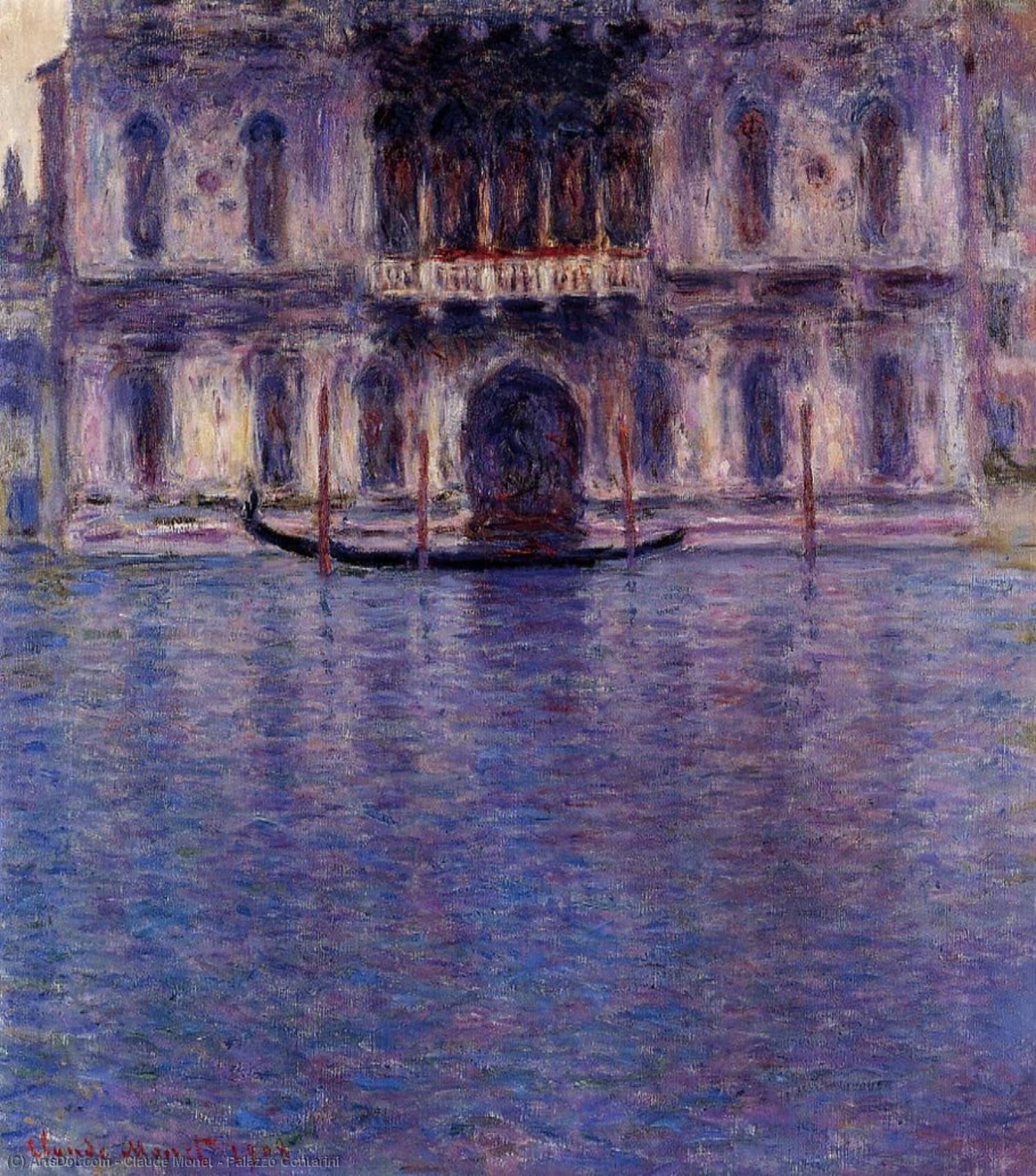
Palazzo Contarini: A Venetian Reverie by Claude Monet
- Artist: claude monet
- Date: 1908
- Medium: Oil on Canvas
- Location: Kunstmuseum, St. Gallen, Switzerland
A Glimpse into Venetian Light and Atmosphere
Claude Monet's "Palazzo Contarini" transports viewers to the heart of Venice, capturing a fleeting moment of beauty along the Grand Canal. This Impressionist masterpiece depicts a gondola gently gliding before an imposing palazzo, its façade reflected in the tranquil water. The scene is bathed in soft, diffused light, characteristic of Monet’s signature style. Rather than striving for photographic realism, Monet prioritizes conveying the atmosphere and emotional essence of the Venetian landscape. The building itself, likely the Palazzo Contarini, a significant historical landmark, dominates the composition with its numerous windows hinting at the grandeur within. This painting is not merely a depiction of a place; it's an exploration of light’s transformative power on color and form. Monet painted "Palazzo Contarini" during one of his visits to Venice in 1908, drawn to the city's unique blend of Byzantine and Gothic architecture and its serene waterways – a constant source of inspiration for him.
Impressionistic Technique: Wet-on-Wet and Layered Color
Monet’s mastery lies in his innovative use of technique. "Palazzo Contarini" exemplifies his signature “wet-on-wet” method, also known as *alla prima*, where he applied fresh paint onto still wet layers, creating a sense of immediacy and spontaneity. This approach allowed him to capture the fleeting effects of light with remarkable speed and fluidity. The painting is characterized by loose brushstrokes and a vibrant palette dominated by purples and blues, reflecting the Venetian sky and water. These colors are subtly layered, building depth and luminosity. Notice how the golden hues of the palazzo are mirrored in the water below, creating an illusion of shimmering reflections. Monet’s technique isn't about precise detail; it's about capturing the *impression* of a scene – the feeling of being present in that moment. The impastoed texture adds a palpable physicality to the paint application, further enhancing the painting’s visual richness and dynamism.
Historical Context: Venice as Muse
Venice held a special allure for Monet. During his visit in 1908, he was captivated by the city's unique character – its canals, palaces, and vibrant atmosphere. This period coincided with a broader interest among artists in capturing the essence of travel destinations, reflecting a growing fascination with exotic locales. Monet’s Venetian series, including "Palazzo Contarini" and “Palazzo Dario,” demonstrates his ability to adapt his Impressionistic style to new environments while maintaining his core artistic principles. The painting also reflects the influence of earlier masters like Claude Lorrain, whose landscapes emphasized atmospheric perspective and luminous light. Furthermore, Monet's work resonated with a growing appreciation for Impressionism in America, where collectors eagerly sought out his paintings.
Symbolism and Emotional Impact
Beyond its aesthetic beauty, "Palazzo Contarini" evokes a sense of tranquility and nostalgia. The calm waters, the stately palazzo, and the solitary gondola create a scene that is both peaceful and evocative. The painting’s subdued color palette contributes to a slightly melancholic mood, hinting at the passage of time and the enduring spirit of Venice. Symbolically, it represents the city's timeless beauty and its rich cultural heritage. The reflection in the water can be interpreted as a metaphor for memory or the ephemeral nature of experience. "Palazzo Contarini" is more than just a landscape; it’s an invitation to immerse oneself in the atmosphere of Venice and contemplate the interplay between light, color, and emotion.
Related Works