A Moment Captured in Light: Deconstructing Monet’s “Le Déjeuner sur l'Herbe”
Claude Monet’s "Le Déjeuner sur l'Herbe," particularly this exquisite detail, isn’t merely a depiction of a picnic; it’s an immersion into the very heart of Impressionism. Painted in 1866-67, during a period of intense experimentation and rebellion against academic conventions, this work represents a pivotal shift in how artists perceived and rendered reality. It's a study in fleeting light, atmospheric perspective, and the subjective experience of observation – qualities that define Monet’s revolutionary approach to painting. The initial reception was famously tumultuous; critics initially scorned it as unfinished and indecent, failing to grasp the radical departure from traditional subject matter and technique. Yet, within this controversy lies its enduring power.
The Scene Unfolds: Composition and Narrative
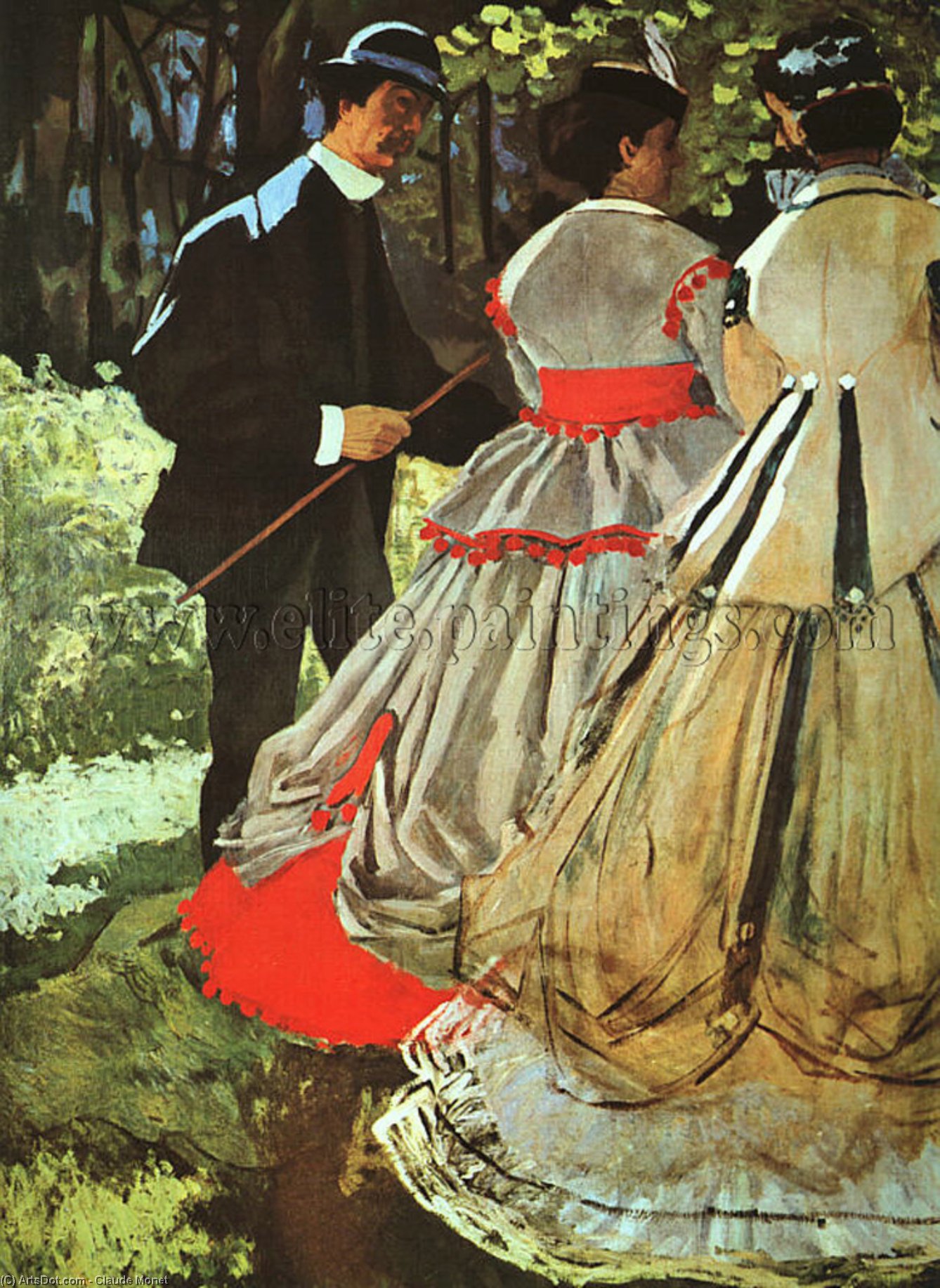
This detail focuses our attention on a small segment of the larger composition, revealing the carefully orchestrated interplay of figures and landscape. We see a group of men gathered in a dappled grove, bathed in the diffused light characteristic of Monet’s style. The central figure, holding a cane with an air of casual authority, draws us into the scene. His posture and gaze suggest a moment of quiet contemplation amidst the activity around him. The man in the tie, likely a friend or companion, leans slightly forward, engaging in conversation – perhaps a shared joke or observation. Two women, partially obscured by foliage, add an element of mystery and intrigue, their presence hinting at a private gathering. The inclusion of a discarded hat and a chair subtly reinforce the notion of a leisurely afternoon spent enjoying nature’s bounty.
- Color Palette: Monet masterfully employs a vibrant yet subdued palette dominated by greens, blues, and ochres. These colors aren't applied with precise detail but rather as broken strokes, allowing the viewer’s eye to blend them together and create an illusion of shimmering light and shadow.
- Brushwork: The visible brushstrokes are crucial to Monet’s technique – they are not meant to conceal the artist’s hand but to reveal the process of painting itself. Each stroke is a tiny fragment of color, contributing to the overall impression of movement and atmosphere.
- Light & Shadow: The dappled sunlight filtering through the trees creates an enchanting interplay of light and shadow, transforming the scene into a living, breathing entity. Monet’s ability to capture this ephemeral quality of light is what truly sets his work apart.
Symbolism and Context – Beyond the Picnic
While superficially appearing as a simple depiction of a picnic, “Le Déjeuner sur l'Herbe” carries deeper symbolic weight. It’s often interpreted as a commentary on contemporary Parisian society, reflecting the burgeoning leisure culture of the Second Empire. The figures are not idealized heroes but rather ordinary men engaging in an informal gathering – a deliberate rejection of the heroic narratives favored by academic painters. Furthermore, the painting can be viewed through the lens of Symbolism, with its emphasis on mood and suggestion. The ambiguous gazes of the figures, the half-hidden forms, and the overall atmosphere of quiet contemplation invite viewers to project their own interpretations onto the scene.
Monet’s Legacy: A Revolution in Perception
“Le Déjeuner sur l'Herbe” represents a watershed moment in art history. Monet’s radical approach to painting – his focus on capturing fleeting moments, his use of broken brushstrokes, and his exploration of light and color – paved the way for subsequent generations of Impressionist painters. This work demonstrated that art could be about *seeing* rather than simply representing; it was a declaration that the artist's subjective experience held equal value to objective reality. Today, reproductions of this iconic painting continue to captivate audiences worldwide, offering a glimpse into the mind of one of history’s most influential artists and reminding us of the enduring power of light, color, and observation.