パリ
フランス
クロード・モネ
オスカー=クロード・モネ、クロード・オスカール・モネ
印象派の巨匠クロード・モネ。光と色彩を捉え、睡蓮や干し草など、移りゆく風景を描き出しました。自然を観察し、独自の技法で表現した作品は、美術史に大きな影響を与えました。
印象派
現代美術
エウジェーヌ・ブーダン
1840年11月14日
1926年12月5日
オスカー=クロード・モネ
フランス人
印象、日の出
フランス、パリ
大理石の彫刻
2
クロード・モネに、エウジェーヌ・ブーダンが教えてくれた重要な技法は何ですか?
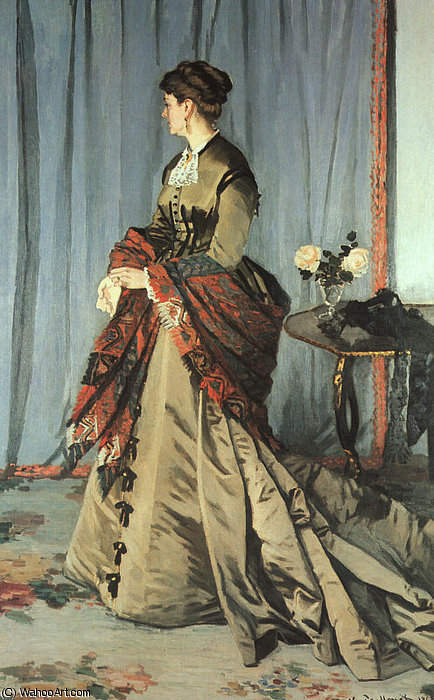
A Window Into Impressionism: Madame Gaudibert by Claude Monet
Claude Monet’s “Portrait of Madame Gaudibert,” completed in 1868, stands as an early cornerstone of his artistic evolution and a captivating glimpse into the burgeoning Impressionist movement. Painted en plein air—directly from nature—a practice championed by Boudin and fundamentally reshaping artistic perception at the time, this oil on canvas piece embodies Monet’s commitment to capturing fleeting sensations rather than meticulous realism. The painting depicts Madame Gaudibert, Louis-Joachim Gaudibert's wife, seated calmly before a draped table adorned with a vase of flowers – a deliberate compositional choice reflecting the prevalent aesthetic ideals of the era.
Style and Technique: Embracing Light and Color
Monet’s style at this juncture leaned heavily toward Realism, prioritizing accurate depiction of form and detail—a departure from academic conventions that favored idealized representations. However, unlike traditional portraits striving for polished perfection, Monet eschewed smooth blending techniques, opting instead for visible brushstrokes that conveyed the dynamism of light and color. The artist skillfully employed broken color—applying pigment in small patches rather than merging them seamlessly—allowing individual hues to vibrate against each other, creating an illusion of luminosity and capturing the subtle nuances of atmospheric conditions. Notice particularly how Monet renders the drapery; it’s not rendered as a solid surface but as interwoven planes of color that shimmer with reflected light.
Historical Context: The Dawn of Impressionism
“Madame Gaudibert” emerged during a period of profound artistic upheaval, marking the formal beginning of Impressionism—a movement spearheaded by Monet and fellow artists like Boudin, Sisley, and Renoir. Artists were increasingly dissatisfied with the constraints imposed by the Salon—the official art exhibition overseen by the Académie Royale de Beaux-Arts—which favored polished academic paintings over innovative explorations of subjective experience. The Impressionists challenged these established norms by prioritizing observation and emotion above all else, rejecting preconceived notions about artistic representation. Gaudibert’s patronage played a crucial role in fostering this revolutionary spirit.
Symbolism: Flowers as Expressions of Sentiment
The inclusion of flowers—specifically lilies—within the composition carries symbolic weight beyond mere decorative embellishment. Lilies are traditionally associated with purity and innocence, reflecting Madame Gaudibert's dignified demeanor and suggesting an idealized portrayal of feminine virtue. Furthermore, Monet’s careful arrangement of blossoms underscores the Impressionists’ fascination with capturing the beauty of the natural world—a preoccupation that extended far beyond aesthetic considerations to encompass a broader engagement with philosophical ideas about perception and consciousness.
Emotional Impact: Tranquility and Observation
Ultimately, “Madame Gaudibert” succeeds in conveying a profound sense of tranquility and contemplative observation. The serene gaze of Madame Gaudibert, combined with the soft luminescence emanating from the painted surfaces, invites viewers into a moment of stillness—a deliberate antithesis to the frenetic pace of Victorian society. Monet’s masterful technique captures not only the visual appearance of his subject but also the intangible essence of her inner life—demonstrating that true artistic achievement lies in conveying emotion and stimulating intellectual engagement. This painting remains an enduring testament to Monet's pioneering vision and the transformative power of Impressionism.