Claude Monet: Capturing Ephemeral Beauty – Poplars on the Banks of the Epte
Claude Monet’s
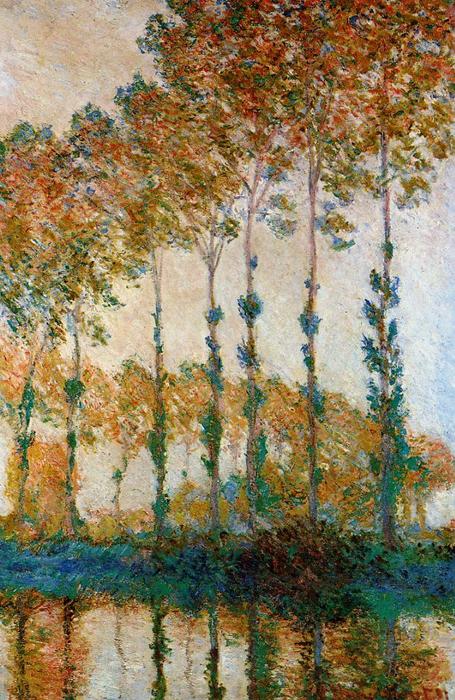
Poplars on the Banks of the Epte, Autumn stands as a cornerstone of Impressionism, embodying its core principles and captivating viewers with its serene depiction of autumnal riverside landscapes. Created in 1891, this monumental canvas – measuring 66 x 101 cm – transcends mere representation; it’s an exquisite distillation of light, color, and atmosphere, achieved through Monet's revolutionary artistic approach.
The Painting's Composition & Symbolism
The scene unfolds along the Epte River, showcasing a cluster of poplar trees gracefully lining its banks. These trees dominate the composition, their vibrant hues—ranging from deep reds to warm oranges—creating an immediate sense of warmth and inviting contemplation. Monet skillfully employs perspective, positioning the trees closer to the foreground while others recede into the distance, enhancing depth and creating a harmonious visual balance. Beyond its aesthetic appeal, the poplar tree holds symbolic significance in Impressionist art, representing resilience, vitality, and connection to nature—themes central to Monet’s artistic vision. The river itself mirrors these colors, amplifying their luminosity and contributing to the painting's overall impression of tranquility.
Monet’s Technique: A Dance with Light
Monet’s technique is undeniably characteristic of Impressionism. He eschews traditional blending methods, opting instead for short, broken brushstrokes—a deliberate decision designed to capture the fleeting effects of sunlight and air movement. These strokes aren't meant to create a smooth surface; rather, they aim to reproduce the way light refracts through foliage, resulting in shimmering patches of color that shift subtly with each glance. This approach is evident throughout the painting, particularly in the dappled reflections on the water’s surface—a testament to Monet’s meticulous observation and masterful execution. The artist's dedication to portraying the immediacy of experience solidified his legacy as a pioneer of modern art.
Historical Context & Artistic Significance
Poplars on the Banks of the Epte emerged during Monet’s formative years as an Impressionist artist—a period marked by experimentation and a fervent desire to break away from academic conventions. Influenced profoundly by Eugène Boudin's advocacy for painting outdoors (“
plein air”), Monet embraced this revolutionary method, prioritizing direct observation over studio reproductions. This commitment to capturing the natural world resonated deeply with fellow Impressionists like Renoir and Sisley, establishing a collective aesthetic that prioritized sensory experience above all else.
Poplars on the Banks of the Epte’s impact extends far beyond its artistic merits; it fundamentally altered perceptions of painting and paved the way for subsequent generations of artists. Its inclusion in the Staatliche Museen zu Berlin's collection underscores its enduring importance as a masterpiece of European art history—a visual embodiment of Impressionism’s groundbreaking innovations and its celebration of beauty found within the everyday world.
The Three Trees, Autumn at Tate Gallery (London, United Kingdom) is another remarkable piece by Monet that showcases similar techniques and thematic concerns. Explore the Staatliche Museen zu Berlin, Germany, a group of museums located in Berlin, Germany, which holds one of the world’s leading collections of European paintings from the 13th to the 18th centuries.
The Three Trees, Autumn by Claude Monet is a testament to Monet's skill and contribution to Impressionism. Its captivating colors and serene atmosphere make it a timeless piece of art that continues to inspire and delight audiences today.
Discover the Staatliche Museen zu Berlin, Germany, a group of museums located in Berlin, Germany, which holds one of the world’s leading collections of European paintings from the 13th to the 18th centuries.