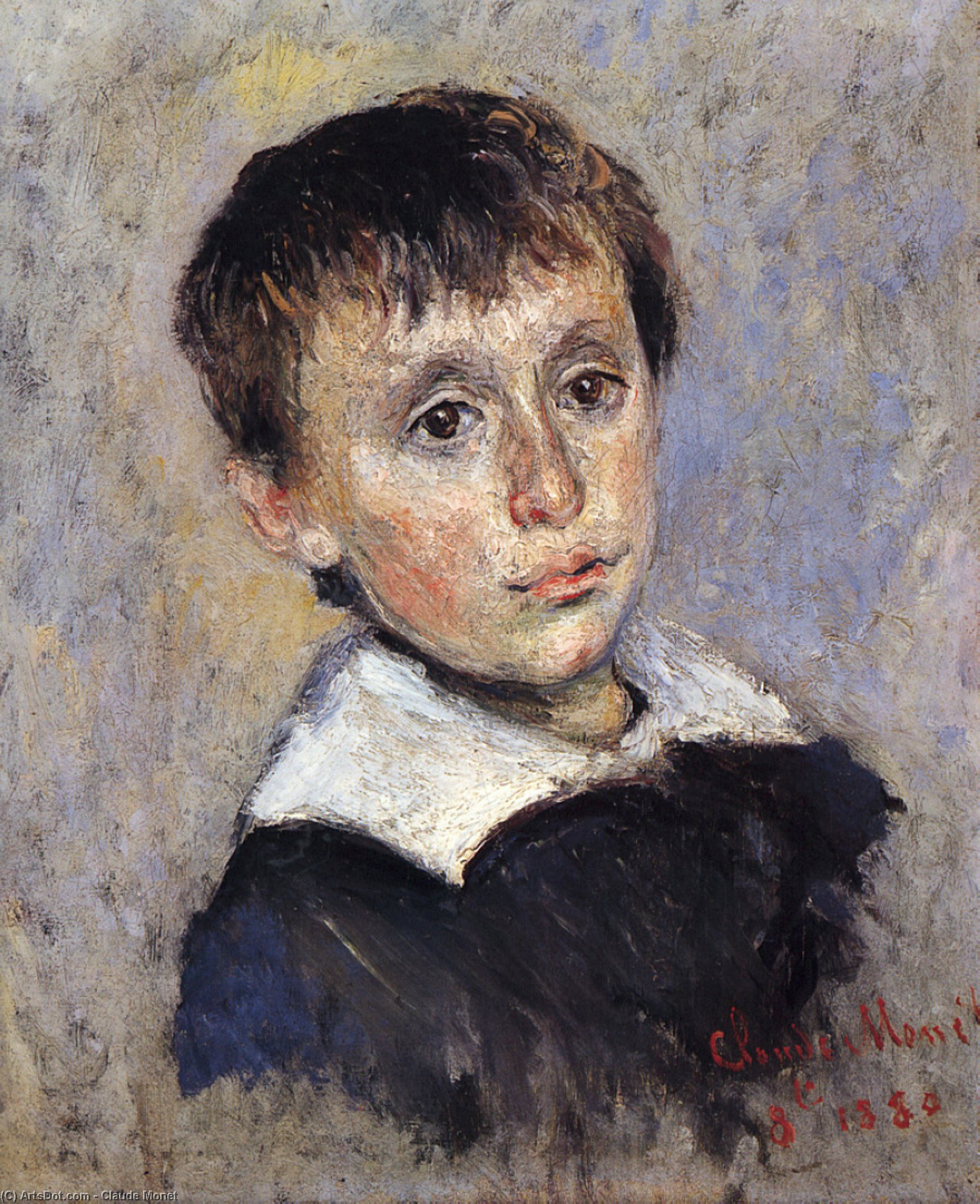
Portrait of Jean Monet: A Glimpse into Impressionist Family Life
- Artist: Claude Monet
- Year: 1880
- Style: Impressionism
- Medium: Oil on Canvas
- Dimensions: 50 x 61 cm
Claude Monet's "Portrait of Jean Monet" is a tender and intimate depiction of his eldest son, Jean, at the age of thirteen. This painting exemplifies Monet’s mastery of Impressionist techniques, capturing not just a likeness but also the fleeting essence of childhood and familial affection. The portrait showcases a young boy with serious eyes, dressed in simple attire – a white shirt and black tie – against a softly blurred background suggesting an outdoor setting.
Historical Context & Family Significance
The 1880s were a period of relative stability for Monet and his family. Following years of financial struggles and personal loss (his first wife, Camille, had passed away in 1879), Monet found solace and renewed inspiration in his growing family. Jean, along with his younger brother Michel, became frequent subjects in Monet’s paintings, offering a window into the artist's domestic life and providing him with opportunities to explore light and color within familiar settings. This portrait was created during a time when Monet was increasingly recognized for his groundbreaking Impressionist style, solidifying his place as a leader of the movement.
Impressionistic Technique & Artistic Merit
The painting is a prime example of Monet’s signature Impressionistic approach. Notice the loose brushstrokes and vibrant colors used to depict Jean's features and clothing. Rather than striving for photographic realism, Monet focused on capturing the play of light and shadow across his son’s face, creating a sense of movement and vitality. The background is deliberately blurred, drawing the viewer's attention directly to Jean and emphasizing the emotional connection between father and son. The subtle use of color – soft blues and greens in the background contrasting with the brighter whites and blacks of Jean’s clothing – further enhances the painting's overall harmony and visual appeal.
Symbolism & Emotional Impact
Beyond its aesthetic qualities, "Portrait of Jean Monet" carries a deeper symbolic weight. The serious expression on Jean’s face suggests a young boy entering adolescence, grappling with maturity and responsibility. Monet’s choice to portray his son in such a straightforward manner conveys a sense of quiet dignity and respect. The painting evokes feelings of warmth, tenderness, and familial love – emotions that resonate deeply with viewers even today. It serves as a poignant reminder of the importance of family bonds and the enduring power of art to capture fleeting moments of human connection.