A Moment Frozen in Light: Monet’s Rouen Cathedral Revisited
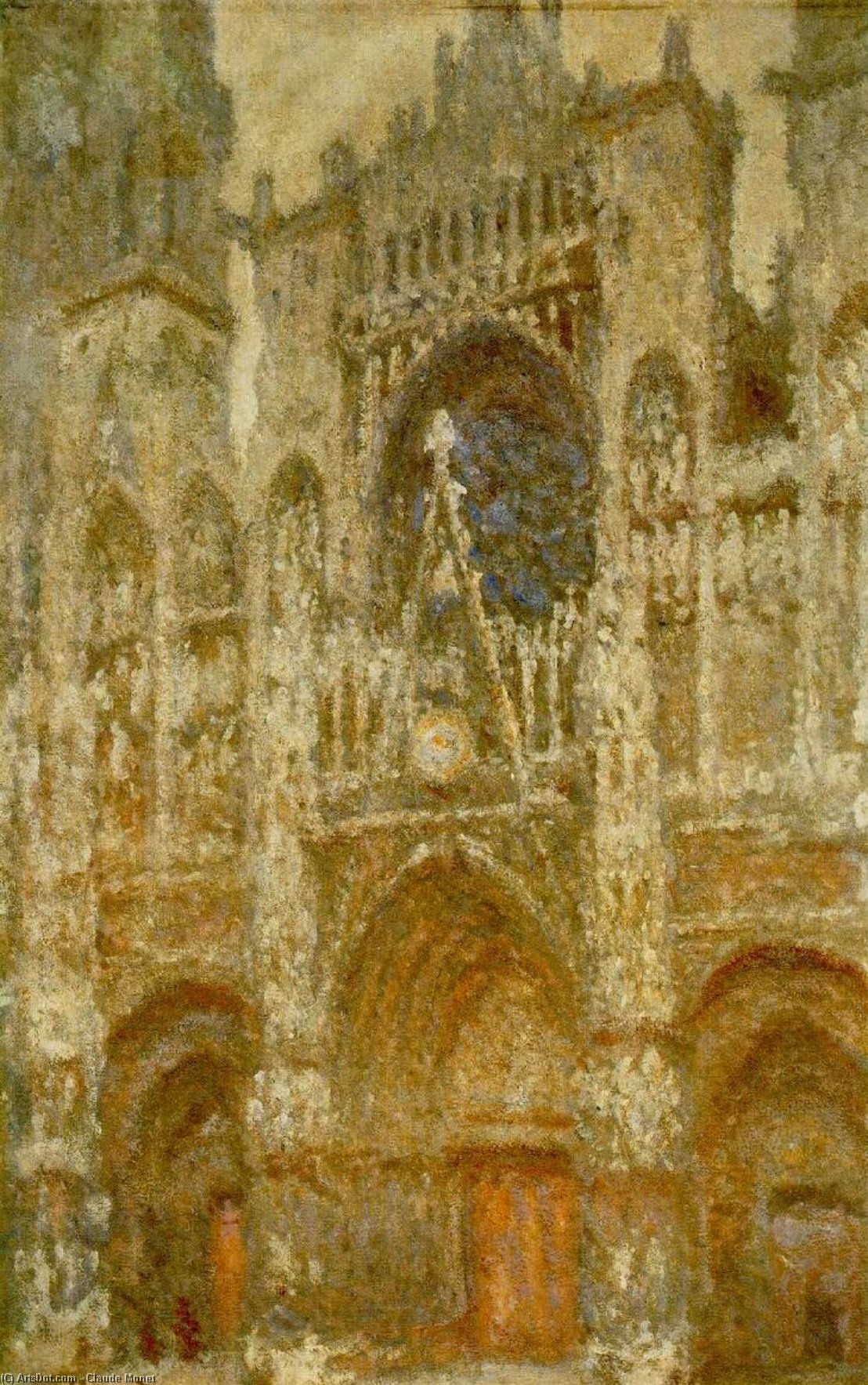
Claude Monet's "Rouen Cathedral, The Gate, Grey Weather," painted in 1894, isn’t merely a depiction of a medieval edifice; it’s an embodiment of Impressionism’s core philosophy—the pursuit of capturing the ephemeral beauty of nature and emotion. This monumental canvas exemplifies Monet’s unwavering dedication to *plein air* painting, immersing himself directly within the atmospheric conditions of Rouen Cathedral as he meticulously observed them. Unlike traditional art history narratives that focus on grand narratives of power or religious dogma, Monet's work invites us into a quieter contemplation—a sensory experience mirroring the artist’s own fascination with light and color.
- Subject Matter: The painting centers around Rouen Cathedral’s western portal, framed by towering arches and adorned with intricate carvings that speak to centuries of architectural history.
- Style: Monet firmly established himself as a pioneer of Impressionism, rejecting academic conventions in favor of loose brushstrokes and vibrant hues—a stylistic choice deliberately designed to convey the immediacy of perception.
Technique and Material Considerations
Monet’s masterful technique is characterized by layering thin washes of pigment onto canvas, allowing light to penetrate through the surface and creating a shimmering effect that captures the subtle nuances of grey weather. The artist employed oil paints mixed with turpentine and linseed oil—a standard practice for Impressionists at the time—to achieve luminosity and fluidity. Notably, Monet undertook multiple sessions of painting the same subject over several days, documenting variations in light and color to build up his final composition. This methodical approach reflects a profound understanding of optical phenomena and underscores Monet’s commitment to scientific observation alongside artistic expression. The canvas itself was stretched on wooden frames, ensuring stability while maximizing surface area for pigment application.
Historical Context: Impressionism's Response to Change
Painted during the Belle Époque—a period marked by rapid industrialization and social transformation—Monet’s Rouen Cathedral series represents a deliberate reaction against the prevailing artistic trends of the time. Whereas Romantic painters sought to evoke dramatic emotion through idealized landscapes, Monet aimed for a more nuanced portrayal of reality, prioritizing sensory experience over narrative storytelling. The cathedral itself stood as a symbol of enduring faith amidst the anxieties of modernity—a visual testament to the continuity of tradition in an era defined by upheaval. Furthermore, Monet’s decision to revisit the same scene repeatedly demonstrates the Impressionists' belief that art could evolve alongside life itself.
Symbolism and Emotional Resonance
Beyond its formal artistic merits, Rouen Cathedral holds significant symbolic weight. The cathedral’s weathered stone façade embodies resilience and permanence—a counterpoint to the fleeting beauty captured by Monet’s brushstrokes. The grey sky serves as a metaphor for melancholy and introspection, inviting viewers to contemplate themes of spirituality and mortality. Yet, crucially, Monet doesn't present these ideas in didactic terms; rather, he invites us to feel them alongside him—to experience the cathedral’s atmosphere as if we were standing there ourselves. This subtle emotional resonance is precisely what distinguishes Monet’s masterpiece from more overtly expressive artworks of his era.
Conclusion: An Icon of Impressionist Vision
“Rouen Cathedral, The Gate, Grey Weather” remains an enduring emblem of Impressionism's legacy—a testament to Monet’s ability to transform observation into art and emotion into visual form. Its luminous palette, masterful technique, and evocative atmosphere continue to captivate audiences today, cementing its place as one of the most celebrated paintings of the 19th century.