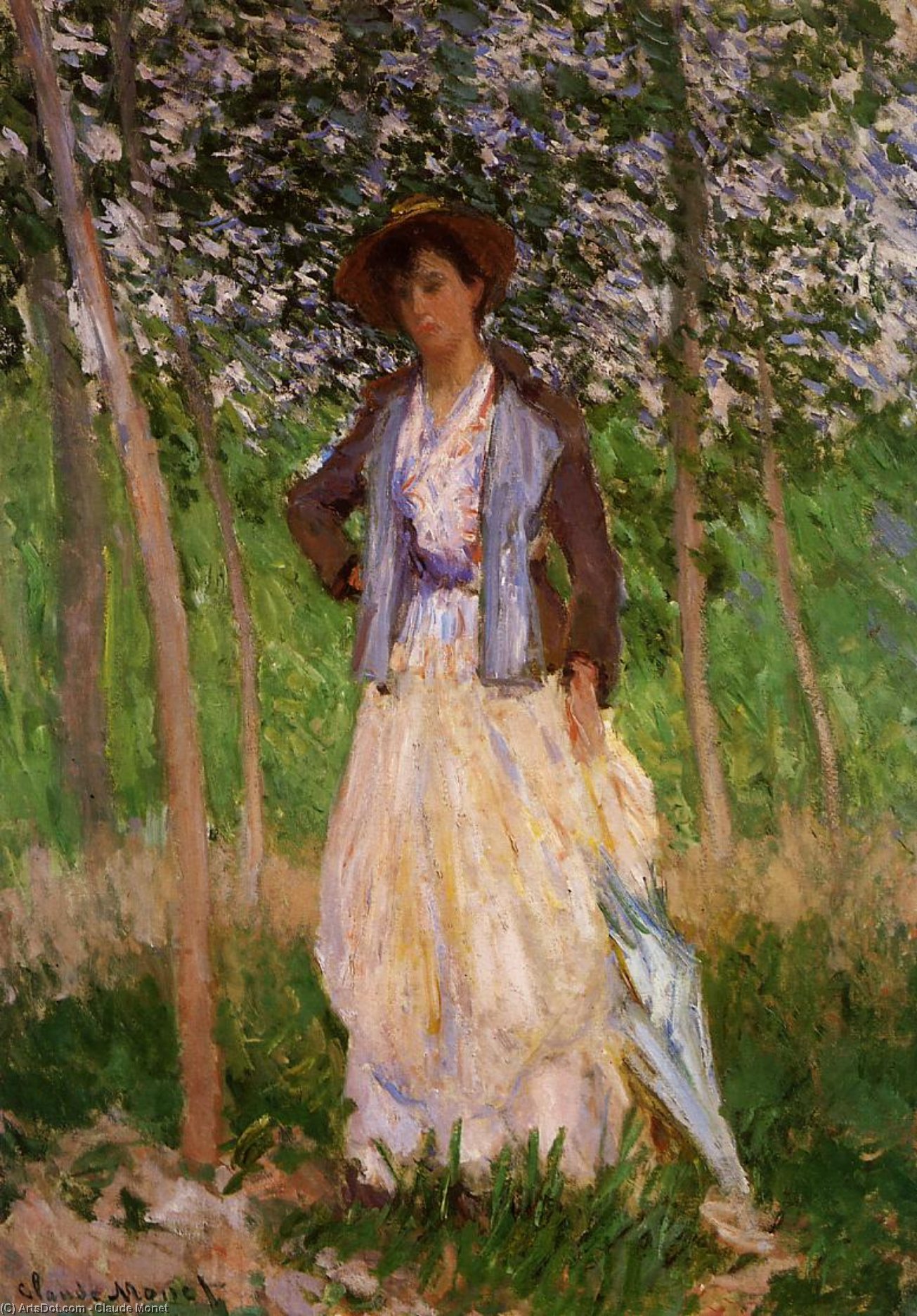
The Stroller (Suzanne Hoschede) – A Portrait of Impressionist Grace
Claude Monet’s “The Stroller” isn't merely a depiction of Suzanne Hoschede; it’s an embodiment of Impressionism itself—a testament to capturing fleeting moments of beauty and emotion through light and color. Painted in 1887, during Monet’s prolific period exploring plein air painting alongside his beloved wife Camille, this oil on canvas masterpiece resides within the Walter H. and Leonore Annenberg Collection at The Metropolitan Museum of Art. Measuring 100 x 70 cm, it exemplifies Monet's revolutionary approach to artmaking—a departure from academic conventions toward a more subjective experience of the visual world.
Subject Matter and Composition
The painting centers around Suzanne Hoschede, a woman posed gracefully beside trees – specifically, the meadows just south of Monet’s home in Giverny. Her posture exudes confidence, subtly accentuated by her hands resting on her hips—a gesture that speaks volumes about composure and self-assurance. The artist skillfully employs light to illuminate Hoschede's figure, creating a soft glow that contrasts beautifully with the darker hues of the surrounding foliage. Two birds perched near the top left corner and another towards the bottom right contribute to the idyllic scene, adding visual interest and hinting at themes of freedom and tranquility. A handbag rests on the ground close to the center, grounding the composition and providing an element of domesticity amidst the expansive landscape.
Monet’s Impressionistic Technique
Monet's masterful technique is immediately apparent upon closer inspection. He eschews meticulous detail in favor of loose brushstrokes—a hallmark of Impressionism—that convey a sense of movement and atmosphere. The paint is applied in successive layers, building up texture and depth while simultaneously capturing the ephemeral qualities of light. Notice how Monet utilizes complementary colors—blues and oranges—to create vibrancy and visual excitement. These bold hues are juxtaposed against muted greens and browns, establishing a harmonious balance that reflects Monet’s fascination with observing nature's subtleties. The artist’s meticulous attention to color is particularly striking in the depiction of the trees—each leaf rendered with remarkable accuracy while simultaneously infused with shimmering light.
Historical Context and Symbolism
“The Stroller” emerged during a pivotal moment in Impressionist history—a time when artists were actively challenging artistic dogma and advocating for a new aesthetic sensibility. Monet’s decision to paint outdoors, directly confronting the challenges posed by inclement weather, underscores his commitment to capturing the immediacy of experience. The painting's serene setting symbolizes domestic harmony and maternal tenderness—themes that resonated deeply with Monet’s own life experiences as he navigated the complexities of marriage and family. Furthermore, the presence of birds evokes notions of aspiration and renewal—a visual metaphor for Hoschede’s role as a mother and wife.
Emotional Resonance
Ultimately, “The Stroller” transcends mere representation; it communicates profound emotional resonance. Monet's ability to convey mood through color and brushwork invites viewers into Hoschede’s world—allowing them to contemplate the beauty of nature alongside the quiet dignity of human presence. The painting’s luminous palette evokes feelings of warmth and optimism, capturing a fleeting moment of idyllic contentment. It stands as an enduring symbol of Impressionism's legacy—a celebration of sensory perception and artistic innovation that continues to inspire audiences today.
- Artist: Claude Monet
- Year: 1887
- Medium: Oil on Canvas
- Dimensions: 100 x 70 cm
- Location: The Walter H. and Leonore Annenberg Collection, Bequest of Walter H. Annenberg, 2002
Related Paintings and Artists
Explore other Impressionist masterpieces by Claude Monet, including “At Her Easel with Suzanne Hoschede Reading” and “Taking a Walk on the Cliffs of Sainte-Adresse,” which can be found at the Matsuoka Museum of Art in Japan. Delve into the broader Impressionist movement through works by Juan Gris and Edgar Degas—artists who similarly championed innovative techniques and expressive vision.
ArtsDot.com – Bringing Monet’s Vision to Life
ArtsDot.com offers exceptional handmade oil painting reproductions of iconic artworks, including Claude Monet's “The Stroller.” Invest in a piece of art history—experience the captivating beauty of Impressionist art firsthand. Visit our website today!