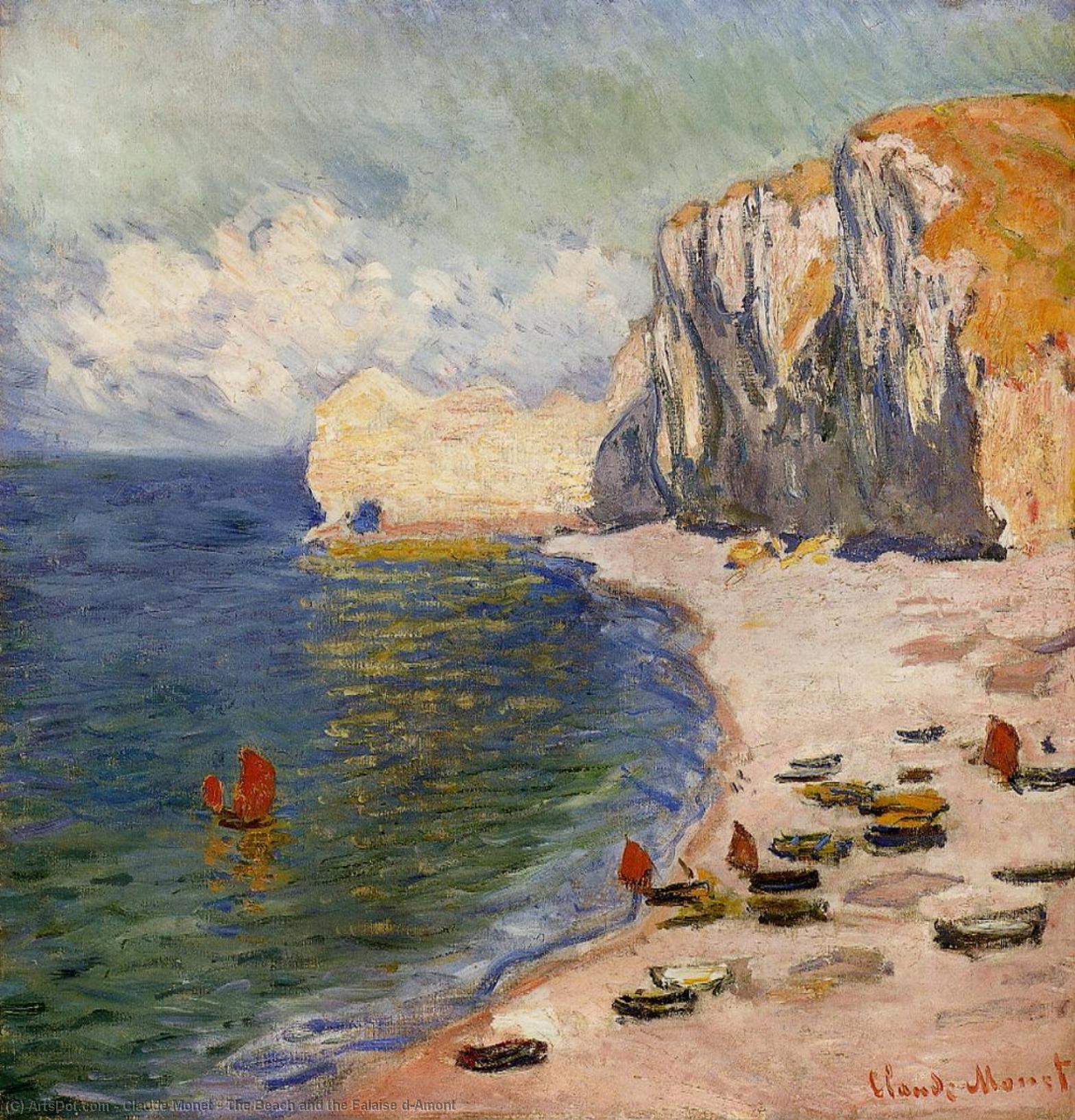
A Coastal Reverie: Exploring Monet’s “The Beach and the Falaise d'Amont”
Claude Monet’s 1885 painting, *The Beach and the Falaise d'Amont*, is more than just a depiction of a seaside scene; it’s an evocative immersion into the fleeting beauty of the Normandy coast. Painted during a period where Monet was actively developing his Impressionistic style, this work encapsulates the artist’s dedication to capturing the ephemeral qualities of light and atmosphere. The painting presents a tranquil vista – a stretch of beach dotted with small boats, all under the watchful gaze of the imposing Falaise d'Amont cliff.
Impressionism in Practice: Style & Technique
This artwork is a quintessential example of Impressionism. Monet eschews precise detail in favor of conveying the *impression* of a moment – the way light dances on the water, the subtle shifts in color across the sand and cliffs.
- Broken Brushstrokes: Notice how Monet employs short, visible brushstrokes to build up texture and form. This technique isn’t about meticulous rendering; it's about suggesting form through the interplay of color.
- Color & Light: The palette is dominated by blues, greens, and grays, but these aren’t flat applications of paint. Monet masterfully blends hues to capture the shimmering effect of sunlight on water and the atmospheric haze surrounding the cliff face.
- Plein Air Painting: Likely painted *en plein air* (outdoors), the work embodies the Impressionist commitment to direct observation of nature, prioritizing sensory experience over academic convention.
Historical Context & Artistic Innovation
By 1885, Monet was already a leading figure in the burgeoning Impressionist movement. He had exhibited with the group since their first independent exhibition in 1874, challenging the established Salon system and its preference for historical or mythological subjects. *The Beach and the Falaise d'Amont* reflects this spirit of artistic rebellion – focusing on an everyday scene and prioritizing subjective perception over objective representation. This period also saw Monet experimenting with series paintings, exploring how a single subject changes under different lighting conditions; while not part of a formal series, this work shares that investigative spirit. His influence extended to artists like Julian Fałat, demonstrating the widespread impact of Impressionist principles across national boundaries.
Symbolism & Emotional Resonance
While seemingly straightforward in its subject matter, *The Beach and the Falaise d'Amont* carries subtle symbolic weight. The cliff, a steadfast presence, represents permanence and enduring nature. In contrast, the boats and figures on the beach suggest transience – the fleeting moments of human life against the backdrop of geological time.
- Serenity & Escape: The overall mood is one of peaceful contemplation. The painting invites viewers to escape into a tranquil coastal landscape, offering respite from the bustle of modern life.
- The Human Scale: The small figures within the vastness of the scene emphasize humanity’s relationship with nature – our place within a larger, more powerful world.
Bringing Monet Home: Reproductions & Interior Design
A high-quality reproduction of *The Beach and the Falaise d'Amont* can transform any space. Its calming color palette and serene composition make it an ideal addition to bedrooms, living rooms, or home offices.
- Coastal Interiors: Naturally complements coastal or nautical-themed décor.
- Neutral Palettes: Works beautifully with neutral color schemes, adding a touch of subtle vibrancy.
- Focal Point: Can serve as a captivating focal point in any room, inviting conversation and contemplation.
The painting’s enduring appeal lies in its ability to evoke a sense of peace and wonder – qualities that resonate deeply with viewers even today.