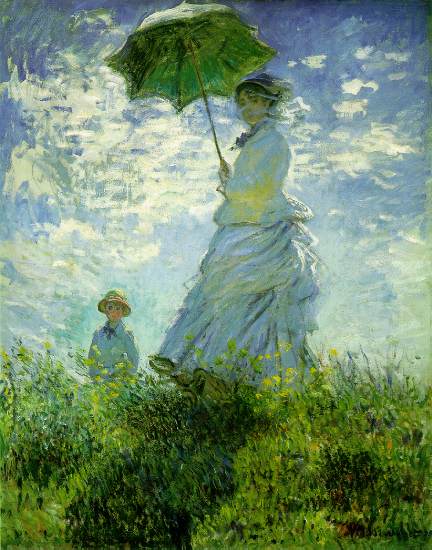
A Moment Captured in Light: Exploring Monet’s “The Stroll”
Claude Monet, a titan of Impressionism, didn't simply depict landscapes; he wrestled with capturing the ephemeral beauty of light itself – an ambition that permeated every brushstroke of his oeuvre. "The Stroll," painted circa 1867-1868, exemplifies this dedication to observation and artistic innovation perfectly.
- Subject Matter: The painting portrays Camille Monet and her son Jean strolling through a grassy meadow under the dappled shade of an umbrella. This seemingly simple scene is imbued with profound significance – it’s not merely a snapshot of domestic life but a deliberate attempt to convey a feeling of tranquility and connection with nature.
- Style & Technique: Monet's signature Impressionistic style dominates “The Stroll.” He eschewed meticulous detail, prioritizing instead the transmission of visual sensations. Thickly applied paint—characteristic of his technique—creates textured surfaces that shimmer with reflected light. Notice how Monet skillfully blends complementary colors – blues and oranges – to heighten the vibrancy of the meadow and create a harmonious visual experience.
- Historical Context: Painted during Monet’s formative years, “The Stroll” sits squarely within the burgeoning Impressionist movement. Artists like Monet were rejecting academic conventions that favored idealized representations and instead embracing plein air painting—working outdoors directly from observation—a revolutionary approach championed by Boudin and others.
Symbolism Beyond Surface Beauty
More than just aesthetically pleasing, “The Stroll” carries symbolic weight. The umbrella serves as a visual metaphor for protection against the elements – both literal and figurative – shielding the family from anxieties and uncertainties. The meadow itself represents fertility and renewal, mirroring Monet’s fascination with capturing the cyclical rhythms of the natural world.
- Color Palette: Monet's masterful use of color is crucial to conveying his emotional intent. Dominant shades of emerald green and golden yellow evoke feelings of warmth and serenity, reinforcing the painting’s overarching mood of contentment.
- Composition: The asymmetrical arrangement contributes to the painting’s dynamism, guiding the viewer’s eye across the canvas and emphasizing the movement of the figures amidst the foliage.
Emotional Resonance & Artistic Legacy
"The Stroll" resonates deeply with viewers today because it speaks to a fundamental human desire for peace and beauty. Monet's ability to distill complex emotions into visual form—to capture not just what he *saw*, but how he *felt*—solidifies his place as one of the most influential artists of the 19th century.
- Influence on Subsequent Artists: Monet’s pioneering approach paved the way for countless subsequent painters who sought to emulate his expressive style and prioritize observation over preconceived notions.
- Perfect for Interior Spaces: A high-quality reproduction of “The Stroll” would bring a touch of Impressionistic elegance into any home, capturing the spirit of leisurely contemplation and celebrating the transformative power of natural light.