The Painting's Composition
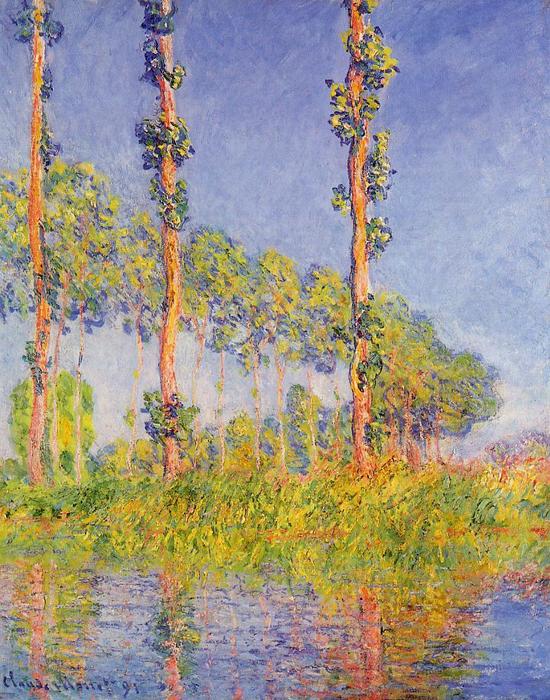
Claude Monet was a French artist who played a pivotal role in founding the Impressionist movement. His approach to art emphasized direct observation and the use of vibrant colors, often applied in loose brushstrokes. One of his most notable works is Three Poplar Trees, Autumn Effect, a stunning example of Monet's impressionist style.
The Painting's Composition
The painting depicts three poplar trees along the Epte River in France, their leaves glowing with the warm hues of autumn. The use of color and brushwork in Three Poplar Trees, Autumn Effect is particularly noteworthy. Monet employs a vibrant palette of greens, yellows, oranges, and reds to convey the richness of the foliage, while his loose brushstrokes create a sense of movement and energy in the scene.
Monet's Series Paintings
Three Poplar Trees, Autumn Effect is part of a series of paintings that Monet created in the late 19th and early 20th centuries. These series paintings, which include works such as his famous Water Lilies, were characterized by their focus on a single subject or theme, explored through multiple iterations and variations.
Historical Context and Symbolism
The Poplars series was painted in 1891, a period when Monet was deeply interested in capturing the fleeting effects of light and atmosphere. The poplars themselves, often associated with mourning and remembrance in European culture, take on a more optimistic tone in Monet's hands, symbolizing resilience and beauty even amidst change. The choice to paint them repeatedly under different lighting conditions reflects the Impressionist desire to record subjective perception rather than objective reality.
Emotional Impact
Three Poplar Trees, Autumn Effect evokes a sense of tranquility and awe at the power of nature. The vibrant colors and dynamic brushstrokes create an immersive experience for the viewer, transporting them to the banks of the Epte River on a crisp autumn day. The painting’s enduring appeal lies in its ability to capture not just what Monet saw, but also how he felt – a profound connection with the natural world.