A Winter’s Embrace: Decoding Monet's ‘Trees in Winter, View of Bennecourt’
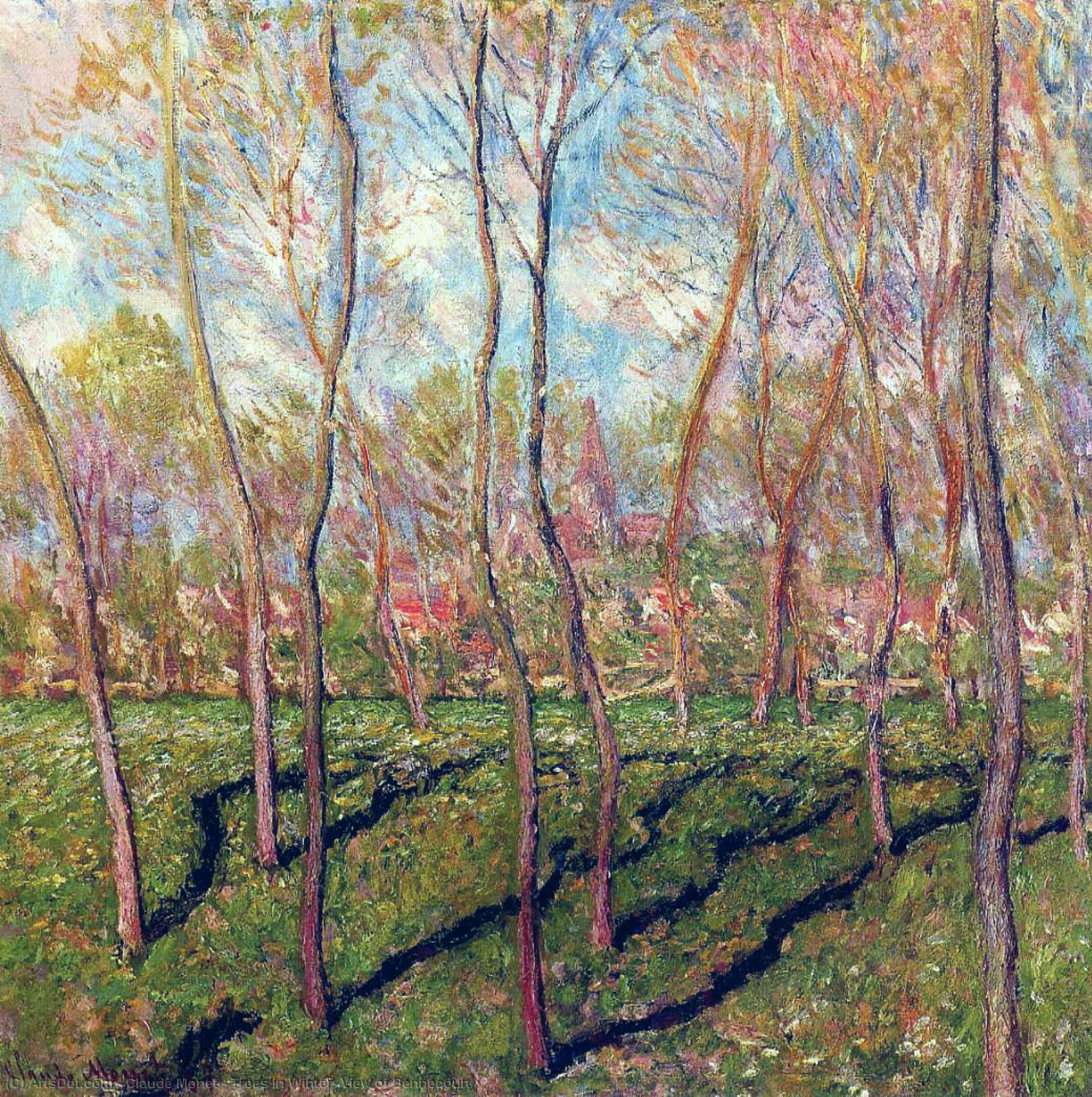
Claude Monet’s *Trees in Winter, View of Bennecourt* (1887) is more than just a landscape; it’s an intimate study of light, atmosphere, and the subtle beauty hidden within the starkness of winter. Painted during a period where Monet was increasingly focused on series paintings – exploring variations of a single subject under different conditions – this work exemplifies his dedication to capturing fleeting moments in nature. Measuring 81 x 81 cm and currently residing at the Columbus Museum of Art, it offers viewers a captivating glimpse into the French countryside.
Impressionistic Technique & Composition
Monet’s masterful application of Impressionistic principles is immediately apparent. He eschews precise detail in favor of conveying the *impression* of a winter scene. The canvas vibrates with short, broken brushstrokes – a hallmark of his style – creating a textured surface that seems to shimmer with light and air. The composition is deceptively simple: a pathway draws the eye into a dense copse of trees, their bare branches reaching towards a bright, cool blue sky. This deliberate use of perspective creates depth, while the contrasting colors—the warm tones within the foliage against the cooler blues and whites of the winter light—heighten the visual impact.
Historical Context & The Series Paintings
The late 19th century saw a shift in artistic focus towards capturing subjective experience rather than objective reality. Monet was at the forefront of this movement, rejecting academic conventions and embracing *plein air* painting – working outdoors directly from nature. *Trees in Winter, View of Bennecourt* is part of a series exploring winter landscapes around Bennecourt, France. This practice wasn’t merely about repetition; it was an investigation into how light and weather transform the same scene at different times, revealing its inherent dynamism. This dedication to seriality distinguishes Monet from many of his contemporaries and cemented his place as a pioneer of modern art.
Symbolism & Emotional Resonance
While seemingly straightforward, *Trees in Winter* invites deeper contemplation. The bare trees can be interpreted as symbols of resilience and dormancy – a quiet strength awaiting the renewal of spring. The pathway suggests a journey, perhaps representing life’s path or an invitation to introspection.
More profoundly, the painting evokes a sense of tranquility and solitude. It's a moment suspended in time, inviting viewers to pause and appreciate the subtle beauty often overlooked during colder months. The diffused light creates a soft, almost ethereal quality, fostering a feeling of peaceful contemplation.
Interior Design & Collecting Considerations
The painting’s muted yet vibrant palette makes it surprisingly versatile for interior design. Its cool tones would complement modern spaces with neutral color schemes, while its organic subject matter adds warmth and texture to more traditional settings. A reproduction of *Trees in Winter, View of Bennecourt* can serve as a focal point in a living room, bedroom, or study, bringing a touch of French Impressionism and serene beauty into the home.
Its relatively square format also lends itself well to various display options. For collectors, this work represents a significant example of Monet’s series paintings and his enduring contribution to art history – a testament to his skill in capturing the ephemeral qualities of light and nature.
- Artist: Claude Monet
- Year: 1887
- Medium: Oil on Canvas
- Dimensions: 81 x 81 cm
- Location: Columbus Museum of Art