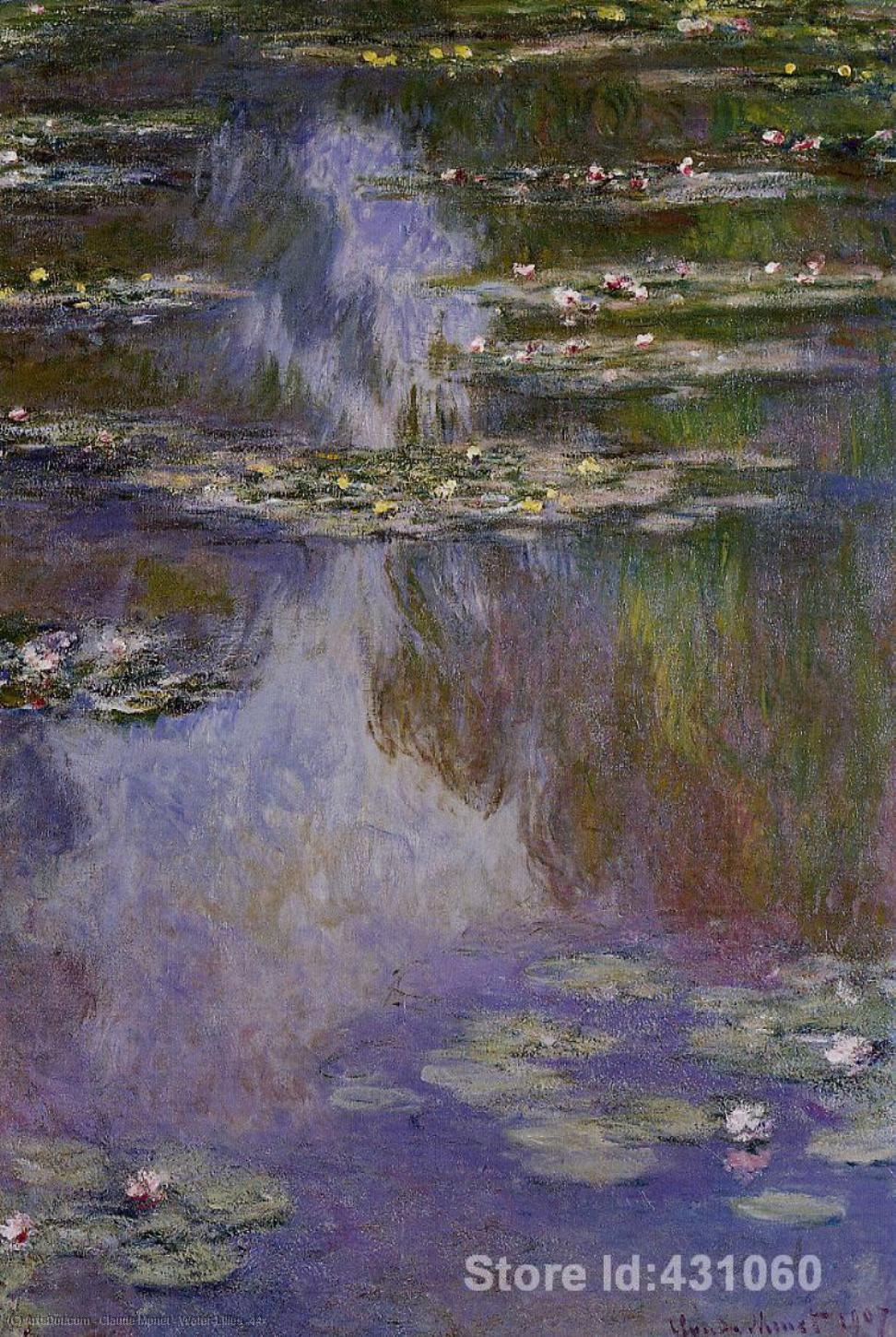
A Glimpse into Monet’s World: Water-Lilies (1907)
Painted in 1907, this captivating work – part of Claude Monet's celebrated *Water Lilies* series – offers a serene and immersive experience of nature. It exemplifies the pinnacle of Impressionist exploration into light, color, and atmosphere.
Subject & Composition
The artwork presents a close-up view of a water lily pond, focusing on the interplay between water, reflections, and vegetation. Rather than depicting a panoramic landscape, Monet invites us to intimately observe the surface of the water itself. Horizontal bands define the water and its mirrored image of the sky, while vertical elements – the lily pads and stems – provide subtle structure. The composition isn’t about precise representation; it's about capturing a fleeting moment, an *impression* of the pond’s beauty.
Style & Technique
- Impressionism at its Finest: This painting is a quintessential example of Impressionism. Monet prioritizes the subjective perception of light and color over realistic detail.
- Broken Brushstrokes: The technique relies heavily on short, broken brushstrokes – a hallmark of the movement – to convey the shimmering quality of light on water. These visible strokes create texture and a sense of movement.
- Color Palette & Atmosphere: A cool palette dominated by blues, greens, and purples evokes tranquility and depth. The diffused lighting suggests an overcast day or twilight, enhancing the dreamlike atmosphere.
- Oil on Canvas: Executed in oil paints on canvas, Monet expertly manipulates the medium to achieve a fluidity that mirrors the water’s surface.
Historical Context & Artistic Evolution
Claude Monet (1840-1926) was a pivotal figure in the development of Impressionism, challenging traditional academic painting. His dedication to plein air painting – working outdoors directly from nature – revolutionized artistic practice. By 1907, Monet had already established his reputation with series paintings like *Haystacks* and *Rouen Cathedral*, exploring how light transforms a single subject over time. The *Water Lilies* series, begun in the late 1890s and continuing until his death, represents the culmination of this lifelong exploration.
Symbolism & Emotional Impact
Water Lilies* are more than just beautiful depictions of nature; they carry symbolic weight. The pond at Giverny – Monet’s own garden – became his sanctuary, and the paintings reflect a sense of peace, contemplation, and harmony. The ephemeral quality of light and reflections speaks to the transient nature of beauty and life itself. Viewing this artwork evokes feelings of serenity, wonder, and a deep connection with the natural world. The immersive quality anticipates abstract expressionism, hinting at a move away from representational art.
Collecting & Interior Design
Owning a reproduction of Monet’s *Water-Lilies* brings a touch of Impressionist elegance to any space. Its calming color palette and serene subject matter make it ideal for bedrooms, living rooms, or meditation areas. The artwork's horizontal format lends itself well to modern interiors, creating a sense of spaciousness and tranquility. As one of the most recognizable and beloved series in art history, a *Water Lilies* print is a timeless investment that will continue to inspire for generations.