A Glimpse into Bohemian Nights: The Cabaret Scene
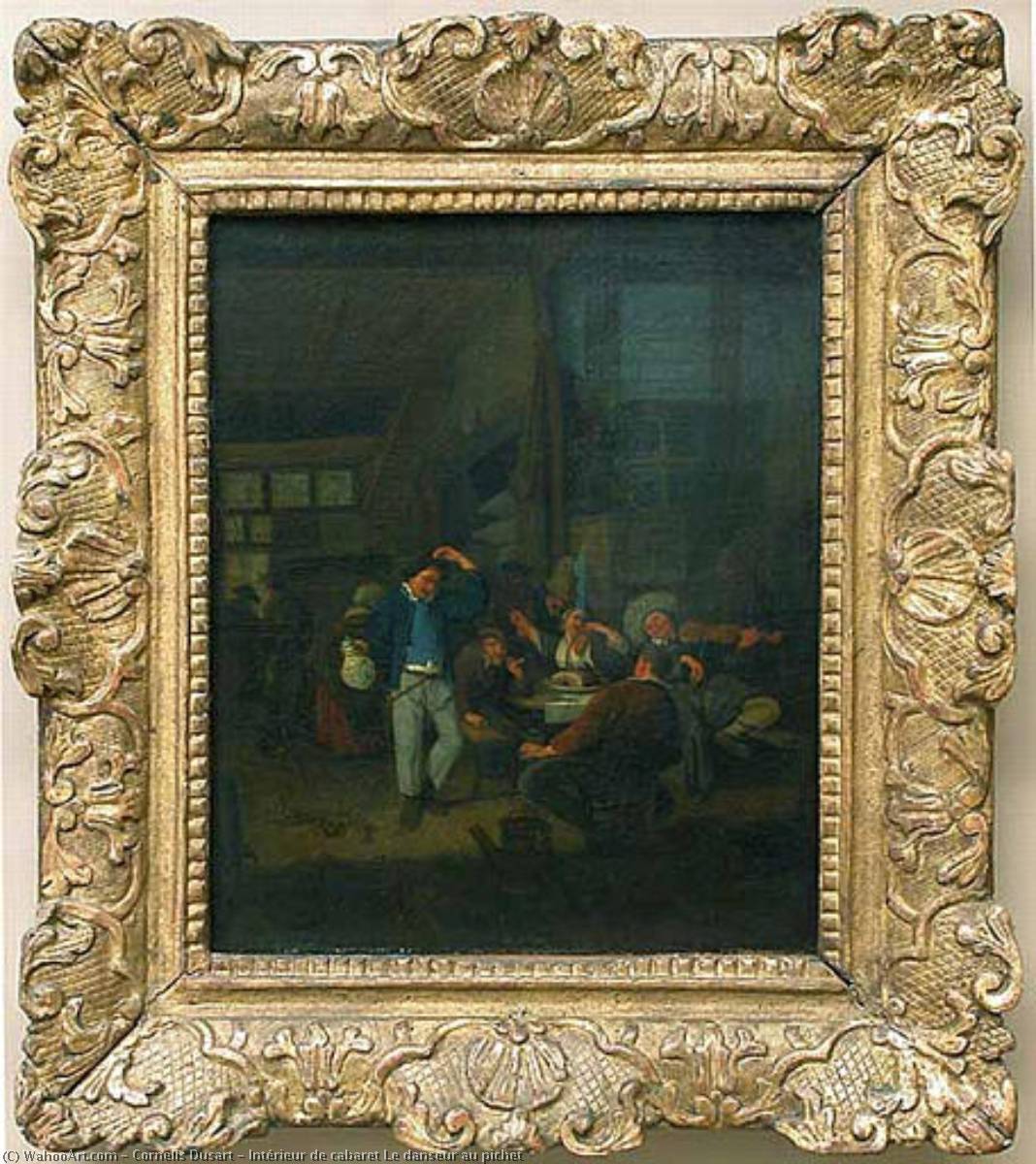
To stand before "Intérieur de cabaret Le danseur au pichet" is to be instantly transported across the centuries, deep into the smoky, convivial heart of a 17th-century Dutch cabaret. This painting does not merely depict a room; it captures an atmosphere—a moment suspended between laughter and quiet contemplation. The scene is richly populated, a tapestry woven from human interaction, the gleam of polished wood, and the shared ritual of drink. One can almost hear the murmur of conversation, the clinking of glass, and the low, rhythmic pulse of music emanating from unseen corners. It speaks to that universal human need for community, for gathering under the warm, imperfect glow of artificial light.
Mastery in Genre Painting: Dusart's Everyday Drama
The hand that painted this work belonged to Cornelis Dusart, an artist whose genius lay not in myth or grand history, but in the profound poetry of the everyday. Trained under the shadow of Rembrandt, Dusart absorbed the master’s gift for psychological depth while carving out a niche as a supreme chronicler of Dutch life. His dedication to genre scenes—the tavern, the marketplace, the intimate gathering—elevated the mundane to the monumental. Here, in this cabaret interior, we see that influence manifest: the figures are not mere mannequins; they possess palpable souls. The composition is dense, yet never chaotic, guiding the eye through layers of humanity and architectural detail with an almost effortless grace.
Technique and Atmosphere: The Palette of Memory
Observe the masterful handling of light. It is a diffused, interior luminescence that seems to emanate from within the scene itself, catching highlights on the pitcher and softening the edges of weary smiles. Dusart employed the rich, earthy tones characteristic of the period—muted browns, deep blues, and somber greys—a palette that lends the entire tableau a beautiful, melancholic patina. The technique suggests meticulous layering; pigments were built up slowly, allowing for subtle gradations of shadow and light that give the figures an almost three-dimensional presence on the canvas. It is a testament to oil paint’s ability to capture both the solidity of form and the ephemeral quality of emotion.
Symbolism of Leisure and Connection
The central motif, the pitcher and the act of sharing drink, carries weight beyond mere refreshment. In art history, such gatherings often symbolize camaraderie, the temporary suspension of societal strictures, and the vital necessity of human connection. Yet, beneath the surface gaiety, there lingers a subtle undercurrent—a hint of weariness or perhaps the bittersweet acknowledgment of time passing. This duality is what makes the piece so enduringly resonant; it speaks to both the joy of the moment and the quiet passage toward reflection.
Bringing the Salon Home: Reproduction for Modern Spaces
For those seeking to infuse a space with the sophisticated narrative weight of Dutch Golden Age art, this reproduction offers an unparalleled opportunity. It is more than decoration; it is a conversation starter, a piece that demands closer looking. Whether placed above a mantelpiece or anchoring a gallery wall, its intimate scale and rich tonality allow it to harmonize beautifully within both grand drawing rooms and cozy, thoughtfully curated interiors. Owning this work means inviting the sophisticated drama of 17th-century life into your modern sanctuary.