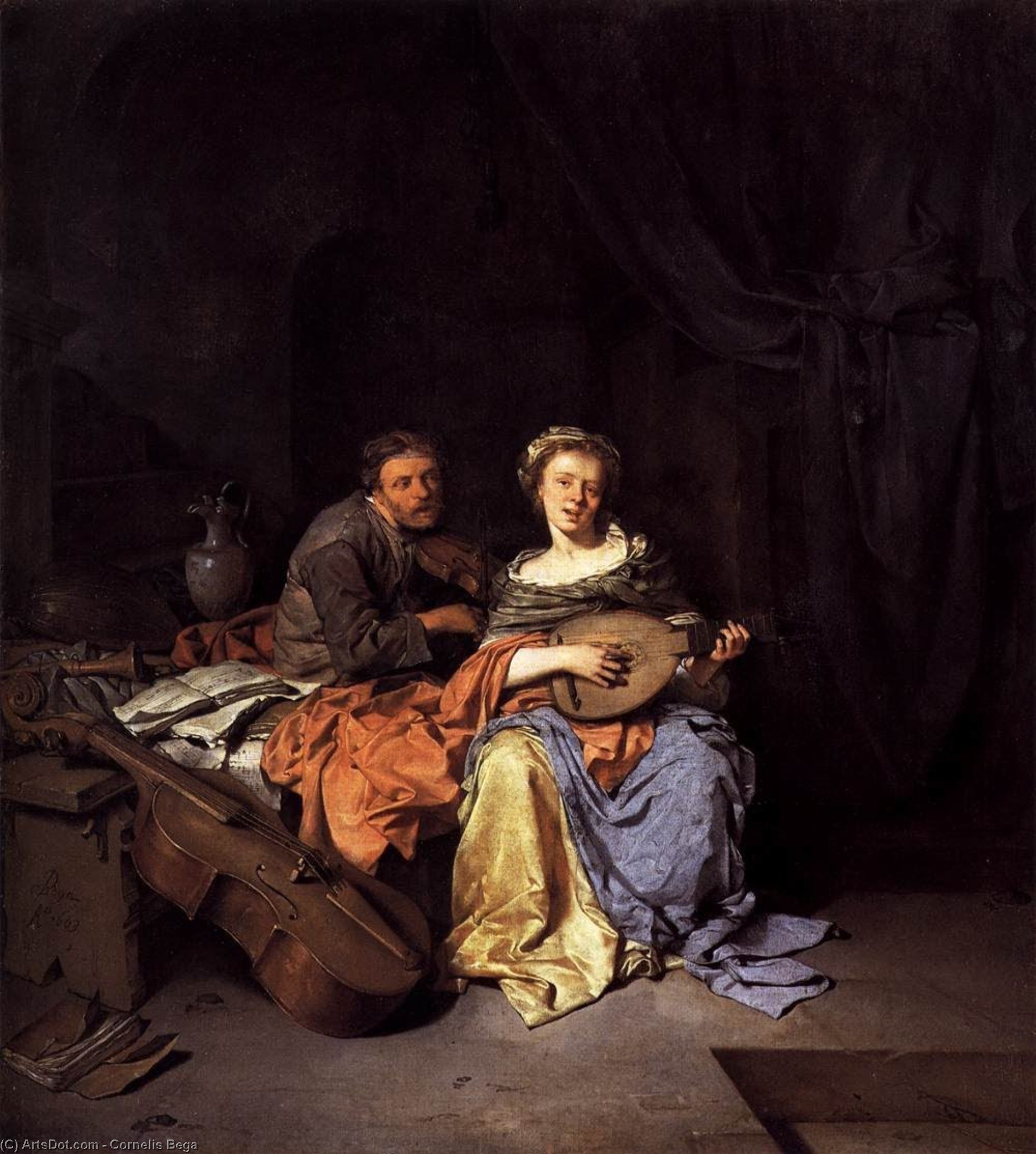
Cornelis Bega's "The Duet" (1663) captures a tender moment between a lute player and his companion, showcasing Dutch Golden Age genre painting with rich detail & intimacy.
コルネリス・ピータースス・ベガ (1630-1664): 活気ある風俗画、居酒屋、農民の生活を描いたオランダ黄金時代の画家。ファン・オスターデの弟子であり、17世紀のオランダを捉えた作品を残しました。
国立美術館
(ストックホルム, スウェーデン)
スウェーデンの国立美術館で、絵画、彫刻、デザインの宝庫を探索!ル・ブランやゴヤから現代アートまで、ストックホルムの美しいルネサンス建築の中で芸術と北欧デザインに浸りましょう。
The Duet: A Portrait of Intimacy in 17th-Century Holland
Cornelis Pietersz Bega’s “The Duet,” painted in Haarlem around 1663, is more than just a depiction of a couple enjoying an evening together; it's a poignant window into the domestic life and burgeoning social dynamics of 17th-century Dutch society. The painting captures a moment of quiet contentment – a man playing the lute while his companion sits beside him, bathed in the soft glow of candlelight. Yet, beneath this seemingly simple scene lies a complex tapestry of symbolism and artistic technique, reflecting Bega’s skill as a genre painter and his deep understanding of the era's visual language. The composition is remarkably balanced, drawing the eye to the central figures while subtly incorporating details that hint at their relationship and the atmosphere of the room. Notice how the lute player’s posture suggests both engagement and gentle authority, while the woman’s relaxed demeanor conveys a sense of ease and shared pleasure.
A Masterclass in Dutch Genre Painting
Bega's work firmly places “The Duet” within the rich tradition of Dutch genre painting – a movement that flourished during the Golden Age, characterized by its focus on everyday scenes of human life. Unlike grand historical or religious paintings, genre works aimed to capture the realities of ordinary people and their interactions. Bega’s style is distinctly influenced by Adriaen van Ostade, with whom he studied, but he possesses a unique sensitivity to light and color. He masterfully employs chiaroscuro – the dramatic contrast between light and shadow – to create depth and intimacy within the scene. The muted palette of browns, ochres, and creams evokes a sense of warmth and domesticity, while strategically placed highlights draw attention to key elements like the lute and the couple’s faces. The brushwork is loose and expressive, contributing to the painting's overall feeling of immediacy and realism.
Symbolism Woven into Domestic Life
Beyond its immediate depiction, “The Duet” is laden with symbolic meaning. The lute itself represents harmony, pleasure, and courtship – a common motif in Dutch art during this period. Its presence underscores the romantic nature of the scene. The three vases scattered around the room are not merely decorative; they likely symbolize abundance, prosperity, and the couple’s comfortable lifestyle. The bottle on the left suggests hospitality and conviviality, inviting the viewer into their private world. Even the arrangement of objects – the worn rug, the simple furniture – speaks to a life of modest comfort and shared experience. The figures' clothing is also significant; they are dressed in relatively plain attire, reflecting the values of the time—simplicity and practicality alongside an appreciation for beauty and refinement.
A Glimpse into a Short-Lived Artist’s Life
Cornelis Pietersz Bega (1630-1664) was a tragically short-lived artist, his life cut short by the plague at the age of 34. His career spanned only a decade, yet he produced a remarkable body of work that offers invaluable insights into Dutch domestic life during the mid-17th century. Born into an artistic family – his father was a sculptor and goldsmith, and his mother’s lineage included the renowned painter Cornelis van Haarlem – Bega inherited a strong foundation in craftsmanship and an appreciation for visual representation. His work is often compared to that of Adriaen van Ostade, another master of Dutch genre painting who captured the lives of peasants and laborers. Despite his brief career, Bega’s paintings are highly valued today for their realism, emotional depth, and ability to transport viewers back in time to a bygone era.
Recreating the Intimacy: A High-Quality Reproduction
Today, “The Duet” is available as a meticulously crafted hand-painted reproduction by ArtsDot.com, preserving the essence of Bega’s original masterpiece. This faithful recreation captures not only the visual details but also the painting's inherent atmosphere of warmth and intimacy. The use of archival quality materials ensures that this reproduction will endure for generations to come, making it a stunning addition to any home or office – a timeless reminder of the beauty and complexity of everyday life in 17th-century Holland. The dimensions are 45 x 41 cm, offering an ideal size for display on walls throughout your living space.