A Vision of Melancholy Beauty: Exploring Dante Gabriel Rossetti’s *Aspecta Medusa* (1877)
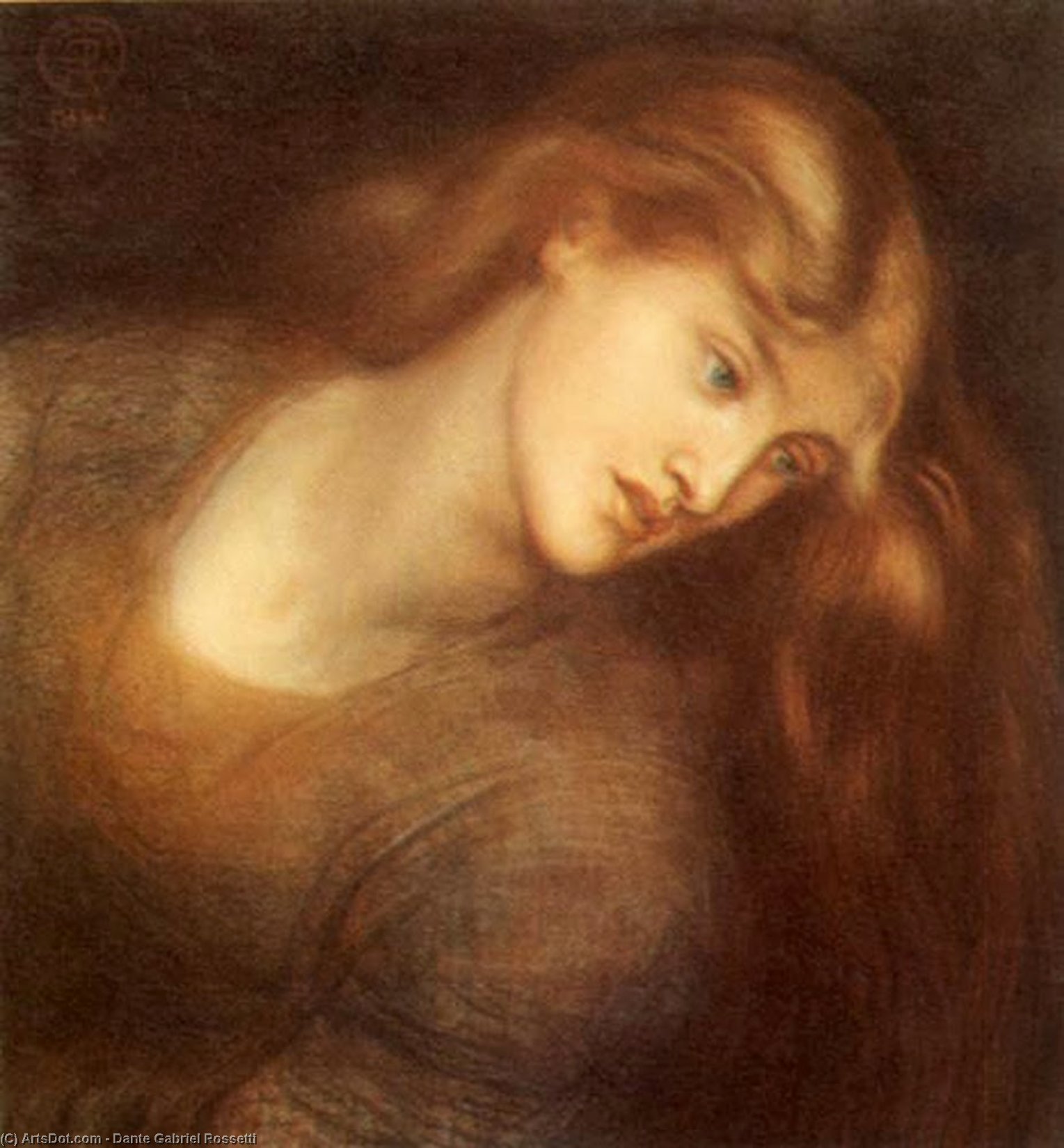
*Aspecta Medusa*, painted in 1877, is a captivating example of Dante Gabriel Rossetti's mature Pre-Raphaelite style. This intimate portrait transcends mere representation, offering instead a deeply evocative exploration of female beauty, introspection, and perhaps, veiled sorrow.
Subject & Composition
The artwork centers on a young woman, her face partially obscured by cascades of vibrant red hair – a hallmark of Rossetti’s depictions of women. The composition is deliberately focused, drawing the viewer's eye immediately to her expression. She isn’t presented as an idealized goddess but as a vulnerable and intensely human figure. The slightly off-center positioning adds a subtle dynamism, preventing the image from feeling static. This close-up perspective fosters a sense of intimacy, inviting contemplation of her inner world.
Style & Technique
Rossetti masterfully blends elements of
Romanticism and Pre-Raphaelitism. The painting’s aesthetic aligns with the Pre-Raphaelite Brotherhood's commitment to detailed realism, intense colors, and a rejection of academic conventions. He employs an oil on canvas technique characterized by meticulous layering and glazing. This creates a rich, textured surface – particularly noticeable in the flowing hair and drapery – that adds depth and luminosity. The visible brushwork contributes to the artwork’s tactile quality.
Historical Context & Rossetti's Vision
Dante Gabriel Rossetti (1828-1882) was a pivotal figure in 19th-century British art. As a founder of the Pre-Raphaelite Brotherhood, he championed a return to the artistic principles prevalent before Raphael, emphasizing sincerity and naturalism. His work often drew inspiration from medieval Italian art, literature (particularly Dante Alighieri), and Shakespeare. Rossetti’s personal life profoundly influenced his art; he frequently used women with whom he had close relationships as models, imbuing his paintings with a sense of personal connection and emotional resonance.
Symbolism & Emotional Impact
The title *Aspecta Medusa* (“Behold Medusa”) introduces an intriguing layer of symbolism. While the subject doesn’t overtly resemble the monstrous Gorgon of Greek mythology, the name suggests a hidden power or dangerous beauty. The downturned mouth and melancholic gaze convey a sense of introspection and vulnerability.
The rich color palette – dominated by warm browns, reds, and golds – further enhances this mood. These colors evoke feelings of passion, warmth, but also decay and loss.
Key Characteristics at a Glance
- Size: 52 x 55 cm
- Style: Pre-Raphaelite Romanticism
- Medium: Oil on Canvas
- Palette: Warm browns, reds, and golds
- Mood: Melancholic, Introspective, Vulnerable
*Aspecta Medusa* is more than just a beautiful portrait; it’s a window into the complex emotional landscape of Rossetti's world. Its enduring appeal lies in its ability to evoke a sense of mystery and invite viewers to contemplate the beauty and fragility of the human spirit.