A Vision of Courage Amidst Victorian Elegance: Exploring Dante Gabriel Rossetti’s Joan of Arc
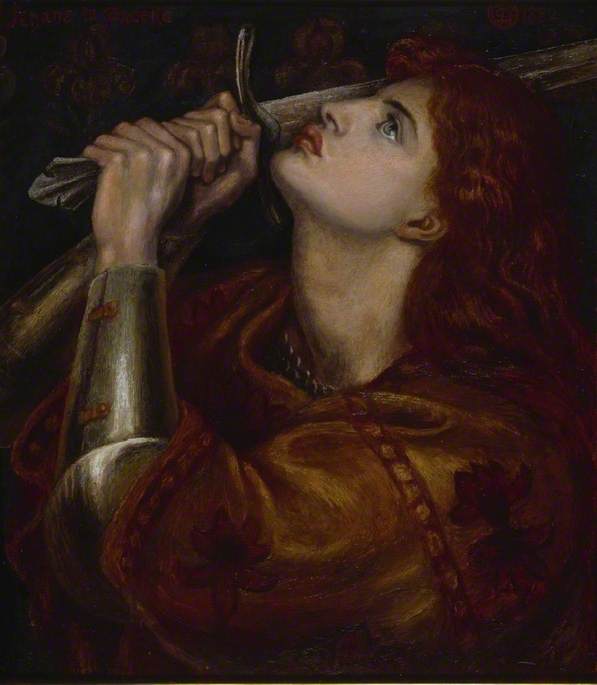
Dante Gabriel Rossetti's “Joan of Arc,” completed in 1882, transcends mere portraiture; it embodies the Romantic spirit’s enduring fascination with heroism and spiritual fortitude within the opulent framework of Victorian England. This striking depiction captures Saint Joan—a young woman revered as France’s national heroine—holding aloft a sword, an emblem of defiance against oppression and unwavering faith in divine providence. The painting immediately draws the eye to Joan's fiery red hair, a deliberate choice reflecting not only her youthful vitality but also symbolizing passion and courage – qualities deeply valued during Rossetti’s era.
- Style & Technique: Rossetti’s approach aligns seamlessly with Pre-Raphaelite aesthetics, prioritizing meticulous detail and luminous color palettes over academic conventions. He employs oil paints on canvas, layering translucent glazes to achieve an ethereal glow that imbues the scene with a palpable sense of atmosphere. The artist skillfully renders textures—the smooth sheen of Joan's dress, the weathered surface of the shield—demonstrating his mastery of artistic craft.
- Historical Context: Painted during a period marked by anxieties surrounding Victorian morality and societal expectations, “Joan of Arc” serves as a poignant counterpoint to these pressures. Joan’s unwavering conviction in her prophetic mission – believing she was divinely guided to liberate France from English domination – resonated powerfully with the Romantic sensibility's preoccupation with idealism and spiritual aspiration.
Symbolism & Narrative Depth: The sword, prominently displayed in Joan’s grasp, is more than just a weapon; it represents righteousness, courage, and divine authority. Its upward trajectory symbolizes Joan’s ascent towards spiritual enlightenment and her determination to defend her beliefs against adversity. Simultaneously, the shield—positioned centrally—suggests protection from harm, both physical and moral, highlighting Joan's unwavering commitment to safeguarding her faith and upholding noble ideals. The muted sky backdrop contributes to the painting’s contemplative mood, mirroring Joan’s inner resilience and conveying a sense of solemn grandeur.
- Emotional Impact: Rossetti’s masterful brushwork evokes a profound emotional response in the viewer. The luminous colors and delicate rendering convey not only beauty but also an underlying current of determination and spiritual conviction. “Joan of Arc” compels contemplation on themes of faith, courage, and resistance against injustice—subjects that continue to resonate with audiences across generations.
- Interior Design Considerations: For collectors and interior designers seeking inspiration, “Joan of Arc” offers a captivating visual centerpiece. Its rich color palette – dominated by golds and reds – lends itself beautifully to creating luxurious spaces infused with warmth and nobility. Reproductions crafted with archival pigments ensure that the painting’s luminous quality is faithfully preserved, allowing its emotive power to endure for years to come.
Concluding Thoughts: Dante Gabriel Rossetti's “Joan of Arc” remains a testament to the enduring allure of Romantic idealism and artistic excellence. It stands as an unforgettable portrait not merely of a historical figure but also of the spirit that dared to champion virtue and faith amidst the constraints of Victorian society—a timeless masterpiece deserving of admiration and preservation.