The Enigmatic Beauty of Regina Cordium
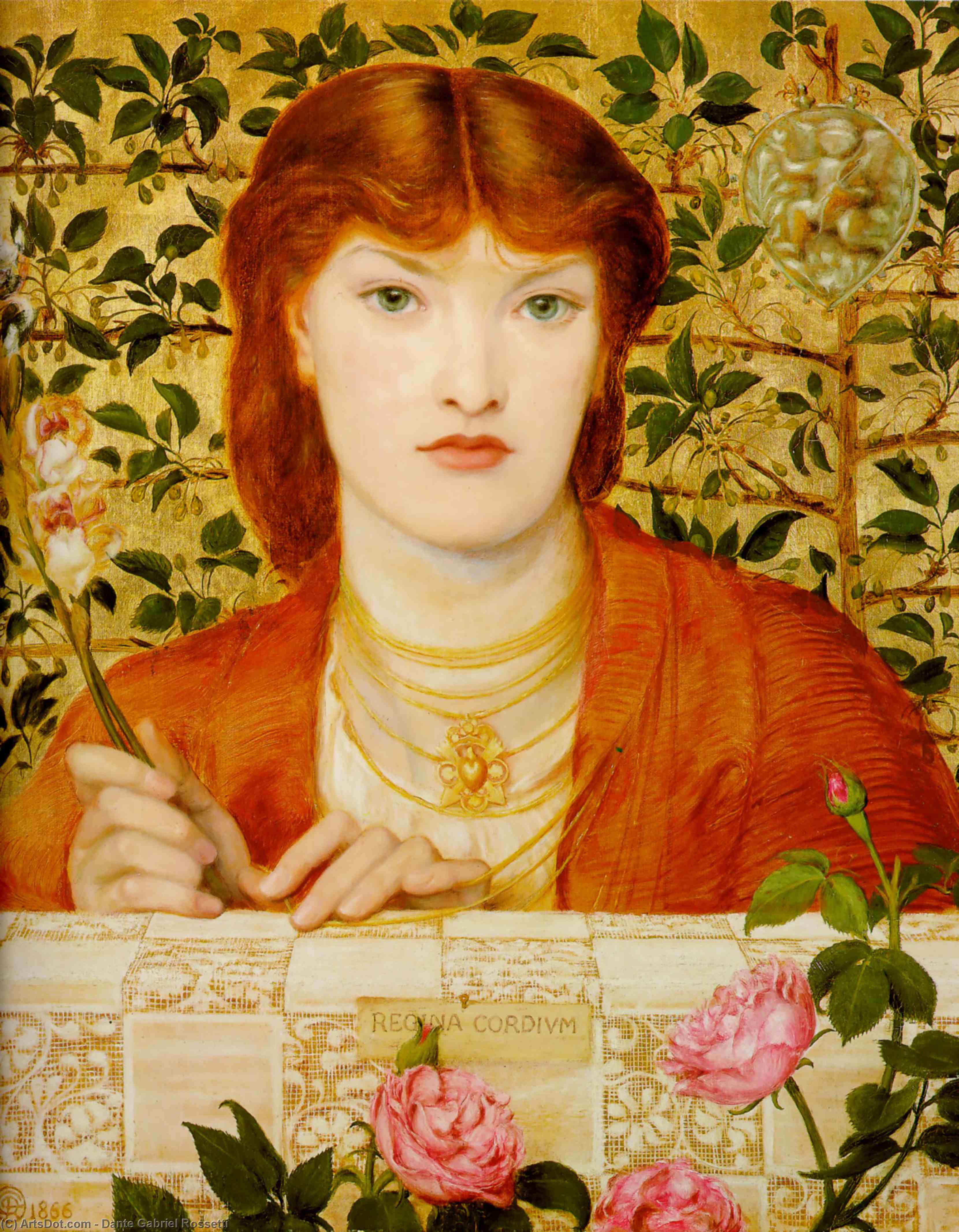
Dante Gabriel Rossetti’s “Regina Cordium” (Queen of Hearts) is not merely a portrait; it's an immersion into a world of Victorian romanticism, steeped in symbolism and shadowed by the artist’s own complex personal life. Completed in 1866, this arresting image captures Elizabeth Siddal, Rossetti’s muse and ultimately his wife, with a haunting intensity that transcends its historical context. The painting immediately draws the viewer into a realm of opulent detail – a dense tapestry of crimson roses, intricate gold filigree, and a background teeming with symbolic flora, all rendered in Rossetti's signature Pre-Raphaelite style.
The work’s genesis is inextricably linked to Rossetti’s tumultuous relationship with Siddal. Siddal, a model of extraordinary beauty and a talented artist herself, suffered from chronic illness and relied heavily on laudanum for pain relief. Her fragile health and the artist's intense devotion created an atmosphere of both profound intimacy and underlying sadness. The painting itself can be interpreted as a poignant meditation on love, loss, and the ephemeral nature of beauty – a visual embodiment of the bittersweet romance that defined their lives.
A Symphony of Color and Line
Rossetti’s technical mastery is immediately apparent in “Regina Cordium.” The color palette is dominated by rich, saturated hues: deep reds and oranges evoke passion and intensity, while golds and creams lend an air of luxuriousness. The use of complementary colors – particularly the juxtaposition of greens within the foliage against the warm skin tones – creates a dynamic visual tension. Lines are meticulously rendered, defining both the sharp edges of decorative motifs and the softer contours of Siddal’s face. The artist employs a technique reminiscent of medieval illumination, layering details with painstaking precision.
The composition is carefully balanced, drawing the eye to Siddal's central figure while simultaneously immersing the viewer in the richly detailed background. Rossetti utilizes a flattened perspective, characteristic of Pre-Raphaelite painting, creating a sense of depth through overlapping shapes and variations in color intensity – a technique that emphasizes the decorative elements rather than strict realism.
Symbolism Woven into the Fabric
“Regina Cordium” is laden with symbolic meaning. The dominant presence of roses, traditionally associated with love, beauty, and even death, underscores the painting’s complex emotional landscape. The heart pendant worn by Siddal further reinforces this theme, while the intricate gold filigree at the bottom of the canvas evokes both royalty and mortality. The inclusion of a pansy – a flower historically linked to remembrance – adds a layer of melancholy, hinting at the tragic circumstances surrounding Siddal’s life and Rossetti's own struggles.
Furthermore, the painting’s title itself—"Regina Cordium"—references Dante Alighieri’s *Divine Comedy*, where Queen Victoria is depicted as a powerful and enigmatic figure. This allusion elevates the portrait beyond a simple likeness of Siddal, transforming her into a symbol of idealized beauty and perhaps even a representation of Victorian ideals.
A Timeless Masterpiece
“Regina Cordium” remains one of Rossetti’s most enduringly captivating works. It is a testament to the artist's extraordinary talent for capturing both the physical beauty and the emotional depth of his subjects. The painting’s haunting atmosphere, rich symbolism, and exquisite technical detail continue to resonate with viewers today, offering a glimpse into the passionate and often tragic world of Victorian art and romance. Reproductions of this iconic image offer a chance to bring this evocative masterpiece into any space, adding a touch of Pre-Raphaelite elegance and timeless beauty.