A Glimpse into the Heart of Flemish Intimacy
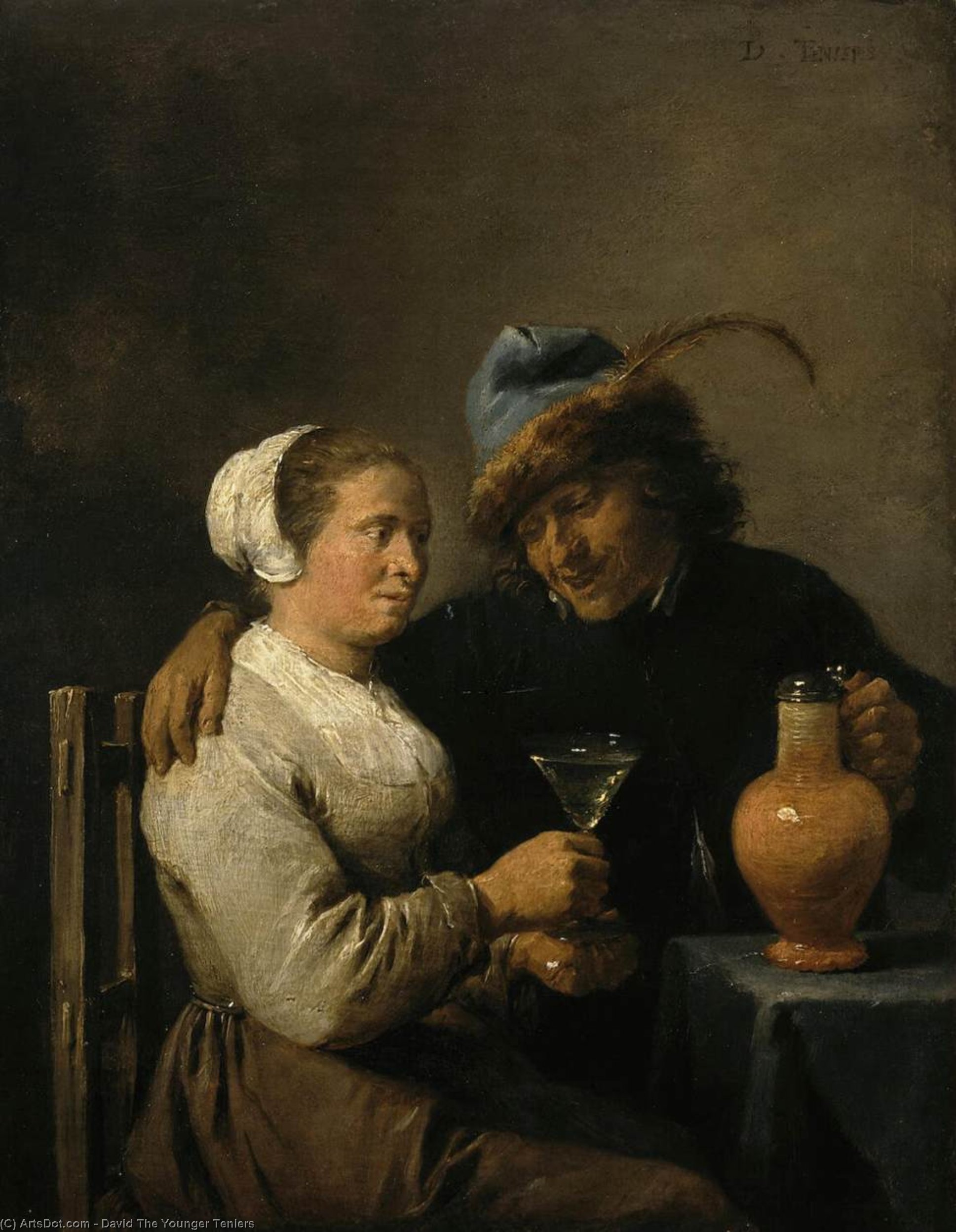
In the quiet, amber-hued corners of 17th-century Antwerp, David Teniers the Younger captured moments that felt both fleeting and eternal. His masterpiece, Tavern Scene, serves as a profound window into the social fabric of the Flemish Baroque era. Rather than focusing on the grand, sweeping historical narratives favored by his contemporaries, Teniers invites us into a much more personal sanctuary. The painting presents an intimate tableau: a man and a woman seated at a wooden table, their world momentarily narrowed to the space between them. As they engage in quiet conversation, a single wine glass rests as a silent witness to their shared connection, suggesting a narrative of companionship and subtle romance that transcends the centuries.
The composition is masterfully orchestrated to draw the viewer into this private enclave. While the central figures anchor our attention, Teniers employs a sophisticated use of perspective to hint at the larger, bustling world beyond their immediate circle. A secondary figure, partially obscured in the background, provides a sense of depth and movement, reminding us that this tavern is a living, breathing ecosystem of human interaction. The inclusion of a delicate vase upon the table adds a touch of refined ornamentation, a subtle nod to the decorative elegance that Teniers often infused into even his most rustic subject matters.
The Mastery of Light and Baroque Texture
To behold Tavern Scene is to witness the technical brilliance of a painter at the height of his powers. Working within the rich traditions of the Baroque, Teniers utilizes light not merely to illuminate, but to sculpt emotion. The soft, flickering glow—reminiscent of candlelight—casts gentle shadows across the subjects' faces, creating a chiaroscuro effect that lends the scene a palpable sense of warmth and mystery. This dramatic interplay of light and shadow is essential in defining the textures that make the painting so tactile; one can almost feel the grain of the weathered wooden table and the smooth, reflective surface of the glassware.
His technique, heavily influenced by the monumental style of Peter Paul Rubens, is characterized by a rhythmic and purposeful brushwork. Teniers layers his pigments with incredible precision, capturing the subtle nuances of fabric and the organic qualities of the tavern's interior. For the discerning collector or interior designer, this level of detail offers an unparalleled sensory experience. The painting does not merely sit upon a wall; it breathes life into a room, providing a rich, textural focal point that rewards prolonged observation and brings a sense of historical weight to any contemporary setting.
A Timeless Legacy for the Modern Collector
Beyond its technical merits, Tavern Scene resonates with a profound emotional intelligence. It celebrates the beauty found in the mundane—the quiet joy of a shared drink, the comfort of good company, and the dignity of everyday life. This ability to elevate a simple genre scene into a work of high art is what defines Teniers' enduring legacy. For those seeking to curate a collection that speaks to both sophistication and soul, this piece offers an exquisite balance of historical significance and aesthetic charm.
Whether placed in a grand library or a cozy, modern study, a high-quality reproduction of this work serves as more than just decoration; it is an invitation to slow down and appreciate the quiet narratives that weave our lives together. It remains a quintessential example of the Flemish Golden Age, offering a sense of grounded serenity and a timeless connection to the artistry of Antwerp's most beloved master.