The Essence of Authority: Velázquez’s Masterpiece
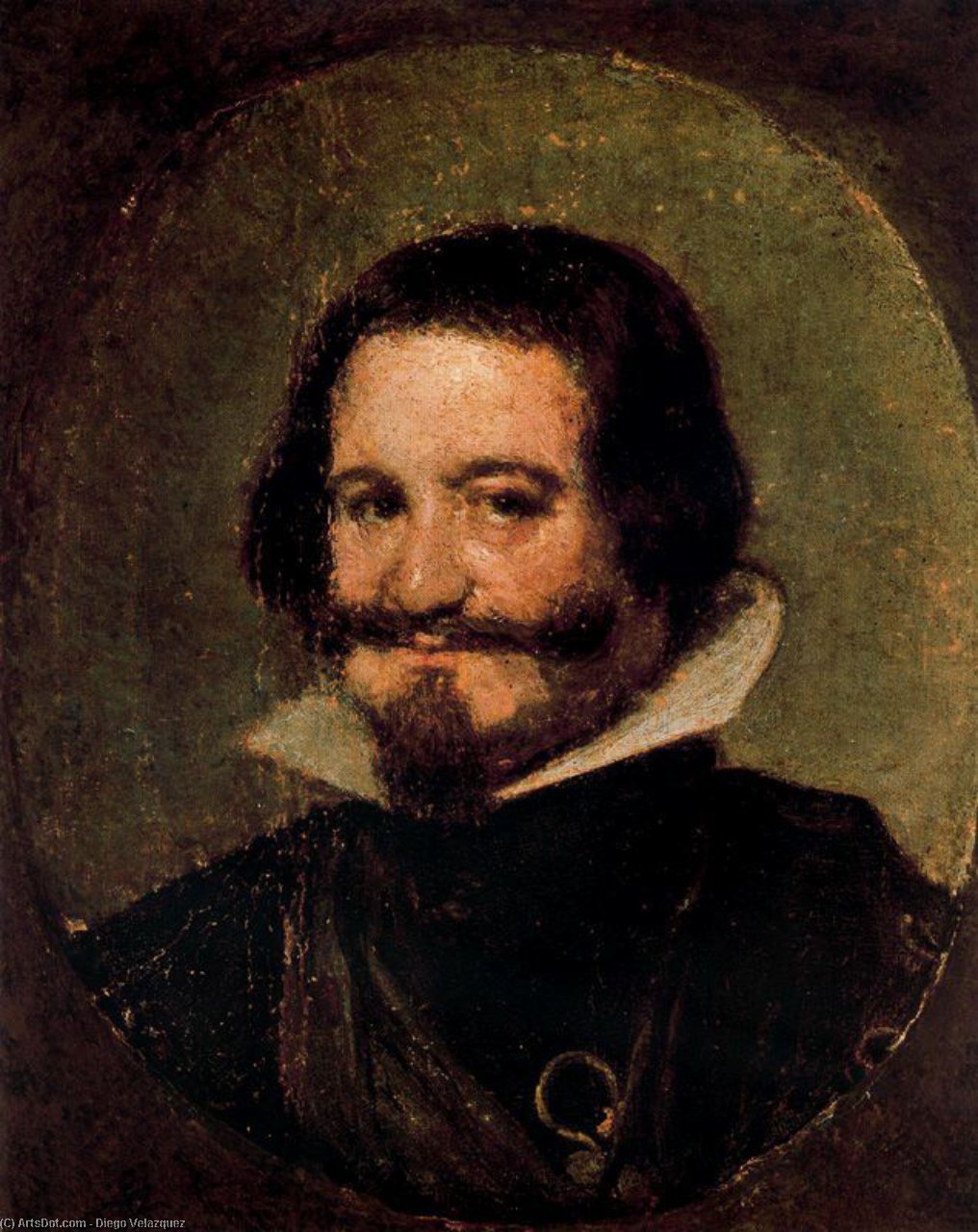
In the grand tapestry of the Spanish Golden Age, few images command the room with as much quiet intensity as Diego Velázquez’s portrait of the Conde-Duque de Olivares. This is not merely a likeness of a man; it is a profound study of power, captured during a period when the Spanish Empire stood at a critical crossroads. The subject, Gaspar de Guzmán, was the valido—the influential chief minister to King Philip IV—and Velázquez renders him with a psychological depth that transcends simple courtly documentation. As you gaze upon this work, you are not just looking at a historical figure, but witnessing the very embodiment of political gravity and the heavy mantle of leadership.
The painting serves as a masterclass in Baroque portraiture, where the artist moves beyond mere representation to sculpt emotion through light. Velázquez employs a dramatic chiaroscuro, utilizing sharp contrasts between deep, swallowing shadows and brilliant highlights to define the Count-Duke’s features. The texture of the piece is remarkably tactile; through a sophisticated use of impasto, the artist breathes life into the ruffled lace of the collar and the heavy weight of the dark cloak. These visible, confident brushstrokes create an immediacy that makes the subject feel present, as if he has just turned his gaze toward the viewer in a moment of somber reflection.
Symbolism and the Architecture of Shadow
Every element within this composition is meticulously orchestrated to direct the eye and reinforce the sitter's status. The background is a swirling, dark void, a compositional choice that serves to isolate Olivares from the distractions of the outside world. This circular, nebulous backdrop acts as a spotlight, pushing the figure forward and emphasizing his singular importance within the courtly hierarchy. The color palette is intentionally restrained, dominated by somber tones of deep brown, midnight black, and muted reds. These hues do more than provide aesthetic harmony; they evoke an atmosphere of dignity, seriousness, and perhaps even a touch of the melancholy that often accompanied the burdens of high office.
For the discerning collector or interior designer, this artwork offers a profound emotional resonance. The Count-Duke’s gaze, cast slightly downward yet remaining direct, suggests a man lost in thought—a leader contemplating the weight of his responsibilities. This sense of introspection makes the portrait incredibly versatile for sophisticated spaces, providing a focal point that invites contemplation rather than mere observation. Whether placed in a formal study, a grand library, or a contemporary gallery setting, a high-quality reproduction of this masterpiece brings with it an aura of timeless elegance and intellectual depth.
To possess such a work is to invite the spirit of the Spanish Baroque into one's environment. It is a piece that speaks of history, of the delicate balance between public persona and private thought, and of the enduring power of light to reveal the human soul. Through Velázquez’s lens, we are reminded that true greatness is often found in the quietest, most shadowed moments of character.