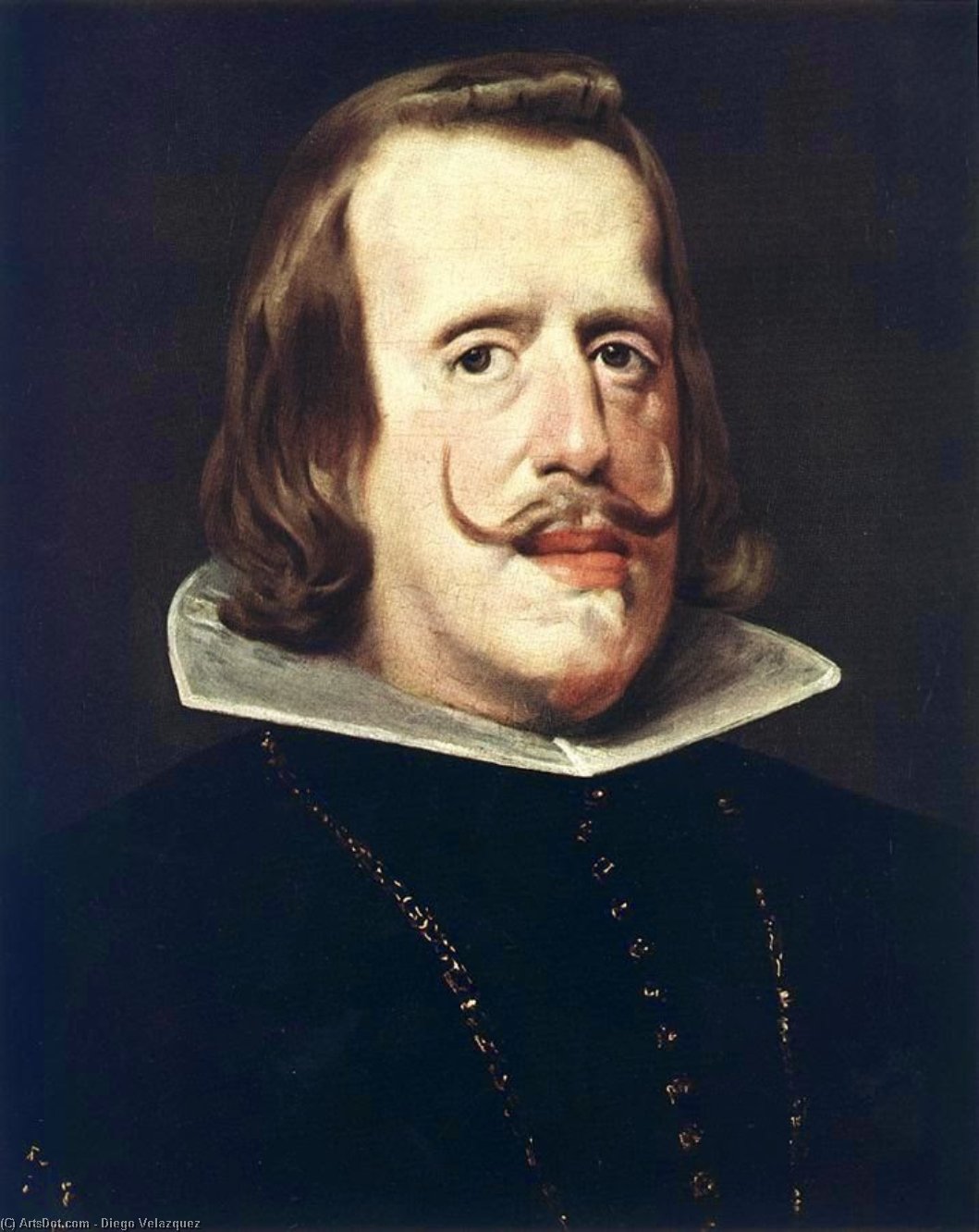
Portrait of Philip IV

Diego Velázquez's 'Portrait of Philip IV' (1652) captures the Spanish monarch with striking realism. Explore this Baroque masterpiece at Vienna’s Kunsthistorisches Museum.


ベラスケス (1599 - 1660)

バロック絵画の巨匠、ベラスケス!『ラス・メニーナス』や『ブレダの降伏』に代表される、卓越したリアリズムと光の表現が魅力。スペイン黄金時代の王室を鮮やかに描き出し、西洋美術史に多大な影響を与えました。

Kunsthistorisches Museum (Vienna, Austria)

ハプスブルク家の至宝を所蔵!ラファエル、レンブラント、フェルメールの傑作からエジプト美術まで、ウィーン芸術史美術館で時を超える芸術体験を。🏛️✨ Kunsthistorisches Museum Austria Vienna Kunsthistorisches Museum Egyptian Collection Over 500,000 objects Art and history museum 1891 Gothic 2 What is the primary architectural style of the Kunsthistorisches Museum?

Portrait of Philip IV: A Royal Gaze Through Time

  • Subject & Composition: This striking portrait captures King Philip IV of Spain in 1652, as rendered by the masterful Diego Velázquez. The composition is a close-up bust, focusing intently on the monarch's face and upper torso. Velázquez skillfully employs a tight framing to draw the viewer’s attention directly to the king’s expression and presence. Philip IV is depicted with a meticulously groomed mustache and beard, indicative of the fashion of the time. He wears a formal dark doublet, a large white collar, and a pearl necklace – symbols of his royal status and power.
  • Style & Technique: Baroque Realism: Velázquez’s style epitomizes the Spanish Golden Age's Baroque aesthetic. The painting showcases an exceptional command of realism, achieved through meticulous observation and skillful execution. The use of chiaroscuro – a dramatic interplay of light and shadow – adds depth and volume to the figure, highlighting the textures of his clothing and skin. Velázquez’s brushwork is characterized by smooth, almost velvety strokes, contributing to a polished and lifelike appearance. The background remains softly blurred, ensuring that all focus rests on the king himself.
  • Historical Context & Significance: Painted during Philip IV's reign (1621-1665), this portrait served as an official representation of the Spanish monarch. Velázquez held a prominent position at the royal court, and his portraits were crucial in projecting an image of power and stability. The painting reflects the artistic trends prevalent during the Habsburg dynasty’s rule, emphasizing formality and grandeur. It is currently housed within the Kunsthistorisches Museum in Vienna, Austria, a testament to its enduring historical and artistic value.
  • Symbolism & Emotional Impact: Beyond a mere likeness, Velázquez's portrait conveys a sense of regal authority and quiet dignity. The king’s gaze is direct yet contemplative, suggesting intelligence and perhaps even a hint of melancholy. The formal attire and jewelry symbolize his royal status and the weight of responsibility he carried as ruler of Spain. While seemingly stoic, the subtle nuances in Velázquez's rendering evoke a sense of humanity within the regal figure, inviting viewers to connect with Philip IV on a more personal level.
  • Velázquez’s Legacy: Diego Velázquez (1599-1660) remains one of history’s most influential artists. His innovative use of light and shadow, coupled with his ability to capture the essence of his subjects, has inspired generations of painters. His masterpiece, Las Meninas (1656), is widely considered a pivotal work in Western art history, further solidifying Velázquez's place as a true artistic genius.