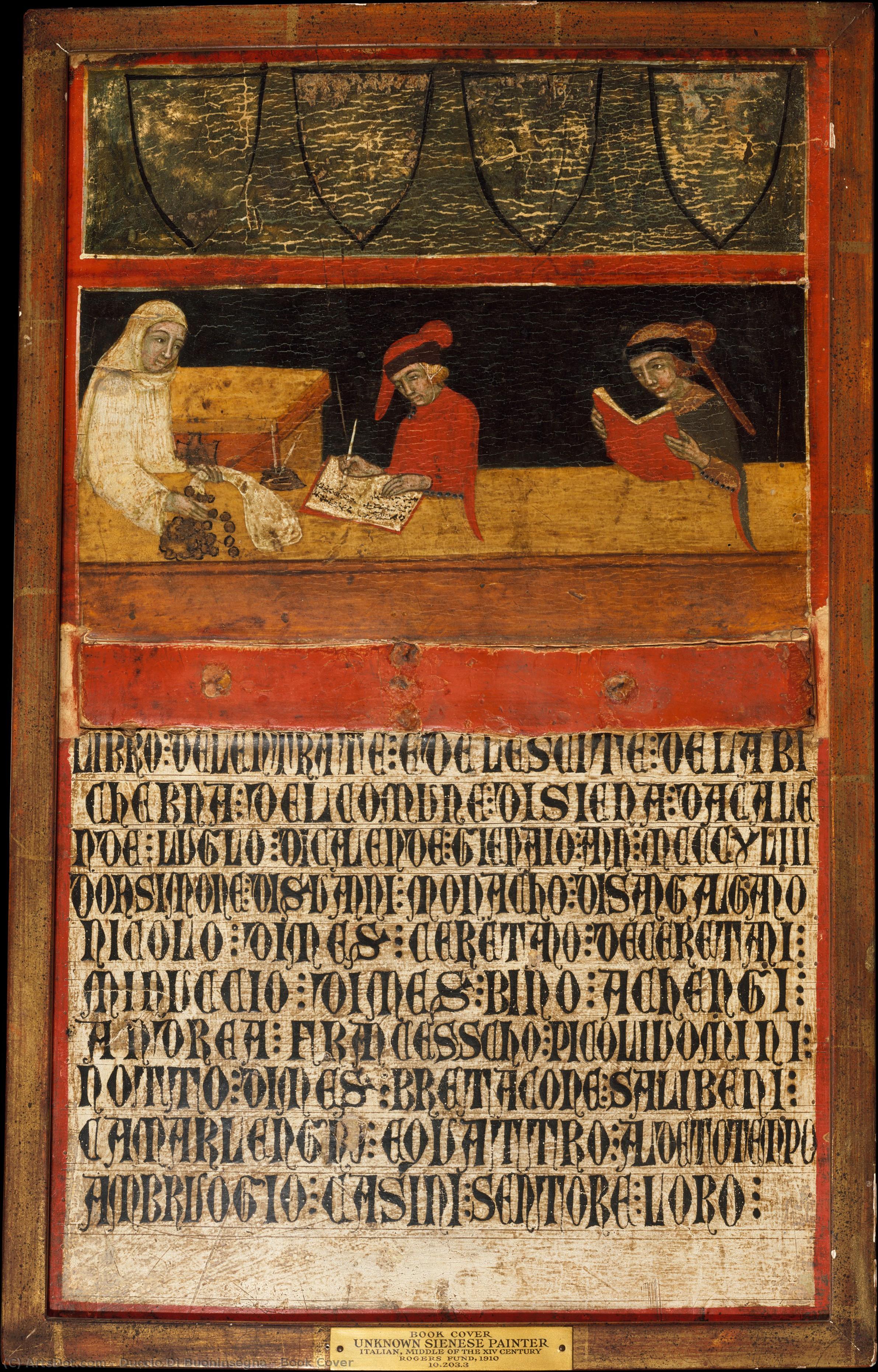
This stunning reproduction showcases Duccio di Buoninsegna’s iconic 'Book Cover,' a poignant depiction of Jesus’s struggle against Satan in the wilderness. The painting embodies the emotional depth characteristic of the Trecento Sienese School and utilizes symbolic elements like books to convey religious themes. Explore this captivating artwork from ArtsDot.com!
A Testament to Faith and Innovation: Duccio’s Book Cover
Duccio di Buoninsegna (c. 1255-1319), a luminary of the Sienese School, stands as an undeniable bridge between the Byzantine grandeur of his formative years and the burgeoning humanist spirit that would define the Italian Renaissance. While biographical details remain elusive—the artist himself often shrouded in artistic legend—his legacy endures through masterpieces like “Book Cover,” a work that exemplifies his groundbreaking approach to religious iconography and secures his place among the most influential painters of the Trecento period. Produced around 1343, this panel depicts a scene from the Gospels, specifically Jesus’ temptation by Satan in the wilderness – a narrative powerfully rendered with meticulous detail and imbued with an unprecedented level of emotional depth.
- Subject Matter: The painting portrays Christ confronting Satan amidst a desolate landscape, symbolizing spiritual struggle and divine perseverance.
- Style: Duccio’s distinctive Gothic style distinguishes itself from its predecessors through a subtle shift towards naturalism. He abandons the stylized flatness characteristic of Byzantine art, favoring a more three-dimensional representation that captures nuanced expressions and gestures.
- Technique: Employing tempera on wood panel—a technique favored by Sienese artists—Duccio achieved remarkable luminosity and vibrancy thanks to layering thin glazes of pigment. This masterful application of color contributes significantly to the painting’s emotive power.
The composition is carefully orchestrated, featuring Jesus at the center, flanked by Satan and several supporting figures representing biblical characters. Notably, two books are prominently displayed—one positioned near Jesus' feet and another on a surface to his right. These books serve as potent symbols of Christian scripture and represent the intellectual underpinning of faith, emphasizing the importance of divine revelation in overcoming temptation. The cup resting on the table reinforces this theme of contemplation and respite amidst adversity.
Historical Context: Siena and the Rise of Gothic Art
Siena during Duccio’s time was a thriving center of artistic patronage and intellectual curiosity, fueled by the wealth generated from banking and wool trade. The influence of Byzantine art—particularly its monumental frescoes—was palpable, yet Duccio skillfully adapted these traditions to his own aesthetic sensibilities. He wasn't merely copying stylistic conventions; he was actively engaging in a dialogue with earlier artistic movements, pushing boundaries and establishing new standards for expressive painting.
- Influence of Byzantium: Duccio’s early training undoubtedly benefited from exposure to Byzantine iconography, informing his understanding of composition and color palettes.
- The Gothic Spirit: Simultaneously, he embraced the burgeoning Gothic spirit—characterized by emotional intensity and a desire for realism—resulting in a synthesis that distinguishes “Book Cover” as a cornerstone of Sienese Gothic art.
Symbolism and Emotional Impact
“Book Cover” transcends mere depiction; it communicates profound spiritual truths. The desolate wilderness setting underscores the vulnerability of Christ facing Satan’s deceit, while Jesus' gaze embodies unwavering faith and determination. Duccio’s masterful use of color—particularly the luminous blues and golds—creates an atmosphere of solemn grandeur, inviting contemplation and conveying a sense of divine majesty. This artwork continues to resonate with viewers today, demonstrating Duccio’s enduring ability to capture the essence of Christian belief and artistic innovation.
Decorative Potential
For interior designers seeking inspiration, “Book Cover” offers a captivating glimpse into the aesthetic sensibilities of the Trecento. Its rich color palette—particularly the dominant blues and golds—can be skillfully incorporated into schemes emphasizing serenity and sophistication. Furthermore, Duccio’s meticulous attention to detail—evident in the expressive faces of the figures and the subtle textures of the landscape—provides a valuable lesson in artistic craftsmanship and elevates any space where it is reproduced.