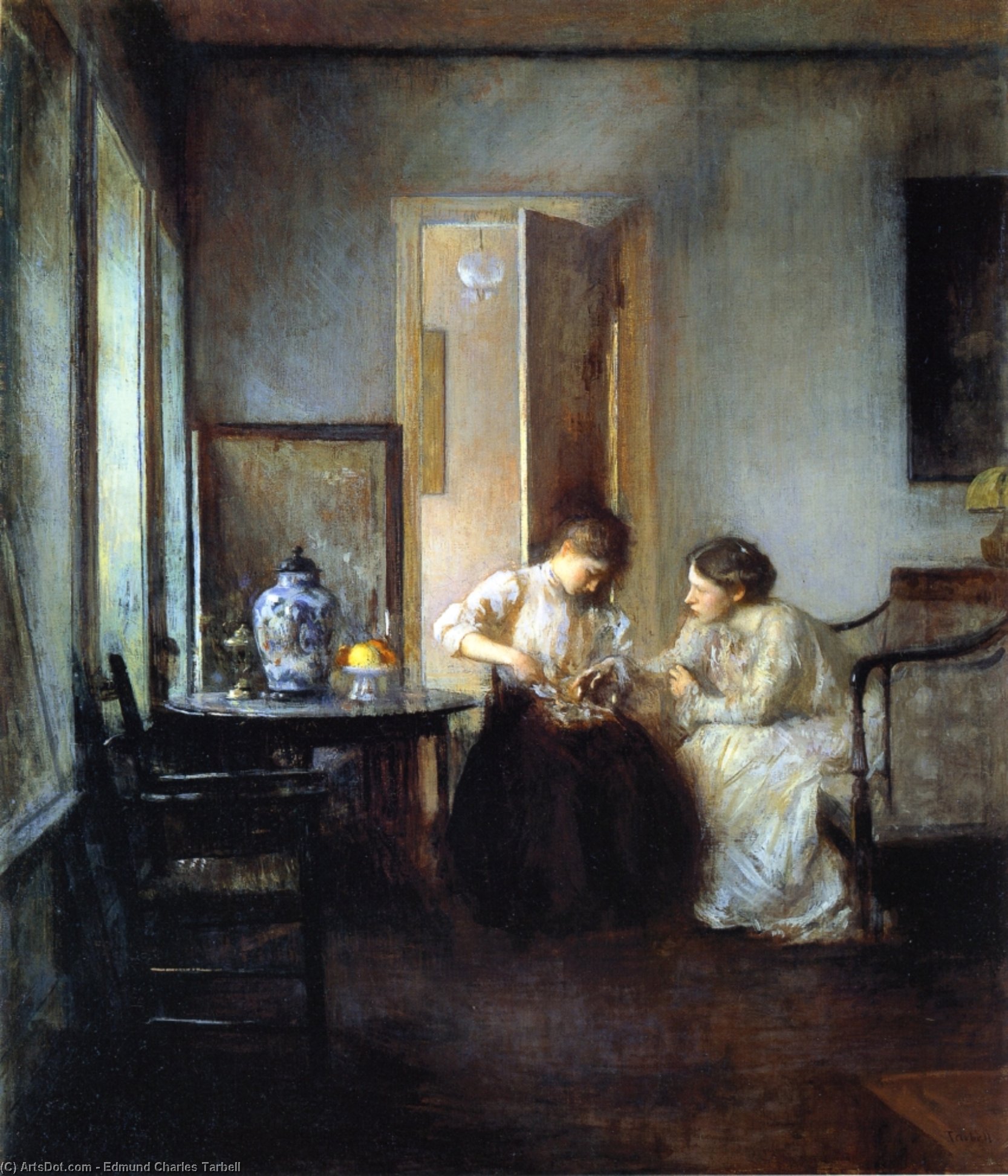
New England Interior: A Window into Impressionistic Domesticity
Edmund Charles Tarbell’s “New England Interior,” completed in 1906, stands as a quintessential example of American Impressionism—a movement that fundamentally challenged the conventions of academic painting and championed capturing fleeting moments of light and atmosphere. Currently residing within the Museum of Fine Arts in Boston, this oil on canvas masterpiece offers more than just a visual depiction; it’s an invitation into a serene tableau of everyday life imbued with subtle emotional resonance.
Tarbell's artistic journey began at the Massachusetts Normal Art School, where he honed his foundational skills before embarking on an apprenticeship under Otto Grundmann at the School of the Museum of Fine Arts. This formative experience instilled in him a deep appreciation for tonal harmony and a masterful command of brushwork—characteristics that would define his distinctive style.
Stylistic Considerations: Light and Atmosphere
- Impressionistic Technique: Tarbell skillfully employed loose, visible brushstrokes to render the scene. Rather than meticulously blending colors to create smooth surfaces, he layered pigments in short dashes and strokes, allowing light to illuminate the canvas and conveying a sense of spontaneity.
- Color Palette: The painting utilizes a muted palette dominated by warm yellows and browns—reflecting the soft glow of sunlight filtering through windows into the room. These colors contribute to the overall feeling of warmth and comfort.
- Composition: Tarbell’s compositional choices prioritize balance and tranquility. The placement of the women, furniture, and decorative elements creates a harmonious visual arrangement that guides the viewer's eye across the canvas.
Historical Context and Symbolism
Painted during the early 20th century, “New England Interior” aligns with the broader artistic trends of its time—specifically, the Boston School of Impressionism. This movement sought to depict scenes from American life with honesty and sensitivity, rejecting idealized representations in favor of capturing authentic experiences.
The room itself serves as a symbolic space—representing domesticity, intimacy, and connection between individuals. The objects within the interior—the vase, bowls, cups—are carefully positioned to suggest refinement and elegance. Furthermore, the quiet conversation between the women embodies themes of companionship and contemplation.
Emotional Impact: Tranquility and Reflection
"New England Interior" transcends mere visual representation; it evokes a profound sense of peace and introspection. The diffused light bathing the room creates an atmosphere conducive to reflection—encouraging viewers to contemplate beauty, simplicity, and the quiet joys of domestic life.
A reproduction of this remarkable artwork can transform any space into a haven of artistic inspiration. Explore high-quality, handmade oil paintings at https://ArtsDot.com – where you can discover exceptional pieces and elevate your home décor.