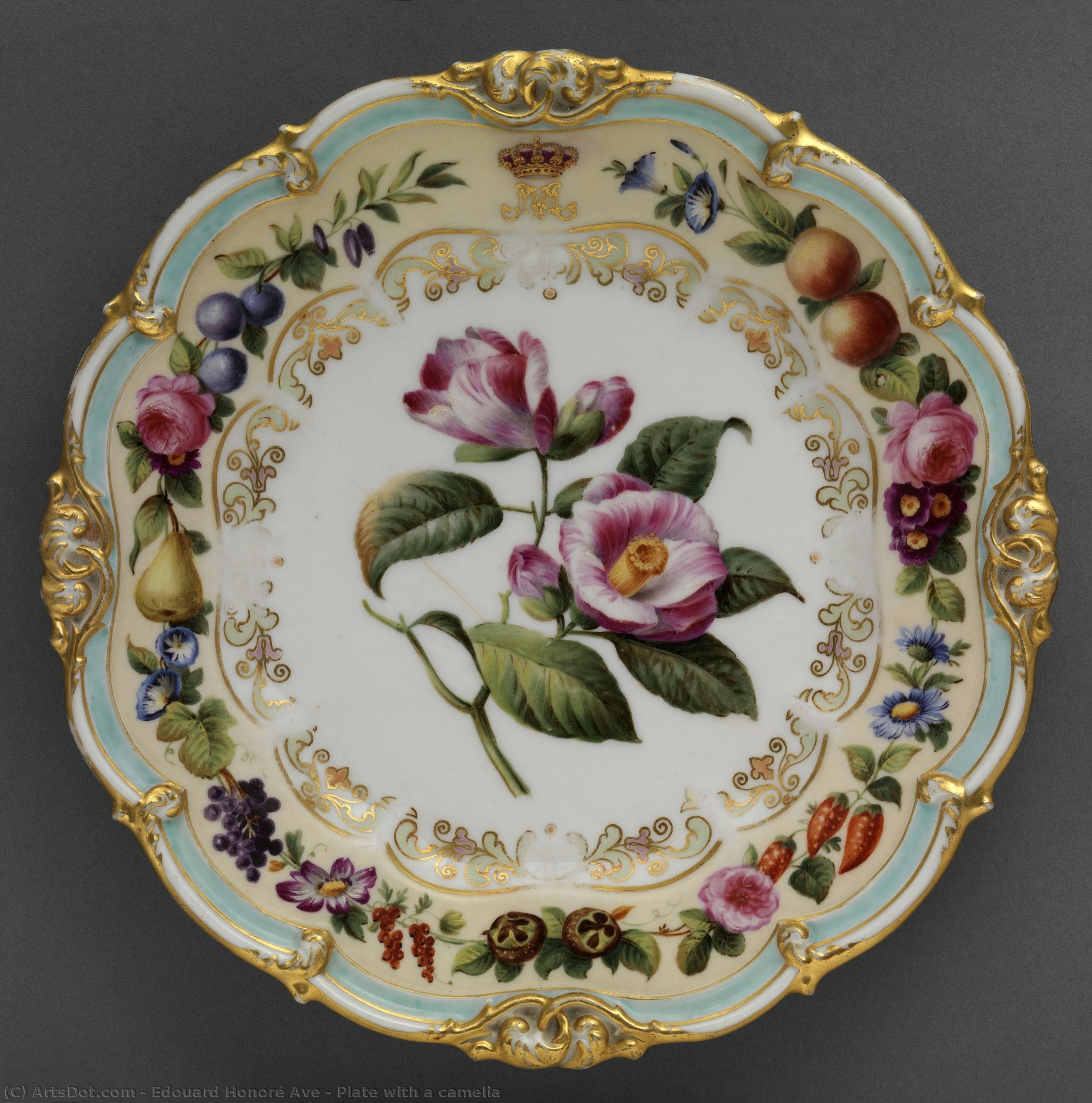
A Symphony of Porcelain and Petals
In the delicate intersection of botanical precision and aristocratic elegance lies the Plate with a camelia, a breathtaking masterpiece by the French master Édouard Honoré Ave. Created around 1840, this exquisite piece serves as more than mere tableware; it is a window into the opulent decorative traditions of the nineteenth century. The plate captures the viewer's eye with its vibrant floral arrangement, where soft pink camellias bloom against a lush backdrop of verdant leaves. A subtle, rhythmic scattering of apples adds a layer of rustic charm to the composition, creating a visual dialogue between the refined elegance of the porcelain and the bountiful sweetness of nature. The deep blue border acts as a sophisticated frame, anchoring the delicate botanical studies and lending the piece an air of timeless authority.
The artistry of Ave is deeply rooted in the prestigious lineage of French academic training. Having studied under the legendary Paul Delaroche, Ave brought a sense of historical grandeur and meticulous detail to the medium of porcelain. This specific work exemplifies his ability to marry the precision of botanical illustration with the flowing, ornamental grace of the Rococo revival. Each brushstroke on this plate reveals a profound mastery of light and texture, simulating the velvety softness of petals and the waxy sheen of fruit. For the discerning collector or interior designer, such a piece represents the pinnacle of craftsmanship, where the technical rigor of fine art meets the functional beauty of decorative objects.
Beyond its aesthetic splendor, the plate carries a profound emotional resonance and historical weight. As part of the prestigious Portuguese Royal Collection, this work was once a symbol of status and refined taste within one of Europe's most significant courts. The camellia itself often symbolizes longing or perfection, and when paired with the abundance suggested by the apples, the piece evokes a sense of eternal spring and prosperity. To possess a reproduction of such a treasure is to invite a fragment of nineteenth-century Parisian elegance into a modern space. It offers an unparalleled opportunity for those seeking to infuse their interiors with a sense of history, sophistication, and the enduring romance of the natural world.