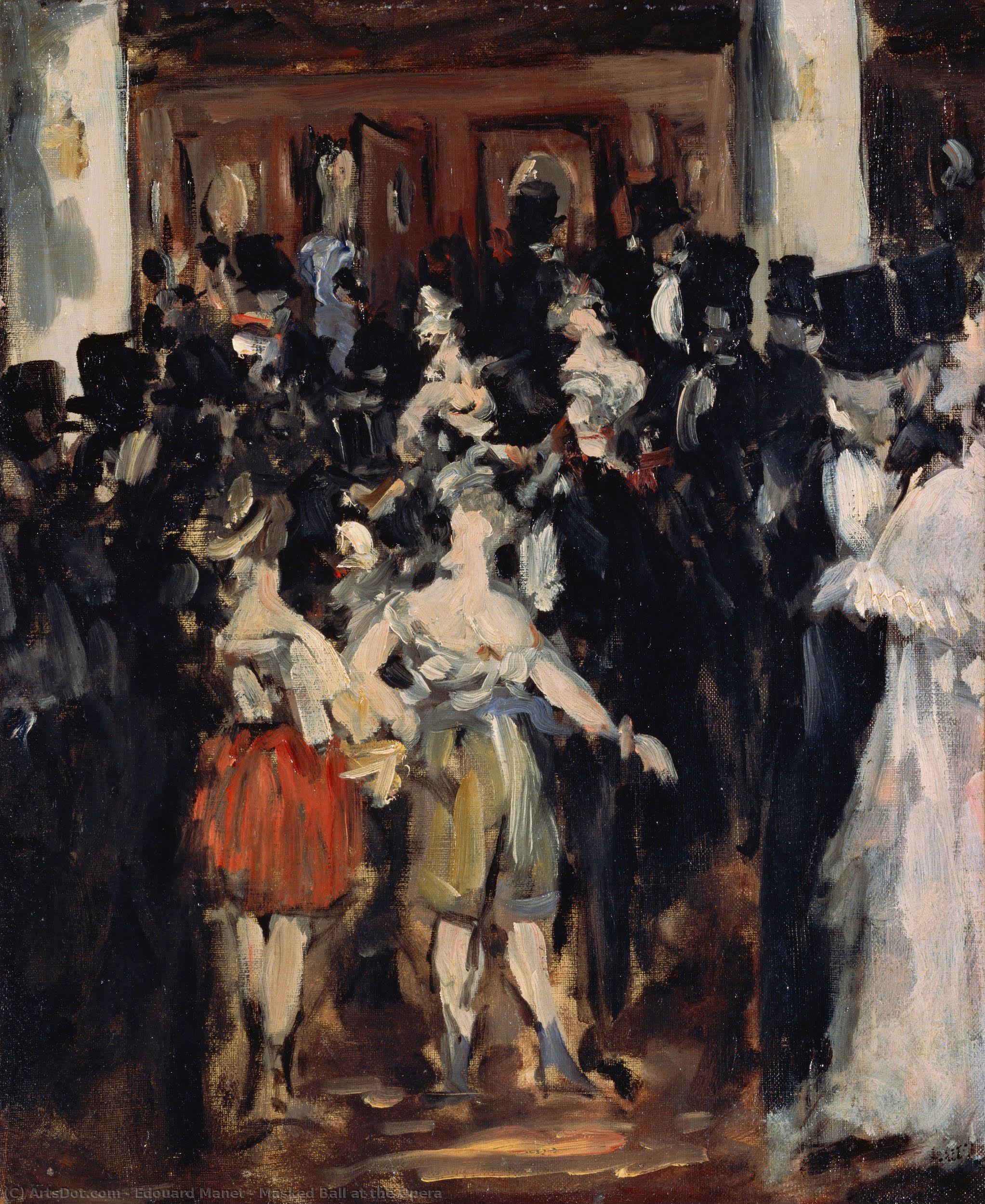
Masked Ball at the Opera
Édouard Manet’s “Masked Ball at the Opera” stands as a pivotal moment in art history—a defiant assertion of Impressionism against the rigid conventions of Realism and a captivating glimpse into the decadent social life of Belle Époque Paris. Produced in spring 1873, this painting immediately provoked controversy upon its debut at the Salon, cementing Manet’s reputation as a provocateur and innovator.
Contextualizing the Painting
“CITE>Edouard Manet” produced several paintings of masked balls, as well as studies for them. The most polished and complete of these, in the
National Gallery in Washington, D.C., was one that Manet submitted to the Salon. It was rejected, possibly because of its risqué content. In this version, a group of black-clad men in silk hats and tailcoats surrounds masked women wearing colorful costumes. The women are dancers and courtesans who are being seduced by those upper-class men. Manet liked painting such scenes of the manners and customs of his times. This rejection underscored the Salon’s conservative stance toward artistic experimentation, highlighting the tension between tradition and modernity that characterized the era.
Artistic Technique and Composition
The eddy of people in between the two large pillars in the painting is depicted with a bold, swift touch that communicates the bustling motion of the crowd and its excitement. Manet skillfully employed chiaroscuro—the dramatic interplay of light and dark—to sculpt figures and create depth within the scene. This technique wasn’t merely stylistic; it reflected Manet's meticulous observation of natural light and his desire to capture fleeting moments of emotion. The rapid brushstrokes convey a sense of immediacy, mirroring the energy of the opera house itself. Furthermore, Manet’s compositional choices—the placement of figures and architectural elements—were deliberate, guiding the viewer’s eye across the canvas and emphasizing key relationships between individuals.
Symbolism and Social Commentary
The masked ball setting serves as a metaphor for the social masquerade of Parisian high society. The masks worn by the women symbolize the hidden identities and desires concealed beneath appearances, while the men's formal attire represents their public personas—a carefully constructed façade designed to impress. This dichotomy encapsulates Manet’s fascination with portraying the complexities of human behavior and challenging societal norms. He subtly critiques the hypocrisy inherent in aristocratic circles, exposing the pursuit of pleasure and status without regard for moral considerations. The inclusion of a clown adds an element of irony, disrupting the solemn atmosphere and hinting at the underlying anxieties of the time.
Relevance and Legacy
“CITE>Edouard Manet"'s “Masked Ball at the Opera” is not only a testament to Manet’s artistic genius but also a window into the social fabric of late 19th-century Paris. The painting's themes of identity, class, and the blurring of public and private lives continue to resonate with audiences today—a reflection of enduring questions about human nature and societal values. Its influence can be seen in subsequent Impressionist works and beyond, establishing Manet as a foundational figure in modern art. For those interested in exploring more of Manet’s works or other Impressionist masterpieces,
Painting by 'Edouard Manet' | Edouard Manet:Masked Ball at the Opera and
Painting by 'Edouard Manet' | Edouard Manet:The Execution of Emperor Maximilian (four fragments) are available on ArtsDot.com.