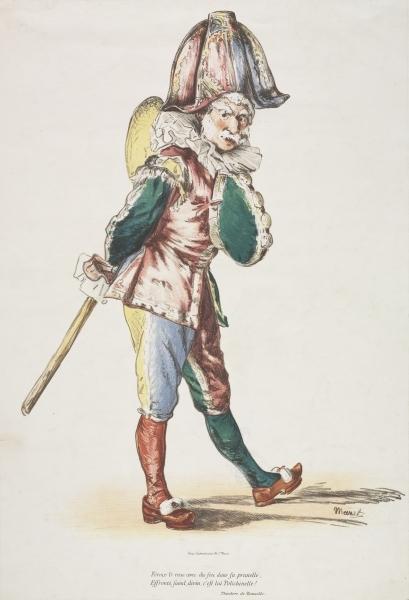
A Portrait of Melancholy Amidst Rococo Splendor: Édouard Manet’s ‘Polichinelle 1’
Édouard Manet (1832-1883) stands as a pivotal figure in the artistic landscape of the late nineteenth century, marking a decisive break from academic tradition and ushering in the dawn of Impressionism. Yet, his early explorations reveal an unwavering fascination with the past—specifically, the opulent aesthetic of Rococo—which profoundly influenced his stylistic choices and contributes to the enduring allure of works like ‘Polichinelle 1.’ This captivating clown portrait transcends mere representation; it embodies a complex interplay of observation, emotion, and artistic innovation.
- Subject Matter & Context: Manet’s subject is a theatrical clown—a figure familiar to audiences of the era—presented with remarkable detail against a backdrop that speaks volumes about societal expectations. The choice of Polichinelle, a traditional marionette character known for its grotesque features and satirical commentary, underscores Manet's desire to challenge conventional notions of beauty and humor. It’s a deliberate provocation against the idealized figures favored by the Académie Française, reflecting a broader artistic rebellion against established norms.
- Style & Technique: The artwork adheres closely to Rococo illustration principles—characterized by meticulous draughtsmanship, balanced compositions, and an emphasis on decorative elegance. Lines are painstakingly rendered to delineate every fold of the clown’s costume, capturing the texture and volume of fabric with masterful precision. Cross-hatching techniques skillfully create depth and luminosity, mimicking the subtle gradations of light found in studio settings. Watercolor and ink combine to produce a muted yet rich color palette—a deliberate departure from the vibrant hues championed by Impressionists.
- Composition & Perspective: The artwork’s central perspective draws the viewer's eye directly to the clown’s figure, reinforcing his dominance within the frame. A low viewpoint subtly elevates him, conveying a sense of grandeur and importance despite his humble attire. Geometric shapes—squares, rectangles, and circles—construct the complex costume design, mirroring the architectural precision characteristic of Rococo art.
- Symbolism & Emotion: Beyond its visual beauty, ‘Polichinelle 1’ carries significant symbolic weight. The clown's melancholic expression—a poignant contrast to the flamboyant colors of his costume—suggests a deeper contemplation on themes of disillusionment and vulnerability. This duality reflects Manet’s broader artistic vision: capturing both the splendor and sorrow inherent in human experience.
- Legacy & Influence: ‘Polichinelle 1’ exemplifies Manet's commitment to dissecting artistic conventions while simultaneously honoring stylistic precedents. It stands as a testament to his unparalleled skill—a beautifully executed portrait that continues to inspire admiration for its meticulous detail and evocative emotional resonance, cementing its place as a cornerstone of modern art history.