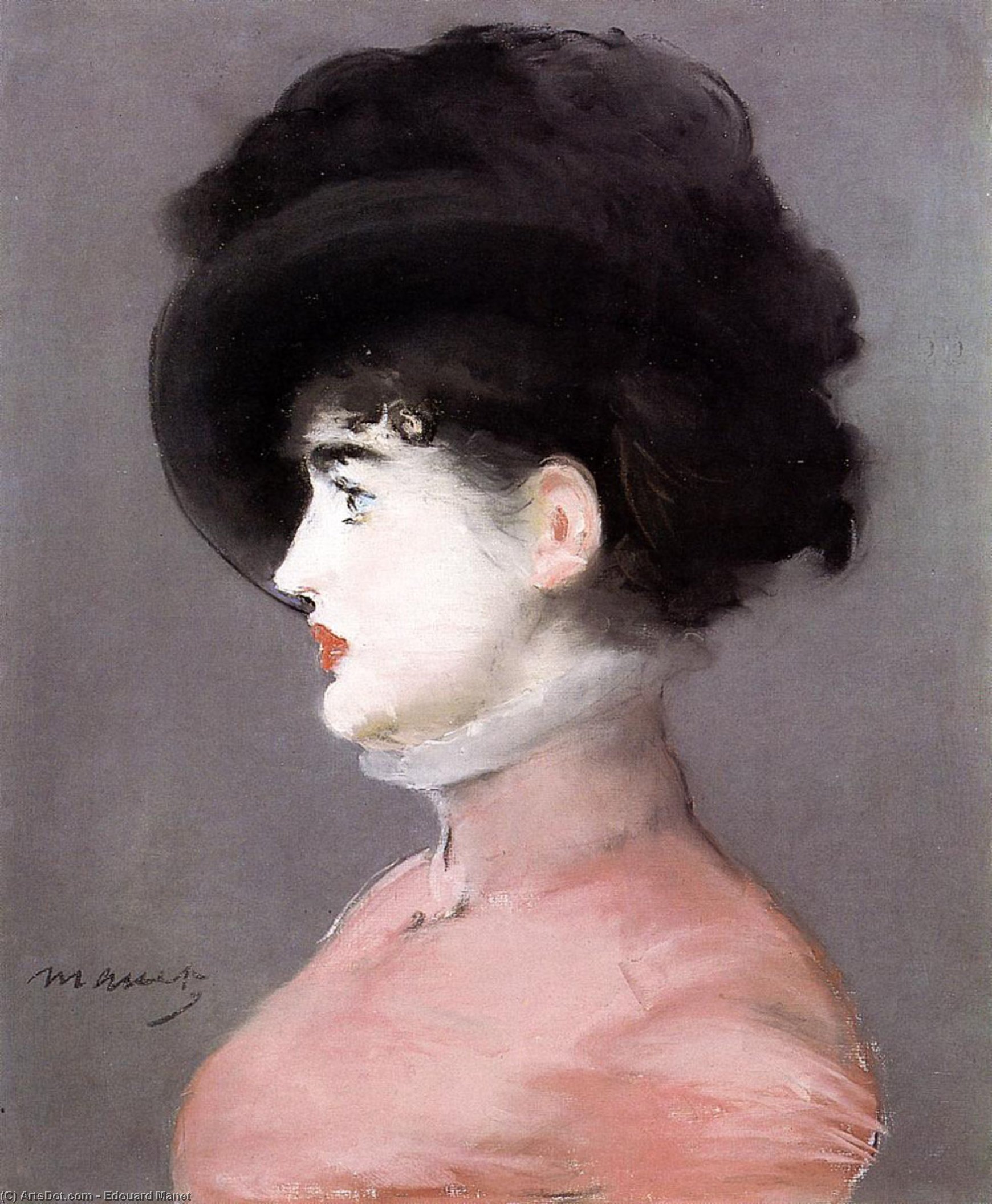
Édouard Manet’s ‘Portrait of Irma Brunner,’ painted in 1880, exemplifies Realism and Impressionism's innovative approach to depicting contemporary life. This pastel showcases Manet’s meticulous detail and captures the beauty of Irma Brunner’s attire and gaze. Explore its historical significance within the art world.
Portrait of Irma Brunner: A Study in Pastel Realism
Édouard Manet’s *Portrait of Irma Brunner*, completed around 1880, stands as a testament to his pioneering approach to painting modern life and his masterful command of pastel technique. More than just a likeness of the Viennese socialite Irma Brunner, this artwork embodies the spirit of Impressionism's nascent stage—a deliberate rejection of academic conventions in favor of capturing fleeting moments of beauty and emotion with unprecedented sensitivity.
- Subject Matter: The portrait depicts Irma Brunner seated elegantly, adorned in a dark hat embellished with a feather – a fashionable accessory reflecting the opulent tastes of Belle Époque Paris. Her pink dress adds a touch of vibrancy against the muted grey backdrop, emphasizing her presence and conveying an aura of refined composure.
- Artistic Style: Manet’s stylistic choices firmly situate *Portrait of Irma Brunner* within the burgeoning Realism movement. Unlike his predecessors who sought to idealize subjects or depict mythological narratives, Manet focused on portraying everyday life with unflinching honesty. However, he achieved this realism not through meticulous detail but rather by employing a technique that prioritized atmosphere and tonal variation—a hallmark of Impressionism.
- Technique: Pastel proved to be an ideal medium for Manet’s vision. The soft, velvety texture of pastel allowed him to achieve subtle gradations of color and luminosity unattainable with oil paint alone. His brushstrokes were loose and expressive, capturing the nuances of light and shadow—a deliberate departure from the smooth surfaces favored by academic painters. This technique wasn't merely stylistic; it served as a crucial element in conveying the psychological depth of his subjects.
- Historical Context: Painted during a period of significant artistic upheaval, *Portrait of Irma Brunner* reflects the broader shift away from traditional artistic dogma toward experimentation and innovation. The Salon rejected Manet’s work initially, sparking heated debate about its merits and challenging established notions of beauty and representation. Yet, this rejection ultimately paved the way for Impressionism to flourish, championed by artists like Monet and Renoir who embraced Manet's pioneering spirit.
- Symbolism & Emotional Impact: Beyond its formal qualities, *Portrait of Irma Brunner* possesses a subtle symbolic resonance. The pose of Irma Brunner—direct gaze, slight inclination of the head—suggests confidence and introspection. The muted palette contributes to an overall mood of quiet elegance and understated beauty. Manet’s aim wasn't simply to depict a woman; he sought to capture her essence—her inner life—expressed through visual cues that transcend mere appearance.
Preservation & Display: A Legacy Recognized Globally
Today, *Portrait of Irma Brunner* resides in the Musée d’Orsay in Paris, a testament to its enduring artistic significance. Its inclusion in the museum's permanent collection underscores its importance as a precursor to Impressionism and exemplifies the dedication to preserving cultural heritage. The painting’s meticulous condition—thanks to careful conservation efforts—allows visitors to appreciate Manet’s masterful technique and contemplate the profound emotional impact of his artwork.
Influence on Modern Art
Manet's bold experimentation with pastel and his focus on capturing everyday life profoundly influenced subsequent generations of artists. Figures like Pierre-Auguste Renoir, who continued to explore similar themes in their own work—particularly the depiction of Parisian society—acknowledged Manet’s pioneering role in establishing a new aesthetic language. *Portrait of Irma Brunner* remains an iconic image of Impressionism's formative years and continues to inspire artists today.