A Symphony of Snow and Sorrow
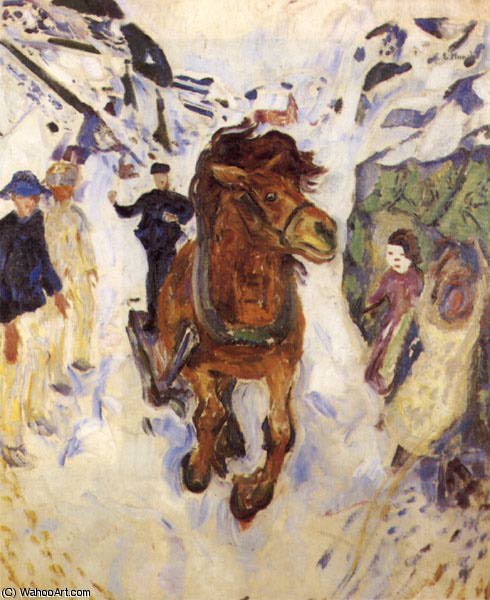
In the quiet, biting chill of a Norwegian winter, Edvard Munch captures more than just a landscape; he captures the very vibration of a soul in motion. “Horse in Flight Oslo,” housed within the prestigious Munch Museum, serves as a visceral manifestation of the artist’s internal landscape. The painting presents a breathtaking tableau where a horse gallops through heavy snowdrifts, its movement cutting through the stillness of the frost. Surrounding this central figure are observers who seem caught in a moment of profound reflection, their presence adding a layer of human connection to the wild, untamed energy of the animal. A solitary bird drifts above the scene, injecting a sense of fleeting life into an environment that feels otherwise frozen in time.
To gaze upon this work is to step into the Fin de siècle—a period defined by a pervasive sense of societal anxiety and existential questioning. Munch, a master of translating psychological dread into visual form, uses the snowy setting not merely as a backdrop, but as a metaphor for the isolation and starkness of the human condition. The interplay between the dynamic, powerful horse and the static, watchful figures creates an arresting tension, inviting collectors and art enthusiasts to contemplate the delicate balance between movement and stillness, life and the encroaching cold.
The Mastery of Expressionist Technique
Munch’s approach in this piece aligns perfectly with the core tenets of Expressionism. Eschewing the objective realism of his predecessors, he prioritizes subjective experience, utilizing distorted forms and a hauntingly atmospheric palette to convey deep-seated emotions such as fear, longing, and even mortality. The technique employed here—tempera on canvas—is instrumental in achieving this effect. The unique properties of tempera, with its pigment bound by egg yolk, allow for a luminous quality that mimics the blinding glare of sun hitting fresh snow, while simultaneously providing a textural depth that makes the heavy drifts feel tangible.
For the interior designer or the discerning collector, this painting offers an unparalleled emotional resonance. The way the light interacts with the snowy textures creates a sense of luminosity that can transform a room, bringing a sophisticated yet melancholic beauty to any space. It is not merely a depiction of a scene; it is an invitation to feel the weight of the atmosphere and the raw energy of the gallop. Whether placed in a contemporary gallery or a classic study, this reproduction serves as a profound focal point, embodying the timeless struggle between the external world and our internal emotional truths.